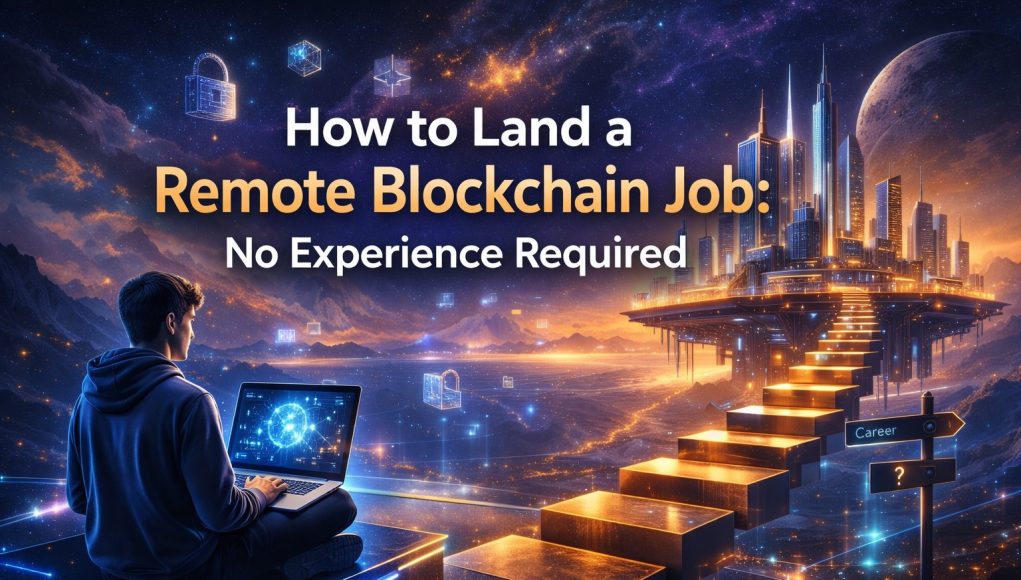
How to Land a Remote Blockchain Job: No Experience Required
The world of work is undergoing a monumental shift, and at the heart of this transformation lies the burgeoning field of blockchain technology, coupled with the accelerating trend of remote employment. Once considered niche, blockchain is now powering everything from decentralized finance (DeFi) and non-fungible tokens (NFTs) to supply chain management and digital identity verification. This rapid expansion has created a massive demand for skilled professionals, and surprisingly, not all of these opportunities require years of prior experience.
For ambitious individuals looking to break into a cutting-edge industry without a traditional background, the blockchain space offers a unique entry point. While it might seem daunting to pursue a highly technical role with “no experience,” this article will guide you through a strategic pathway designed to equip you with the knowledge, skills, and network needed to land a remote blockchain job, even if you’re starting from scratch.
The Blockchain Boom: Why Now Is the Time
Blockchain technology, the underlying innovation behind cryptocurrencies like Bitcoin and Ethereum, has evolved far beyond its initial use case. It represents a fundamental paradigm shift in how we store, transfer, and verify data, offering unprecedented levels of security, transparency, and decentralization.
Key Growth Drivers:
- Decentralized Finance (DeFi): Reshaping traditional financial services with lending, borrowing, and trading platforms built on blockchain.
- Non-Fungible Tokens (NFTs): Revolutionizing digital ownership in art, gaming, and collectibles.
- Web3: The vision for a decentralized internet, where users have more control over their data and digital assets.
- Enterprise Adoption: Major corporations exploring blockchain for supply chain, data management, and secure transactions.
- Global Remote Work: The pandemic accelerated the acceptance of remote work, making it easier to access global opportunities regardless of location.
This explosive growth means that companies, from startups to established enterprises, are actively seeking talent. While seasoned experts are always in demand, the pace of innovation often outstrips the supply of experienced professionals, opening doors for motivated newcomers who can demonstrate potential and a strong aptitude for learning. In a field as young and dynamic as blockchain, “experience” is often defined by demonstrable projects and continuous learning rather than years on a conventional resume.
Dispelling the “No Experience” Myth: What Companies Really Look For
The phrase “no experience required” rarely means “no skills or effort required.” Instead, it signifies that direct, professional work history in blockchain isn’t a prerequisite. What companies are truly seeking in entry-level candidates, especially in a rapidly evolving tech sector, includes:
- Transferable Skills: Are you a strong problem-solver? A critical thinker? Can you adapt quickly to new tools and concepts? These cognitive abilities are invaluable.
- Demonstrable Passion and Interest: Employers want to see that you’re genuinely excited about blockchain, not just chasing a trend. This includes following industry news, participating in communities, and understanding the core ethos.
- Proactive Learning and Self-Driven Projects: The ability to teach yourself complex topics and apply that knowledge to build something, however small, speaks volumes. It shows initiative and resourcefulness.
- Understanding of Fundamental Concepts: While you might not have built a complex DApp, a solid grasp of blockchain basics—what it is, how it works, its implications—is crucial.
- Communication Skills: Remote roles demand excellent written and verbal communication. The ability to articulate technical concepts clearly is a major asset.
- Grit and Persistence: Learning blockchain is challenging. Employers want to see that you can push through difficulties and iterate on solutions.
By focusing on cultivating these attributes, you can effectively bridge the gap between “no experience” and “high potential.”
Building Your Foundational Knowledge: The Self-Taught Route
The first and most critical step is to immerse yourself in learning. The beauty of the blockchain space is the abundance of free and affordable educational resources available online.
Understanding Blockchain Fundamentals
Before diving into code, grasp the core principles. This foundational understanding will serve as your compass.
- What is Blockchain? Learn about distributed ledgers, immutability, cryptographic hashing, peer-to-peer networks, and consensus mechanisms (e.g., Proof of Work, Proof of Stake).
- Key Concepts:
- Decentralization: The absence of a central authority.
- Smart Contracts: Self-executing contracts with the terms of the agreement directly written into code.
- Tokens (ERC-20, ERC-721/NFTs): Digital assets representing value or ownership.
- Decentralized Applications (DApps): Applications running on a decentralized network.
- Web3: The next iteration of the internet, built on decentralized technologies.
- DeFi (Decentralized Finance): Financial services built on blockchain without intermediaries.
- Recommended Resources:
- Online Courses: Coursera (e.g., “Blockchain Specialization” by Princeton University), edX, Udemy (search for “Blockchain Basics,” “Ethereum Developer Bootcamp”).
- Books: “Mastering Bitcoin” by Andreas M. Antonopoulos, “Mastering Ethereum” by Andreas M. Antonopoulos and Gavin Wood.
- Whitepapers: Read the original Bitcoin Whitepaper by Satoshi Nakamoto and the Ethereum Whitepaper by Vitalik Buterin. These are fundamental texts.
- YouTube Channels: Finematics, Dapp University, EatTheBlocks, freeCodeCamp.org.
- Blogs/News Sites: CoinDesk, CoinTelegraph, The Block, Bankless, a16z Crypto.
Learning Essential Programming Languages
Once you have a conceptual understanding, it’s time to get hands-on with programming. You don’t need to master every language, but focusing on a few key ones will make you highly employable.
- Solidity (for Ethereum and EVM-compatible chains): If you want to build smart contracts, Solidity is paramount. Ethereum hosts the largest ecosystem of DApps, and Solidity is its primary language.
- Where to learn: CryptoZombies, Solidity by Example, official Solidity documentation.
- JavaScript/TypeScript (for Web3 Frontend Development): Many blockchain applications require a web interface. JavaScript (and its superset TypeScript) is essential for interacting with smart contracts from a browser using libraries like Web3.js or Ethers.js.
- Where to learn: freeCodeCamp, The Odin Project, JavaScript.info.
- Python (for Backend, Data Analysis, Scripting, Web3.py): Python is versatile and widely used for backend services, data analysis, and interacting with blockchain nodes using libraries like web3.py.
- Where to learn: Python Crash Course by Eric Matthes, Automate the Boring Stuff with Python by Al Sweigart.
- Rust (for Solana, Polkadot, Near): Rust is gaining significant traction for its performance and safety features, particularly in newer blockchain ecosystems like Solana and Polkadot. While more complex, it’s a valuable skill for specific platforms.
- Where to learn: The Rust Programming Language Book (official documentation), Rustlings.
Tip: Don’t try to learn everything at once. Pick one blockchain ecosystem (e.g., Ethereum) and one primary language (e.g., Solidity or JavaScript for frontend) and go deep.
Exploring Blockchain Platforms and Tools
Beyond languages, familiarity with the ecosystem’s tools is crucial for practical development.
- Major Blockchain Platforms:
- Ethereum: The most mature and widely used smart contract platform.
- Solana: Known for high throughput and low transaction fees.
- Polkadot/Substrate: A framework for building interoperable blockchains.
- Binance Smart Chain (BSC), Avalanche, Polygon: EVM-compatible chains offering alternatives to Ethereum.
- Development Tools:
- MetaMask: A browser extension wallet essential for interacting with DApps.
- Truffle Suite / Hardhat: Development environments for compiling, deploying, and testing smart contracts.
- Remix IDE: An in-browser IDE for Solidity development, great for beginners.
- Ganache: A personal Ethereum blockchain for local development.
- IPFS/Arweave: Decentralized storage solutions often used for NFTs and DApp data.
Set up a local development environment. Install Node.js, npm, Hardhat/Truffle, and start experimenting. The act of setting up and troubleshooting is a learning experience in itself.
Practical Application: Building Your Portfolio (No Job Experience Needed!)
This is where you transform theoretical knowledge into tangible proof of your abilities. A strong portfolio is your resume when you have no formal experience.
Personal Projects Are Gold
Start small, iterate, and build. Every project, no matter how simple, demonstrates your understanding and problem-solving skills.
- Simple Smart Contract:
- An ERC-20 token (a basic cryptocurrency).
- An ERC-721 NFT contract.
- A simple crowdfunding contract.
- A basic voting system.
- Basic Decentralized Application (DApp):
- A simple web page that connects to MetaMask and interacts with one of your smart contracts (e.g., displaying your token balance, minting an NFT).
- A guestbook DApp where users can sign messages on-chain.
- A simple decentralized to-do list.
- Contributing to Open-Source Projects:
- Look for “good first issues” on GitHub repos of blockchain projects.
- Start with documentation improvements, bug fixes, or writing tests. This shows collaboration and an understanding of real-world codebases.
- Building a Blockchain-Related Tool or Script:
- A Python script to track gas prices.
- A small utility to parse transaction data.
- A Telegram bot that provides crypto prices.
Key Tip: Don’t just build; document your process. Explain your choices, challenges, and solutions. This shows your thought process.
Participating in Hackathons and Bounties
Hackathons are intensive events where teams build projects in a short timeframe. They are fantastic for:
- Real-world problem-solving: You tackle actual challenges.
- Networking: Meet other developers, mentors, and project founders.
- Learning under pressure: Develop skills quickly.
- Building portfolio pieces: Even if you don’t win, you’ll have a project to showcase.
Platforms like EthGlobal, Solana Summer Camp, and Gitcoin host regular virtual hackathons. Gitcoin Bounties also allow you to earn crypto by completing small development tasks for existing projects, providing valuable experience and often direct payment.
Documenting Your Journey
Your work needs to be discoverable and understandable.
- GitHub: Essential. Every project, big or small, should be on GitHub. Ensure your repositories are well-organized, have clear README files, and ideally, include deployment instructions or live demos.
- Blog/Medium: Write about your projects, explain blockchain concepts in your own words, or document your learning process. This demonstrates your communication skills and depth of understanding.
- LinkedIn: Optimize your profile to highlight your self-taught skills, projects, and relevant coursework. Use keywords like “Solidity Developer,” “Web3,” “Smart Contracts,” etc. Link directly to your GitHub and blog.
- Personal Website: A simple portfolio site can bring all your work together in one place.
Top 20 High-Paying Remote Web3 Jobs Hiring in 2026
AI & Web3 Integration: Building Decentralized Intelligence in 2026
Networking Your Way In (Remotely!)
In a remote-first industry, your network is your net worth. Build connections strategically.
Online Communities Are Key
Engage where blockchain developers and enthusiasts gather.
- Discord Servers: Join official Discord channels for major blockchain projects (e.g., Ethereum, Solana, Chainlink) and Web3 communities. Participate in discussions, ask intelligent questions, and offer help when you can.
- Telegram Groups: Similar to Discord, many projects have active Telegram groups.
- Reddit: Subscribe to subreddits like r/ethdev, r/solidity, r/web3, r/decentralizedfinance. Engage in discussions, share your projects, and answer questions.
- Stack Exchange: The Ethereum Stack Exchange is a great place to ask and answer technical questions.
Virtual Events and Meetups
Even if you can’t attend physical conferences, there’s a wealth of virtual opportunities.
- Webinars and Online Conferences: Follow major blockchain events like EthGlobal, Devcon, Solana Breakpoint, and Blockchain Week. Many offer free virtual passes or stream sessions online.
- Online Workshops: Participate in coding workshops or developer calls hosted by projects.
- Twitter: Follow prominent figures in the blockchain space, engage with their content, and participate in Twitter Spaces.
Leveraging LinkedIn
LinkedIn is more than just a resume dump; it’s a powerful networking tool.
- Connect Strategically: Send personalized connection requests to recruiters, developers, and founders in the blockchain space.
- Engage with Content: Like, comment on, and share relevant posts. This increases your visibility.
- Share Your Progress: Post updates about your learning journey, projects, and insights. This positions you as an active participant in the community.
Crafting Your Application: Standing Out Without Experience
Your application materials are your first impression. Make them count.
Tailoring Your Resume/CV
Since you lack traditional experience, your resume needs to emphasize your potential.
- Highlight Projects: Create a dedicated “Projects” section at the top. Detail each project, the technologies used, your role, and the impact. Provide GitHub links.
- Showcase Self-Taught Skills: List the programming languages, frameworks, and tools you’ve mastered.
- Focus on Transferable Skills: Integrate keywords like “problem-solving,” “self-starter,” “fast learner,” “critical thinking,” and “adaptability.”
- Relevant Coursework/Certifications: List any online courses, bootcamps, or certifications you’ve completed.
- Keywords: Scan job descriptions for common terms and integrate them naturally into your resume.
- Link to Everything: GitHub, personal website, blog, LinkedIn. Make it easy for recruiters to see your work.
Writing a Compelling Cover Letter
This is your opportunity to tell your story and express your genuine passion.
- Express Genuine Enthusiasm: Clearly state why you are excited about blockchain and this specific company/role.
- Address the “No Experience” Directly (but positively): Instead of apologizing, frame it as an advantage. “While I don’t have traditional industry experience, I’ve leveraged my passion for blockchain to teach myself Solidity by building X and Y, demonstrating my ability to rapidly acquire and apply new technical skills, a crucial trait in a fast-evolving field.”
- Connect Your Projects to Their Needs: Explain how your personal projects or hackathon experiences have equipped you with skills relevant to the job description.
- Show Company Understanding: Research the company’s mission, products, and recent news. Mention something specific to demonstrate you’ve done your homework.
- Proofread Meticulously: Typos reflect poorly on attention to detail.
Acing the Interview (Even for Entry-Level)
Interviews for entry-level blockchain roles will assess both your technical aptitude and your soft skills.
- Technical Basics: Be prepared for questions on blockchain fundamentals (how it works, consensus, smart contracts), basic data structures, and the programming languages you listed. Practice explaining concepts clearly.
- Behavioral Questions: Prepare stories that demonstrate your problem-solving abilities, how you learn from mistakes, how you manage your time (especially in self-learning), and how you collaborate (even on open-source or hackathon projects).
- Show Enthusiasm and Curiosity: Ask insightful questions about the team, the project, the company’s roadmap, and their tech stack. This shows engagement.
- Practice Explaining Your Projects: Be ready to walk through your GitHub projects, explaining the code, challenges, and decisions you made.
- Live Coding (Optional but possible): Some interviews might include a simple coding challenge. Practice basic Solidity or JavaScript tasks.
Finding Remote Blockchain Roles: Where to Look
The remote nature of the blockchain industry means opportunities are global.
Specialized Job Boards
These are your primary hunting grounds for blockchain-specific roles.
- Web3.career: A leading job board exclusively for Web3 and blockchain roles.
- CryptoJobs.com: Another popular platform for crypto and blockchain jobs.
- DappRadar Jobs: Focuses on jobs related to DApps and the Web3 ecosystem.
- Gitcoin Jobs: Often features roles for projects that have participated in Gitcoin grants or bounties.
- BuiltInBlock.com: A newer dedicated blockchain job board.
General Remote Job Boards with Filters
Leverage the filtering capabilities of broader remote job platforms.
- Remote.co: Look for “blockchain,” “Web3,” “Solidity,” “smart contract.”
- We Work Remotely: Similar to Remote.co.
- FlexJobs: Requires a subscription but curates legitimate remote opportunities.
- LinkedIn Jobs: Use advanced search filters for keywords and “remote” location.
Company Websites and Ecosystems
Many major blockchain companies and projects list roles directly on their career pages.
- Major Players: ConsenSys, Chainlink Labs, Protocol Labs, Coinbase, Kraken, Binance, Polygon Labs, Solana Foundation, Circle, etc.
- Ecosystem-Specific Sites: Explore the developer documentation or community pages of specific blockchain ecosystems (e.g., Ethereum.org, Solana.com, Polkadot.network) for links to projects and their hiring pages.
Freelancing and Bounties as a Stepping Stone
If direct employment is initially challenging, consider these avenues to gain experience and build a reputation.
- Upwork/Fiverr: Offer your services for small blockchain-related tasks.
- Gitcoin Bounties: Continuously check for small, paid tasks from various projects.
- Dework.xyz: A platform for Web3-native task management and bounties.
These can help you build a track record, earn some income, and network with project teams.
Common Entry-Level Blockchain Roles
While “no experience” doesn’t mean you can instantly become a lead architect, several roles are more accessible for newcomers who demonstrate potential.
- Junior Blockchain Developer (Solidity, Rust, Go, etc.): Focuses on writing and testing smart contracts or contributing to blockchain protocols. Your personal projects are key here.
- Web3 Frontend Developer: Builds user interfaces that interact with smart contracts. Requires strong JavaScript/TypeScript skills and familiarity with Web3.js/Ethers.js and frameworks like React or Next.js.
- Community Manager / Ecosystem Growth: Requires excellent communication skills, a deep understanding of the project’s technology and community, and the ability to engage users. Technical understanding is often valued.
- Technical Writer: Explains complex blockchain concepts, protocols, or DApps in clear, concise language. Requires strong writing skills and a solid grasp of the underlying technology.
- Blockchain QA Engineer: Tests DApps and smart contracts for bugs and vulnerabilities. Requires an understanding of how DApps function and testing methodologies.
- Support Engineer: Provides technical support to users of blockchain products or protocols. Requires problem-solving skills and a clear understanding of the technology.
Focus on roles that align with your strongest self-taught skills and passions.
Sustaining Your Growth in the Blockchain Space
Landing your first remote blockchain job is a significant achievement, but it’s just the beginning. The blockchain space evolves at an incredibly rapid pace, demanding continuous learning and adaptation