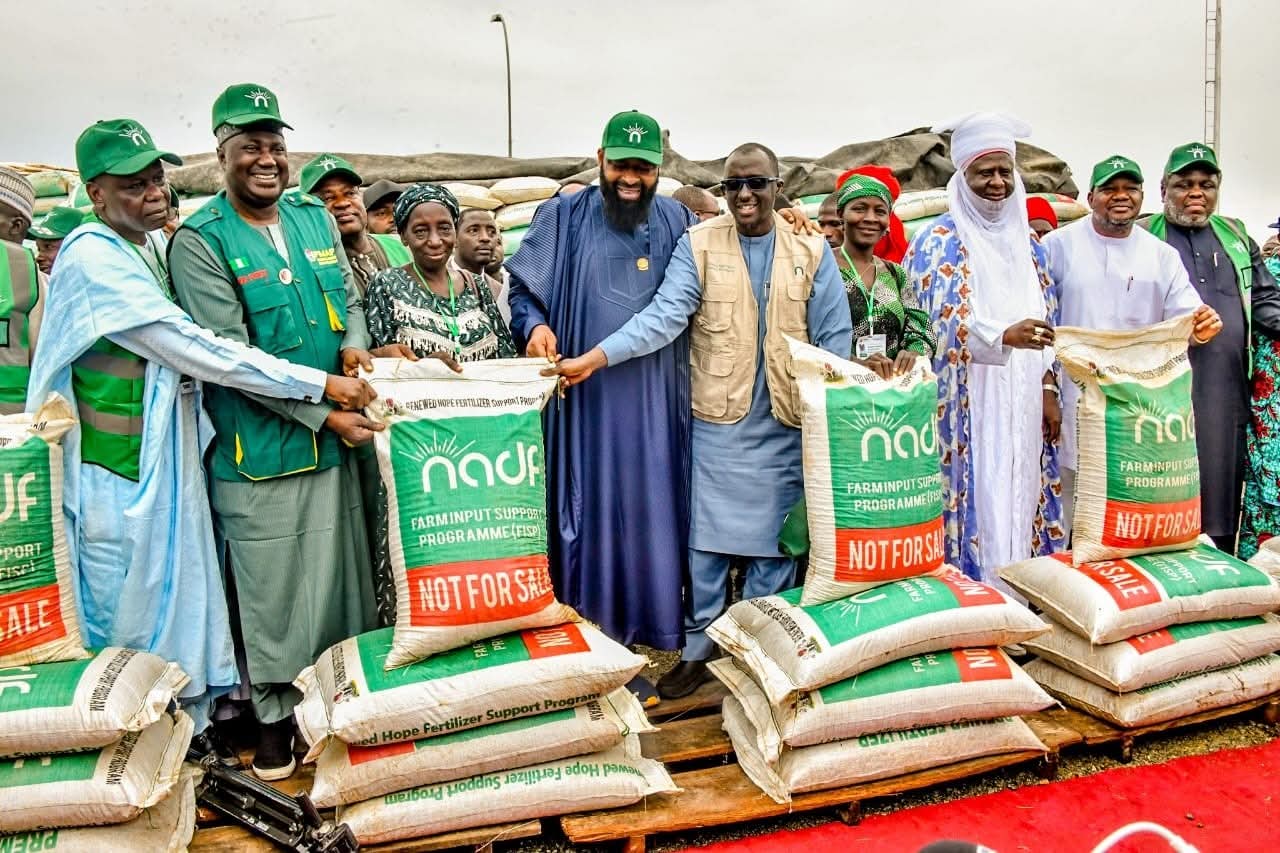
Agriculture remains the backbone of Nigeria’s economy, employing a significant portion of the population and serving as a critical pillar for national food security. Recognizing the pivotal role of adequate farm inputs, particularly fertilizers, the Nigerian government has consistently rolled out initiatives to support farmers. The upcoming FG 2026 Fertilizer Distribution, spearheaded by the National Agricultural Development Fund (NADF) and aligned with the Renewed Hope Fertilizer and Inputs Supply Program (FISP), represents a significant stride in this direction.
This comprehensive guide aims to demystify the application process, providing Nigerian farmers with a clear, step-by-step roadmap to access these vital resources for the FG 2026 Fertilizer Distribution. Understanding the nuances of these programs, eligibility criteria, and the application procedure is crucial for maximizing your chances of success and contributing to a more prosperous agricultural sector.
Understanding the Framework: NADF and Renewed Hope FISP
Before delving into the application specifics, it’s essential to grasp the foundational programs that underpin the FG 2026 Fertilizer Distribution. These initiatives are designed to create a robust and sustainable agricultural ecosystem, moving beyond mere input distribution to foster long-term growth and resilience.
The National Agricultural Development Fund (NADF)
The National Agricultural Development Fund (NADF) is a critical institution established to mobilize resources and provide financial and technical support for the development of Nigeria’s agricultural sector. Its mandate is broad, encompassing various aspects of agricultural value chains, from research and development to infrastructure, mechanization, and input supply.
Key Objectives of NADF:
- Resource Mobilization: Attracting funding from government, private sector, and international partners for agricultural projects.
- Strategic Interventions: Implementing programs that address critical bottlenecks in agricultural production, processing, and marketing.
- Capacity Building: Supporting training, extension services, and technology transfer for farmers and agricultural professionals.
- Policy Implementation: Acting as a key vehicle for executing government agricultural policies and initiatives, including input distribution.
- Data Management: Building and maintaining a comprehensive database of farmers and agricultural activities to inform policy and resource allocation.
NADF plays a pivotal role in ensuring that programs like the fertilizer distribution are well-funded, strategically planned, and efficiently executed, leveraging its institutional capacity to reach a wide array of beneficiaries.
The Renewed Hope Fertilizer and Inputs Supply Program (FISP)
The Renewed Hope Fertilizer and Inputs Supply Program (FISP) is a flagship initiative of the current administration, embodying its commitment to revitalizing the agricultural sector and achieving food security. This program is designed to ensure timely and affordable access to essential farm inputs, with a particular focus on fertilizers, improved seeds, and other agro-chemicals.
Core Principles of Renewed Hope FISP:
- Affordability: Providing inputs at subsidized rates to reduce the financial burden on farmers.
- Accessibility: Ensuring that inputs are readily available across all geopolitical zones, minimizing logistical challenges.
- Timeliness: Distributing inputs at optimal planting seasons to maximize their impact on crop yields.
- Quality Assurance: Guaranteeing the supply of high-quality, genuine inputs to prevent losses due to substandard products.
- Transparency and Accountability: Implementing robust mechanisms to ensure fair distribution and prevent diversion or corruption.
The Renewed Hope FISP works in close synergy with NADF, utilizing NADF’s infrastructure and funding mechanisms to achieve its objectives. The FG 2026 Fertilizer Distribution is a direct manifestation of this collaborative effort, aiming to empower farmers with the tools they need for a bountiful harvest.
Why 2026? Planning for Future Agricultural Success
The focus on 2026 for the FG 2026 Fertilizer Distribution program highlights a proactive and forward-looking approach by the government. Agricultural planning often requires long lead times, encompassing budgeting, procurement, logistics, and farmer sensitization. By announcing the 2026 program now, it allows:
- Strategic Procurement: Bulk purchasing of fertilizers at potentially better rates and ensuring adequate stock.
- Logistical Optimization: Planning for efficient transportation and storage across the vast geographical spread of Nigeria.
- Farmer Preparedness: Giving farmers ample time to register, update their details, and understand the application process.
- Data-Driven Allocation: Utilizing current and projected agricultural data to determine needs and allocate resources effectively.
This forward planning aims to minimize the delays and challenges that have sometimes plagued past input distribution programs, ensuring a smoother and more impactful intervention for the 2026 farming season.
The Imperative of the FG 2026 Fertilizer Distribution for Farmers
Access to high-quality, affordable fertilizer is a game-changer for Nigerian farmers. The government’s intervention through programs like the FG 2026 Fertilizer Distribution under NADF and Renewed Hope FISP offers a multitude of benefits that extend beyond individual farm productivity to national food security and economic stability.
Boosting Yields and Productivity
Fertilizers provide essential nutrients that are often depleted from the soil after repeated cropping. By participating in the FG 2026 Fertilizer Distribution, farmers can significantly enhance crop growth, vigor, and ultimately, yield. For a farmer, this means more produce from the same plot of land, directly translating to increased income and food availability.
Reducing Production Costs
The cost of agricultural inputs, especially fertilizers, can be a major barrier for smallholder farmers. Government-subsidized programs like the FG 2026 Fertilizer Distribution drastically reduce this financial burden. By providing fertilizers at below-market rates, farmers can invest their limited capital in other critical areas like improved seeds, labor, or pest control, making farming more profitable and sustainable.
Ensuring Food Security
At a national level, widespread access to affordable fertilizer through the FG 2026 Fertilizer Distribution directly contributes to food security. Higher yields across numerous farms lead to an overall increase in food production, reducing reliance on imports and stabilizing food prices. This is crucial for feeding a rapidly growing population and mitigating the impact of global food price volatility.
Economic Empowerment and Poverty Alleviation
Increased farm income, often boosted by initiatives like the FG 2026 Fertilizer Distribution, empowers farmers and their families, lifting them out of poverty. It enables them to invest in education, healthcare, and other necessities, improving their quality of life. Furthermore, a thriving agricultural sector creates jobs along the entire value chain, from input supply and transportation to processing and marketing, stimulating rural economies.
Soil Health and Sustainability
While often associated with chemical inputs, responsible fertilizer use, especially when combined with good agricultural practices, can contribute to soil health. By ensuring balanced nutrient availability, fertilizers can help maintain soil fertility over time, preventing degradation and supporting sustainable farming practices. The FG 2026 Fertilizer Distribution programs often include guidance on proper application to maximize benefits and minimize environmental impact.
Eligibility Criteria: Who Qualifies for the 2026 Program?
To ensure that the fertilizer reaches genuine farmers who need it most, specific eligibility criteria are put in place for the FG 2026 Fertilizer Distribution. While precise details might be updated closer to the application period, the following are generally consistent requirements for government agricultural intervention programs in Nigeria.
1. Registered Farmers
This is arguably the most crucial criterion. Applicants must be genuinely registered farmers within the national farmer database. This database, often managed by the Federal Ministry of Agriculture and Rural Development (FMARD) through platforms like FMARDIS, helps the government identify, track, and provide targeted support to agricultural producers.
- Existing Farmers: If you’ve previously benefited from government programs, ensure your registration details are up-to-date.
- New Farmers: You will likely need to register with the relevant agricultural agencies (e.g., local government agricultural departments, state ADPs) to obtain a Unique Farmer Identification (UFID) number.
2. Farm Size and Location
Programs often specify minimum or maximum farm sizes to ensure equitable distribution. Smallholder farmers are typically prioritized, but larger commercial farms might also be included under specific categories.
- Location: The farm must be located within Nigeria. Some programs might prioritize specific states or geopolitical zones based on agricultural potential or food security needs.
- Proof of Land: Applicants must be able to demonstrate legitimate access to farmland, whether through ownership (e.g., land title, customary rights) or a valid lease agreement.
3. Crop Type
While many programs support a wide range of crops, priority is often given to staple food crops critical for national food security. These commonly include:
- Maize
- Rice
- Cassava
- Sorghum
- Millet
- Wheat
- Soybeans
- Groundnuts
- Yam
Farmers cultivating these crops are usually at an advantage.
4. Cooperative Membership
Membership in a registered farmers’ cooperative society is often a significant advantage, and sometimes even a mandatory requirement. Cooperatives facilitate easier communication, verification, and distribution for government agencies. They also empower farmers through collective bargaining and shared resources.
5. Valid Identification
Applicants must possess valid national identification documents. This typically includes:
- National Identity Number (NIN)
- Bank Verification Number (BVN)
- A valid government-issued ID card (e.g., National ID card, Driver’s License, International Passport).
These are essential for verifying identity and preventing fraudulent applications.
6. Active Participation in Farming
Applicants should be actively engaged in farming activities. This might be assessed during verification processes, where extension agents visit farms to confirm cultivation and readiness for the planting season.
A Step-by-Step Guide to Applying for FG 2026 Fertilizer Distribution
Applying for the FG 2026 Fertilizer Distribution requires careful attention to detail and adherence to the outlined procedures. While the specific portal and exact dates will be announced by NADF and the Ministry of Agriculture closer to 2026, the general steps below provide a robust framework.
Step 1: Farmer Registration and Unique Farmer Identification (UFID)
This is the foundational step. If you are not already registered in the national farmer database, you must do so. This foundational step is crucial for anyone looking to benefit from the FG 2026 Fertilizer Distribution.
- Check Your Status: If you’ve previously applied for government agricultural programs, confirm your registration status and ensure your details are current.
- New Registration: Visit your local government’s agricultural department, state Agricultural Development Program (ADP) office, or designated NADF/FMARD registration centers. You may also be able to register online via official portals like FMARDIS (Federal Ministry of Agriculture and Rural Development Information System) or a dedicated NADF portal when announced.
- Required Information for Registration: You will typically need to provide personal details, biometric data (fingerprints, photograph), farm location (GPS coordinates if possible), farm size, types of crops cultivated, and details of any farmer cooperative you belong to.
- Obtain Your UFID: Upon successful registration, you will be issued a Unique Farmer Identification (UFID) number. This number is crucial for all future interactions with government agricultural programs.
Step 2: Accessing the Official Application Portal
Once the application window opens (which will be widely publicized for the FG 2026 Fertilizer Distribution), you will need to access the official portal.
- Official Sources: Always rely on official government websites (e.g., NADF website, Federal Ministry of Agriculture and Rural Development website) or reputable news outlets for links to the application portal.
- Beware of Scams: Be extremely cautious of unofficial links or requests for payment outside the official process. The government typically does not charge application fees for such programs.
- Create an Account: If it’s your first time using the specific application portal, you may need to create an account using your UFID, NIN, and a valid email address/phone number.
Step 3: Completing the Online Application Form
The application form for the FG 2026 Fertilizer Distribution will require detailed information about you and your farming operations. Fill it out accurately and completely.
- Personal Information: Your full name, contact details (phone, email), NIN, BVN, and UFID.
- Farm Information:
- Location: State, Local Government Area (LGA), community, and specific farm address or nearest landmark.
- GPS Coordinates: If available, providing precise GPS coordinates of your farm boundary can significantly aid verification.
- Farm Size: Specify the total cultivable area in hectares or acres.
- Ownership/Lease: Indicate if you own the land or lease it, and provide details of the proof.
- Crop Information:
- Intended Crops: List the specific crops you plan to cultivate during the 2026 season.
- Planting Season: Indicate the expected planting season (e.g., wet season, dry season).
- Previous Harvests: You might be asked about your previous season’s yields to assess your farming capacity.
- Fertilizer Requirements:
- Type: Specify the type of fertilizer you need (e.g., NPK 20-10-10, Urea, NPK 15-15-15, SSP). If unsure, consult with an extension agent.
- Quantity: Indicate the estimated quantity in bags or kilograms, based on your farm size and crop type. Be realistic and avoid over-requesting, as this can raise flags during verification.
- Declaration: You will typically need to agree to terms and conditions, declaring that all information provided is true and accurate.
Step 4: Uploading Supporting Documents
Most online applications for the FG 2026 Fertilizer Distribution require digital copies of supporting documents. Ensure these are clear, legible, and in the specified file formats (e.g., PDF, JPEG).
- National ID: Scanned copy of your NIN slip or a valid government-issued ID.
- Proof of Land Ownership/Lease: Scanned copy of your land title, customary land document, or a signed lease agreement.
- Passport Photograph: A recent, clear passport-sized photograph.
- Farm Photographs: Some applications may request geotagged photos of your farm, showing current activity or readiness for cultivation.
- Cooperative Membership Certificate: If applicable, a scanned copy of your cooperative membership certificate.
Step 5: Review, Submission, and Confirmation
Before submitting your application for the FG 2026 Fertilizer Distribution, meticulously review all the information you have entered and the documents you have uploaded.
- Accuracy Check: Ensure there are no typos, incorrect dates, or mismatched information.
- Submission: Click the “Submit” button once you are confident everything is correct.
- Confirmation: After submission, you should receive a confirmation message or email with an application ID or reference number. Save this number carefully, as it will be essential for tracking your application status.
Step 6: Verification and Validation
After submission, your application for the FG 2026 Fertilizer Distribution will undergo a rigorous verification process.
- Desk Review: Initial screening of your application details and uploaded documents.
- Field Verification: Agricultural extension agents or designated officials may visit your farm to physically verify the information provided in your application (farm size, crop type, active farming status). Be prepared to cooperate with these officials.
- Importance of Accuracy: Discrepancies between your application and the verified information can lead to disqualification.
Step 7: Notification of Successful Application
If your application for the FG 2026 Fertilizer Distribution is successful, you will be notified through official channels.
- Communication Channels: Notifications are typically sent via SMS to your registered phone number, email, or through updates on the application portal.
- Instructions: The notification will include details on where and when to collect your allocated fertilizer.
Step 8: Fertilizer Collection and Distribution
This is the final stage where you receive your allocated inputs from the FG 2026 Fertilizer Distribution.
- Designated Collection Centers: Fertilizers are usually distributed at specific collection points, such as local government agricultural offices, designated warehouses, or cooperative hubs.
- Required for Collection: You will typically need to present your application confirmation slip/ID, your national ID, and possibly your UFID.
- Verification at Collection: Your identity and allocation will be verified at the collection point before the fertilizer is released to you.
- Transportation: Be prepared to arrange for the transportation of your allocated fertilizer from the collection center to your farm.
Essential Documents for Your Application
- Strategic Secretarial Solutions: 7 Essential & Powerful Ways to Mitigate Governance Risks
- How to Create a TIN in Nigeria: A Step-by-Step Guide
- YEIDEP Batch B Registration 2026 Portal: Your Essential Guide to Apply
To make the application process for the FG 2026 Fertilizer Distribution smoother, gather these documents in advance and prepare digital copies (scans or clear photographs) if applying online.
- National Identity Number (NIN) / Bank Verification Number (BVN): Crucial for identity verification.
- Proof of Land Ownership or Lease Agreement:
- Land title deeds.
- Customary land documents.
- Signed and dated lease agreement from the landowner.
- Affidavit of land ownership/usage (in some cases, for communal lands).
- Passport Photograph: A recent, clear passport-sized photo with a white or off-white background.
- Farm Photographs: Recent photos of your farm, preferably geotagged, showing the current state of cultivation or readiness for planting. This helps verify active farming.
- Cooperative Membership Certificate (if applicable): Proof of registration with a recognized farmers’ cooperative society.
- Previous Season’s Harvest Records (optional but helpful): Any documentation demonstrating your historical yields can support your application and show farming experience.
- Valid Phone Number and Email Address: For communication and notifications.
Maximizing Your Chances: Tips for a Successful Application
Securing your share of the FG 2026 Fertilizer Distribution requires more than just meeting the basic criteria. Employing these tips can significantly enhance your application’s success.
1. Early Bird Advantage
Don’t wait until the last minute. As soon as the application window opens for the FG 2026 Fertilizer Distribution, begin your application. Early submission allows for quicker processing and potentially addresses any unforeseen issues before the deadline. It also demonstrates your seriousness and preparedness.
2. Accuracy is Key
Double-check every piece of information you provide. Inconsistencies or errors, no matter how small, can lead to delays or disqualification. Ensure that your name, NIN, farm size, and location details match across all documents and the application form.
3. Leverage Cooperatives
If you are not already a member, consider joining a registered farmers’ cooperative. Government programs like the FG 2026 Fertilizer Distribution often prioritize cooperative members because it simplifies logistics, verification, and distribution. Cooperatives also offer a platform for shared knowledge and collective support.
4. Stay Connected and Informed
Follow official government channels (NADF, FMARD, state ADPs, reputable news outlets) for updates. Attend local farmers’ meetings or sensitization programs organized by agricultural extension agents. Information is power, and staying informed will ensure you don’t miss crucial announcements or deadlines regarding the FG 2026 Fertilizer Distribution.
5. Seek Guidance from Extension Agents
Agricultural extension agents are invaluable resources. They can provide advice on soil testing, appropriate fertilizer types and quantities for your crops and soil, and assist with understanding the application process for the FG 2026 Fertilizer Distribution. They are often the first point of contact for farmers regarding government programs.
6. Prepare Your Documents in Advance
Before the application portal opens, gather all necessary documents and prepare their digital copies. This proactive approach will save you time and stress during the application period for the FG 2026 Fertilizer Distribution.
7. Be Prepared for Verification
As mentioned, field verification is a crucial step. Ensure your farm is accessible and that you can readily provide any additional information or clarification requested by verification officers. Your cooperation can expedite the process for the FG 2026 Fertilizer Distribution.