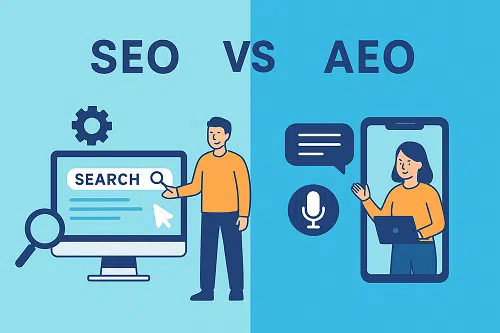
The world of search engine optimization (SEO) is in constant flux, but perhaps no shift has been as profound as the advent of artificial intelligence. With Google’s Search Generative Experience (SGE), OpenAI’s ChatGPT, Microsoft’s Copilot, and other AI models increasingly influencing how users find and consume information, the traditional SEO playbook needs a serious update. Keyword stuffing and superficial content are dead; the AI era demands a new breed of content: deeply authoritative, genuinely helpful, and semantically rich.
At our core, we believe that the best content for AI search is, paradoxically, the best content for humans. AI models are trained on vast datasets of human-generated text, and their goal is to understand and synthesize information in a way that best serves human intent. This means our content strategies must evolve from simply targeting keywords to comprehensively addressing user needs, demonstrating expertise, and building trust.
This guide outlines our step-by-step process for building an SEO Content Roadmap for AI Search. It’s a holistic approach that prioritizes user value, leverages semantic understanding, and prepares your content to thrive in a world where AI is the gatekeeper of information.
The Evolving Landscape of AI Search and SEO Content
For years, SEO was largely about understanding algorithms, optimizing for specific keywords, and building backlinks. While these elements remain important, AI has introduced a new layer of complexity and opportunity.
Consider Google’s Search Generative Experience (SGE), which provides AI-generated summaries and answers directly within the search results. Users might get their questions answered without ever clicking through to a website. This changes the game: your content needs to be so authoritative, so comprehensive, and so well-structured that it’s chosen as a source for these AI summaries, or it needs to provide such deep value that users want to click through for more.
AI models are not just matching keywords; they are understanding intent, context, and the relationships between concepts. They prioritize content that displays clear expertise, experience, authoritativeness, and trustworthiness (E-E-A-T). They reward content that answers complex questions thoroughly, anticipates follow-up questions, and provides a holistic understanding of a topic.
The goal, therefore, is no longer just to rank for a keyword, but to be the definitive resource for a topic, recognized by both human users and advanced AI systems.
Core Principles of AI-Ready SEO Content
Before diving into the tactical steps, it’s crucial to internalize the foundational principles that guide our content creation in the AI era. These are the non-negotiables:
User-Centricity Above All
This has always been an SEO mantra, but it’s more critical than ever. AI models are designed to serve users. If your content genuinely solves problems, answers questions, and provides value to your target audience, it’s inherently AI-friendly. Focus on understanding user intent – not just what they type, but why they’re searching.
Authority & Expertise (E-E-A-T)
Google’s emphasis on E-E-A-T (Experience, Expertise, Authoritativeness, Trustworthiness) is amplified by AI. AI systems are designed to surface reliable information. Your content must clearly demonstrate:
- Experience: Do you have firsthand knowledge of the topic? Share practical insights, case studies, and personal anecdotes.
- Expertise: Is the content written by or reviewed by a subject matter expert?
- Authoritativeness: Is your website recognized as a go-to source in your niche? Do other authoritative sites link to you?
- Trustworthiness: Is your information accurate, transparent, and unbiased? Do you cite sources?
Comprehensiveness & Depth
AI models love thoroughness. Instead of shallow articles that skim the surface, create long-form, in-depth pieces that cover a topic from multiple angles. Anticipate related questions and address them within your content. This doesn’t mean rambling; it means being exhaustive in your coverage while remaining concise and clear.
Clarity & Conciseness
While depth is important, so is clarity. AI systems need to parse information efficiently to generate summaries or answer specific questions. Use clear language, short sentences, and logical paragraph breaks. Avoid jargon where possible, or explain it thoroughly. Well-structured content with clear headings and subheadings is easier for AI to digest.
Originality & Value
The internet is awash with generic, rehashed content. AI can quickly identify and de-prioritize content that offers no new insights or unique perspectives. Strive to provide original research, unique viewpoints, fresh data, or innovative solutions. Ask yourself: “Does this content genuinely add value that isn’t easily found elsewhere?”
Semantic Richness
Move beyond exact keyword matching. AI understands the meaning behind words and phrases. Incorporate related concepts, synonyms, and latent semantic indexing (LSI) keywords naturally. This helps AI understand the full context and breadth of your content’s topic.
Step 1: Foundational Research & Audience Understanding
The first step in building any effective content roadmap, especially for the AI era, is deep foundational research. This isn’t just about keywords; it’s about truly understanding the ecosystem you’re operating in.
Define Your Target Audience (Again, but Deeper)
In the AI era, understanding your audience goes beyond demographics. You need to delve into their psychographics, their pain points, their aspirations, and their information-seeking behaviors.
- Buyer Personas: Develop detailed personas that include not just who they are, but what problems they face, what questions they ask, what solutions they seek, and what kind of language they use.
- User Journeys: Map out the typical journey your audience takes, from initial awareness to conversion. What information do they need at each stage?
- Conversational Queries: Think about how your audience would ask questions if they were talking to an AI assistant. These are often longer, more natural language queries than traditional keywords. For example, instead of “best CRM,” they might ask, “What is the best CRM for a small business with a sales team of five that integrates with QuickBooks?”
Competitor Analysis (AI-Era Lens)
Traditional competitor analysis focuses on keyword rankings and backlinks. For the AI era, we expand this to understand how competitors are establishing E-E-A-T and comprehensiveness.
- Topical Authority: Identify competitors who are consistently ranking for broad topics, not just individual keywords. What makes them authoritative?
- Content Formats: What types of content are they using? Long-form guides, interactive tools, videos, case studies?
- Content Gaps: Where are your competitors falling short? Are there specific sub-topics they haven’t covered in depth? Are their articles outdated or lacking in practical experience? These are your opportunities to create superior content.
- E-E-A-T Signals: Analyze how competitors demonstrate expertise. Do they have author bios with credentials? Do they cite sources? Do they have a strong backlink profile from reputable sites?
Keyword Research (Intent-Based & Semantic)
Keyword research remains vital, but the approach shifts from singular terms to understanding topical clusters and user intent.
- Topic Clusters, Not Just Keywords: Instead of chasing individual keywords, identify broad topics your audience cares about. Then, find all the related sub-topics and questions. For example, “content marketing” is a broad topic. Sub-topics might include “content strategy,” “blog post ideas,” “SEO content writing,” “content promotion,” “content analytics,” etc.
- Long-Tail & Conversational Queries: Use tools like Ahrefs, SEMrush, Google Keyword Planner, and even “People Also Ask” sections in Google to find longer, more specific, and conversational queries. These are excellent for understanding intent and for targeting SGE-like answers.
- Intent Categorization: For each keyword or topic, categorize its intent:
- Informational: “How does SEO work?” “What is content marketing?” (Often best for blog posts, guides)
- Navigational: “Google Analytics login,” “HubSpot pricing page” (Often best for specific pages on your site)
- Commercial Investigation: “Best CRM software,” “SEO tools comparison” (Often best for reviews, comparison guides)
- Transactional: “Buy running shoes,” “Sign up for free trial” (Often best for product/service pages)
Understanding intent helps you choose the right content format and approach.
Step 2: Topic Ideation & Cluster Mapping
With foundational research complete, the next step is to translate those insights into a structured content plan. This is where we move from individual articles to interconnected content ecosystems.
Brainstorming Core Topics
Based on your audience’s pain points, business goals, and keyword research, identify the overarching themes or “pillar topics” that are central to your niche. These should be broad enough to encompass many sub-topics but specific enough to be relevant to your audience.
- Example: If you’re an accounting firm, core topics might include “Small Business Tax Planning,” “Personal Finance Management,” “Auditing & Compliance.”
- Prioritization: Prioritize topics based on search volume, business value, competitive landscape, and your ability to provide authoritative content.
Developing Topic Clusters (Pillar & Supporting Content)
This is the cornerstone of AI-era SEO content strategy. Topic clusters organize your content around a central, comprehensive “pillar page” that links to multiple, more detailed “cluster content” articles.
- Pillar Pages:
- Purpose: A comprehensive, high-level guide on a broad topic. It aims to answer most common questions about the topic in a general sense.
- Characteristics: Long-form (2,000+ words), covers all facets of the topic, acts as a central hub. It links out to more detailed cluster content and links back to itself from those articles.
- Example: “The Ultimate Guide to Small Business Tax Planning”
- Cluster Content:
- Purpose: Detailed articles that explore specific sub-topics mentioned in the pillar page. Each piece of cluster content delves deeply into one aspect.
- Characteristics: Shorter than pillar pages but still in-depth (800-1500 words), focused on a single long-tail keyword or specific question. Critically, each cluster piece links back to the pillar page.
- Example (for “Small Business Tax Planning” pillar):
- “Understanding Deductible Business Expenses”
- “How to Choose the Right Business Structure for Tax Benefits”
- “Navigating Sales Tax for E-commerce Businesses”
- “Year-End Tax Planning Strategies for Startups”
- Why Clusters are Crucial for AI:
- Demonstrates Authority: By creating a network of interconnected content on a topic, you signal to AI that you are a comprehensive authority on that subject.
- Semantic Understanding: AI can better understand the relationships between different concepts on your site.
- Improved User Experience: Users can easily navigate from a broad overview to specific details.
- Internal Linking Power: The strong internal linking structure within clusters boosts the SEO value of all related pages.
Identifying Content Gaps
As you map out your clusters, you’ll inevitably identify areas where your current content is lacking or where competitors are strong and you are weak. These gaps represent opportunities to create new, authoritative content that fills a specific need.
- Look for questions your audience is asking that you haven’t answered.
- Identify sub-topics within your pillar areas that lack dedicated, in-depth articles.
- Analyze competitor content for topics they cover that you don’t.
Step 3: Content Outline & Structure for AI Search
Once you have your topics and clusters mapped out, the next critical step is to outline each piece of content with an “AI-first” mindset. This means structuring your content so it’s easily digestible and understandable by both humans and AI models.
The “AI-First” Outline
A well-structured outline is your blueprint for success. It ensures logical flow, comprehensive coverage, and optimal readability for AI.
- Clear Introduction: Start with a strong hook that immediately states the problem the content will solve and the value it will provide. For AI, this means clearly defining the topic and its scope.
- Logical Flow & Headings (H2, H3, H4): Use a hierarchical heading structure to break down complex topics into manageable sections.
- H2s: Main sections of your article.
- H3s: Sub-sections within H2s.
- H4s: Further sub-divisions.
This structure helps AI understand the relationships between different parts of your content and makes it easier to extract specific information for summaries.
- Answer the Core Question Early: For informational content, provide a direct answer to the main question within the first few paragraphs. This is crucial for featured snippets and SGE answers, where AI often pulls concise definitions or explanations from the beginning of an article.
- In-Depth Sections: Dedicate sufficient space to explain each sub-topic thoroughly. Don’t just list points; elaborate on them with details, context, and practical implications.
- Examples, Case Studies, Data: Support your claims with concrete evidence. AI loves factual information. Use real-world examples, anonymized case studies, and statistical data to bolster your authority and trustworthiness.
- FAQs Section: Include a dedicated “Frequently Asked Questions” section. This directly addresses common user queries, making your content a prime candidate for SGE’s conversational nature. Structure these as direct question-and-answer pairs.
- Concise Conclusion: Summarize the key takeaways and provide a clear call to action (if appropriate). Reiterate the main value proposition of the content.
Optimizing for Featured Snippets & SGE Snapshots
Specific formatting can significantly increase your chances of being featured in AI-generated summaries and snippets.
- Definitions: Provide clear, concise definitions for key terms, often in a paragraph immediately following an H2 or H3.
- Lists: Use numbered or bulleted lists for steps, ingredients, benefits, or features. These are highly digestible for AI.
- Tables: Present comparative data, pros and cons, or structured information in tables.
- Direct Answers: When answering a question, provide the most direct and concise answer first, then elaborate.
- Example Question: “What is the capital of France?”
- Direct Answer: “The capital of France is Paris.”
- Elaboration: “Paris, also known as the ‘City of Light,’ is a major European city and a global center for art, fashion, gastronomy, and culture…”
Semantic Markup & Schema
Structured data (Schema markup) helps search engines and AI understand the context and meaning of your content.
- Article Schema: For blog posts and articles.
- FAQPage Schema: Essential for your FAQ sections, helping AI understand the question-answer pairs.
- HowTo Schema: For step-by-step guides.
- Review Schema: For product or service reviews.
Implementing relevant schema markup provides explicit signals to AI about the nature and purpose of your content, increasing its chances of being correctly interpreted and surfaced.
Step 4: Content Creation & Quality Control
This is where the rubber meets the road. The content creation phase must be guided by the principles of E-E-A-T and a deep understanding of how AI processes information.
Writing for E-E-A-T
Every piece of content you create should be a testament to your brand’s expertise and trustworthiness.
- Expertise:
- Demonstrate deep knowledge of the subject matter.
- Cite reputable sources, studies, and industry reports.
- Include quotes from recognized experts in your field.
- Ensure factual accuracy and up-to-date information.
- Experience:
- Share personal anecdotes, real-world examples, and case studies.
- Explain how you (or your team) have practically applied the advice.
- Provide actionable tips and step-by-step instructions based on hands-on experience.
- Authoritativeness:
- Showcase author bios with relevant credentials and experience.
- Link to other authoritative pages on your site (internal linking).
- Encourage backlinks from other reputable websites.
- Build a strong brand reputation in your niche.
- Trustworthiness:
- Be transparent about your sources and any potential biases.
- Maintain a professional tone and avoid sensationalism.
- Ensure your website has clear contact information, privacy policy, and terms of service.
- Regularly update and audit your content for accuracy.
Leveraging AI Tools (Responsibly)
AI content generation tools are powerful, but they are assistants, not replacements for human creativity and critical thinking. For deeper insights into leveraging such tools, consider exploring AI SEO power directly inside WordPress.
- Brainstorming & Outlining: Use AI to generate initial ideas, expand on outlines, or suggest related topics.
- Grammar & Style Checks: AI tools can help refine language, correct grammar, and improve readability.
- Rephrasing & Summarization: Use AI to rephrase sentences for clarity or create concise summaries.
- Crucial Caveat: Never publish AI-generated content without thorough human review, editing, and fact-checking. AI models can “hallucinate” facts, produce generic content, or lack the nuanced understanding required for true E-E-A-T. Your unique voice, insights, and experience are what differentiate your content from the masses.
Multimedia Integration
Content isn’t just text. AI models are becoming increasingly adept at understanding and processing multimedia.
- Images & Infographics: Use high-quality, relevant images and custom infographics to break up text, illustrate complex concepts, and enhance engagement. Optimize images with descriptive alt text for accessibility and SEO.
- Videos: Embed videos (your own or relevant others) to explain concepts, provide tutorials, or offer expert interviews. Videos can significantly increase time on page.
- Interactive Elements: Quizzes, calculators, polls, or interactive charts can make content more engaging and provide unique value.
Internal Linking Strategy
A robust internal linking strategy is fundamental to topic clusters and crucial for AI.
- Connect Pillar to Cluster: Your pillar page should link to all relevant cluster content.
- Connect Cluster to Pillar: Each piece of cluster content should link back to the main pillar page.
- Connect Cluster to Cluster: Where relevant, link between related cluster articles to create a rich web of information.
- Anchor Text: Use descriptive anchor text that accurately reflects the linked page’s content. This helps both users and AI understand the context of the link.
Step 5: Content Optimization & Promotion
Creating great content is only half the battle. It needs to be optimized for search engines and actively promoted to reach its intended audience.
On-Page SEO (AI-Era Refresh)
While AI understands context, traditional on-page elements still play a role in signaling relevance.
- Title Tags & Meta Descriptions: Craft compelling titles and meta descriptions that accurately describe your