
Table of Contents
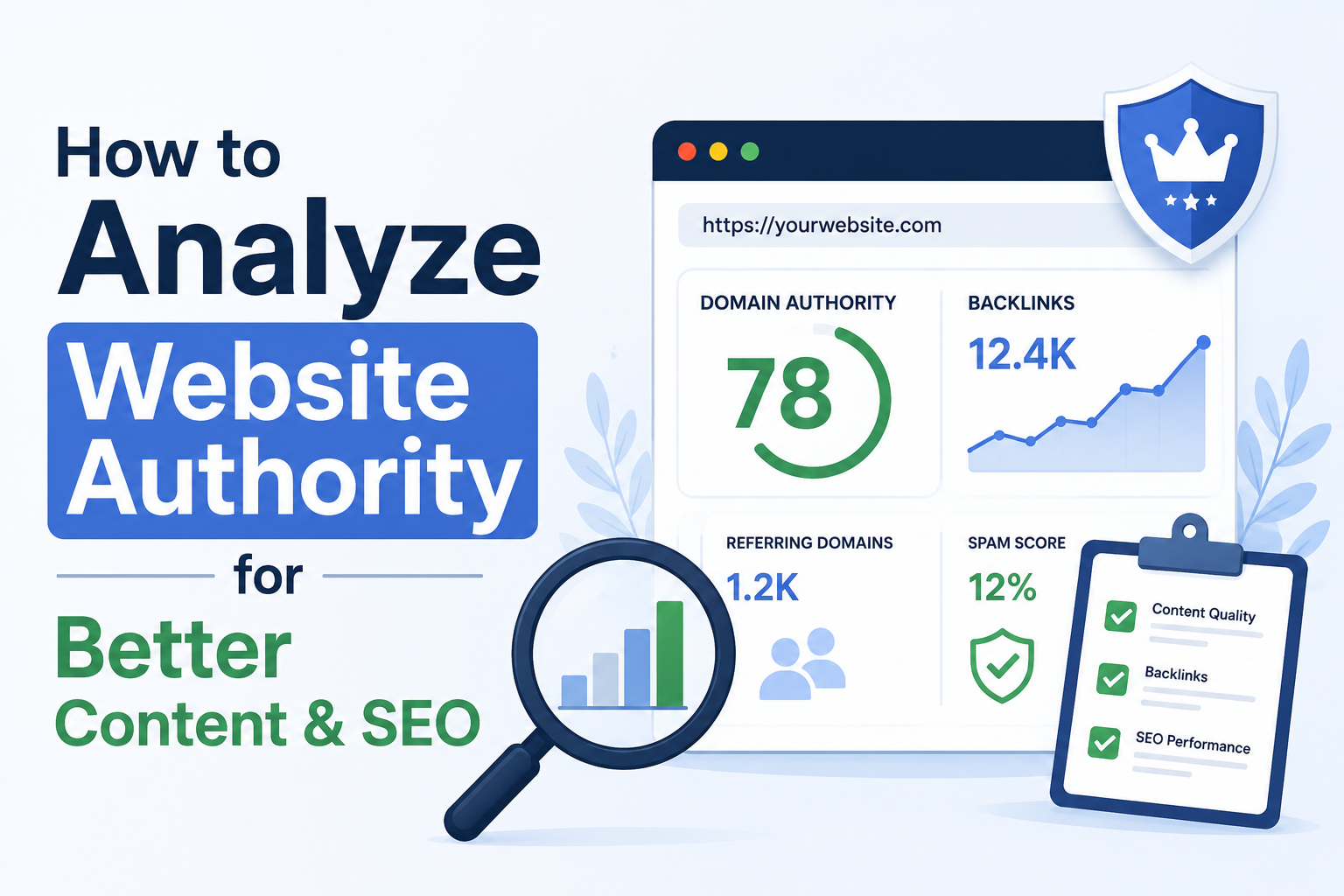
Website authority is one of the most talked-about, yet often misunderstood, concepts in the world of search engine optimization (SEO) and content marketing. It’s the invisible force that dictates how much trust and credibility search engines, particularly Google, place in your website. For content creators and marketers, understanding and strategically leveraging website authority isn’t just an advantage—it’s a necessity for achieving sustainable organic visibility and driving meaningful traffic.
In an increasingly competitive digital landscape, merely producing “good” content isn’t enough. Your content needs to be seen, trusted, and valued by both users and search engines. This is where website authority comes into play. By meticulously analyzing your own site’s authority, as well as that of your competitors, you can make informed decisions that shape your content strategy, improve your rankings, and ultimately, build a more robust and influential online presence.
This comprehensive guide will demystify website authority, explain its core metrics, show you how to analyze it effectively, and most importantly, demonstrate how to harness this knowledge to create content that not only ranks but also resonates with your target audience.
Demystifying Website Authority: More Than Just a Number
At its core, website authority is an estimation of a website’s overall strength, credibility, and influence within its niche. While Google itself doesn’t use a single “authority score” in its ranking algorithms, it certainly evaluates a multitude of signals that collectively contribute to what we perceive as authority. Think of it as a website’s reputation in the eyes of a search engine.
This reputation is built upon several pillars:
- Trustworthiness: Is the information accurate, reliable, and backed by credible sources?
- Expertise: Does the website demonstrate deep knowledge and understanding of its subject matter?
- Authoritativeness: Is the site recognized as a go-to source by other reputable sites and experts in the field?
These pillars align closely with Google’s E-A-T guidelines (Expertise, Authoritativeness, Trustworthiness), which are crucial for content quality, especially in “Your Money or Your Life” (YMYL) topics that can impact a user’s health, financial stability, or safety.
A website with high authority is generally perceived by search engines as a reliable source of information, making its content more likely to rank higher in search results. Conversely, a low-authority site, even with well-written content, may struggle to gain visibility due to a lack of trust signals.
Why Website Authority is a Cornerstone of Content Strategy
Understanding and actively working on website authority isn’t just an SEO best practice; it’s a fundamental element of a successful content strategy. Here’s why:
Direct Impact on Ranking Potential
Search engines prioritize authoritative sources. When you publish content on a high-authority domain, it has a significantly better chance of ranking for competitive keywords compared to content published on a low-authority domain. This means your content gets seen by more people, driving more organic traffic.
Competitive Intelligence
Analyzing the authority of your competitors provides invaluable insights. You can identify who is dominating your niche, understand the level of authority required to compete for specific keywords, and pinpoint opportunities where you might be able to outrank them by creating superior content or targeting less competitive terms.
Content Gap Analysis
By comparing your authority with that of top-ranking sites, you can identify “content gaps”—topics or keywords where your competitors are ranking, but you are not. More importantly, you can assess whether your current authority allows you to realistically compete for those terms, or if you need to build more authority first.
Link Acquisition and Distribution
High authority sites naturally attract more backlinks, which in turn further boosts their authority. Analyzing authority helps you identify potential link-building targets (sites to get links from) and understand how to create “linkable assets” that other authoritative sites will want to reference. It also informs your internal linking strategy, helping distribute authority across your own site.
Brand Credibility and Trust
Beyond search engines, a high-authority website builds trust with users. When visitors perceive your site as an authoritative source, they are more likely to engage with your content, share it, convert into customers, and return for future information.
Key Metrics for Quantifying Website Authority
Since Google doesn’t provide a public “authority score,” third-party SEO tools have developed their own proprietary metrics to estimate a website’s authority. While these scores are not Google’s, they are highly correlated with search performance and are excellent indicators for competitive analysis and strategic planning.
Domain Authority (DA) by Moz
What it is: Domain Authority (DA) is a search engine ranking score developed by Moz that predicts how likely a website is to rank in search engine result pages (SERPs). DA scores range from 1 to 100, with higher scores corresponding to a greater likelihood of ranking.
How it’s calculated: Moz calculates DA by evaluating multiple factors, including linking root domains, the number of total links, MozRank, and MozTrust. It uses a machine learning model to find a “best fit” algorithm that correlates with rankings across thousands of actual search results. Because it’s a machine learning model, your site’s DA can fluctuate as more data points are introduced or as other sites gain/lose links.
- Find and Fix 404 Errors: A Simple Guide
- Quantum Computing Explained: 10 Incredible Impacts on the Tech Industry
- Xiaomi 17T Pro: Amazing Review: The Ultimate Flagship Killer?
How to check it: You can check a website’s DA using Moz’s Link Explorer, the MozBar browser extension, or various other SEO tools that integrate Moz’s data.
Strengths & Limitations:
- Strengths: Widely recognized and used, good for comparative analysis, incorporates many link-related factors.
- Limitations: It’s a comparative metric, meaning a site’s DA can drop even if it hasn’t lost links, simply because other sites have gained more. It’s also not a direct Google ranking factor.
Domain Rating (DR) by Ahrefs
What it is: Domain Rating (DR) is an Ahrefs metric that shows the strength of a website’s backlink profile compared to all other websites in their database, on a 100-point logarithmic scale. The higher the DR, the stronger a site’s backlink profile.
How it’s calculated: DR is primarily based on the quantity and quality of unique referring domains linking to a website. It takes into account the DR of the linking domains and how many unique domains each of those linking domains link to. It’s a measure of the “link popularity” or “backlink power” of a domain.
How to check it: You can check DR using Ahrefs’ Site Explorer.
Strengths & Limitations:
- Strengths: Highly correlated with Google rankings, focuses purely on backlink strength, making it a clear indicator of link equity.
- Limitations: Exclusively focuses on backlinks, so it doesn’t directly account for on-page SEO, content quality, or user experience signals (though these indirectly influence backlink acquisition).
Trust Flow (TF) & Citation Flow (CF) by Majestic
What they are: Majestic SEO offers two primary flow metrics:
- Trust Flow (TF): Predicts how trustworthy a page is based on the quality of its backlinks. It measures the “trustworthiness” of a site based on the proximity of its links to a seed set of trusted sites. A higher TF indicates a more trustworthy backlink profile.
- Citation Flow (CF): Predicts how influential a URL is based on the number of sites linking to it. It’s a measure of link equity or “power” that a URL is passing. A higher CF indicates a higher quantity of backlinks.
How they’re calculated: Both metrics are calculated based on the number and quality of backlinks. TF specifically looks at the quality of those links by tracing them back to a manually reviewed seed set of highly trusted websites. CF is more about the sheer volume of links.
How to check them: You can check TF and CF using Majestic’s Site Explorer.
Relationship: Ideally, you want a high Trust Flow relative to your Citation Flow. A healthy ratio (e.g., TF close to CF, or TF > CF) suggests that your site is acquiring high-quality, trustworthy links. A high CF and low TF could indicate a large quantity of low-quality or spammy links.
Strengths & Limitations:
- Strengths: Excellent for evaluating link quality and identifying potentially spammy link profiles. TF is particularly good for assessing trustworthiness.
- Limitations: Less widely used than DA or DR, and can be harder to interpret without understanding the relationship between the two metrics.
Beyond the Metrics: Google’s Perspective & Holistic Factors
While third-party metrics are incredibly useful, it’s crucial to remember that Google doesn’t use them directly. Google’s assessment of authority is far more nuanced and encompasses a broader range of signals. These include:
- Backlink Profile Quality & Relevance: Not just the number of links, but their quality, relevance to your niche, anchor text diversity, and the authority of the linking domains. Google values links from highly relevant, authoritative sites far more than a multitude of low-quality, irrelevant links.
- Content Quality & Relevance: Is your content comprehensive, accurate, well-researched, unique, and truly helpful to users? Does it fully address the user’s search intent? High-quality content naturally attracts links and positive user engagement.
- User Experience (UX) Signals: How users interact with your site (dwell time, bounce rate, pages per session) can indirectly signal authority. If users spend a long time on your page and don’t immediately bounce back to search results, it suggests your content is valuable and authoritative.
- Brand Mentions & Sentiment: Unlinked brand mentions across the web, positive reviews, and general brand recognition contribute to perceived authority. Google understands entities and brand prominence.
- Technical SEO Health: A technically sound website (fast loading, mobile-friendly, secure, crawlable, indexable) provides a better user experience and allows search engines to easily access and understand your content, indirectly contributing to its authority.
- Domain Age: Older, established domains often have an inherent advantage, assuming they have maintained a good reputation over time.
Essential Tools for Authority Analysis
To effectively analyze website authority, you’ll need
Have any thoughts?
Share your reaction or leave a quick response — we’d love to hear what you think!
-
 0
0
-
 0
0
-
 0
0
-
 0
0
-
 0
0
-
 0
0
