Best Angel Investors for Web3Projects: How to Connect
Introduction
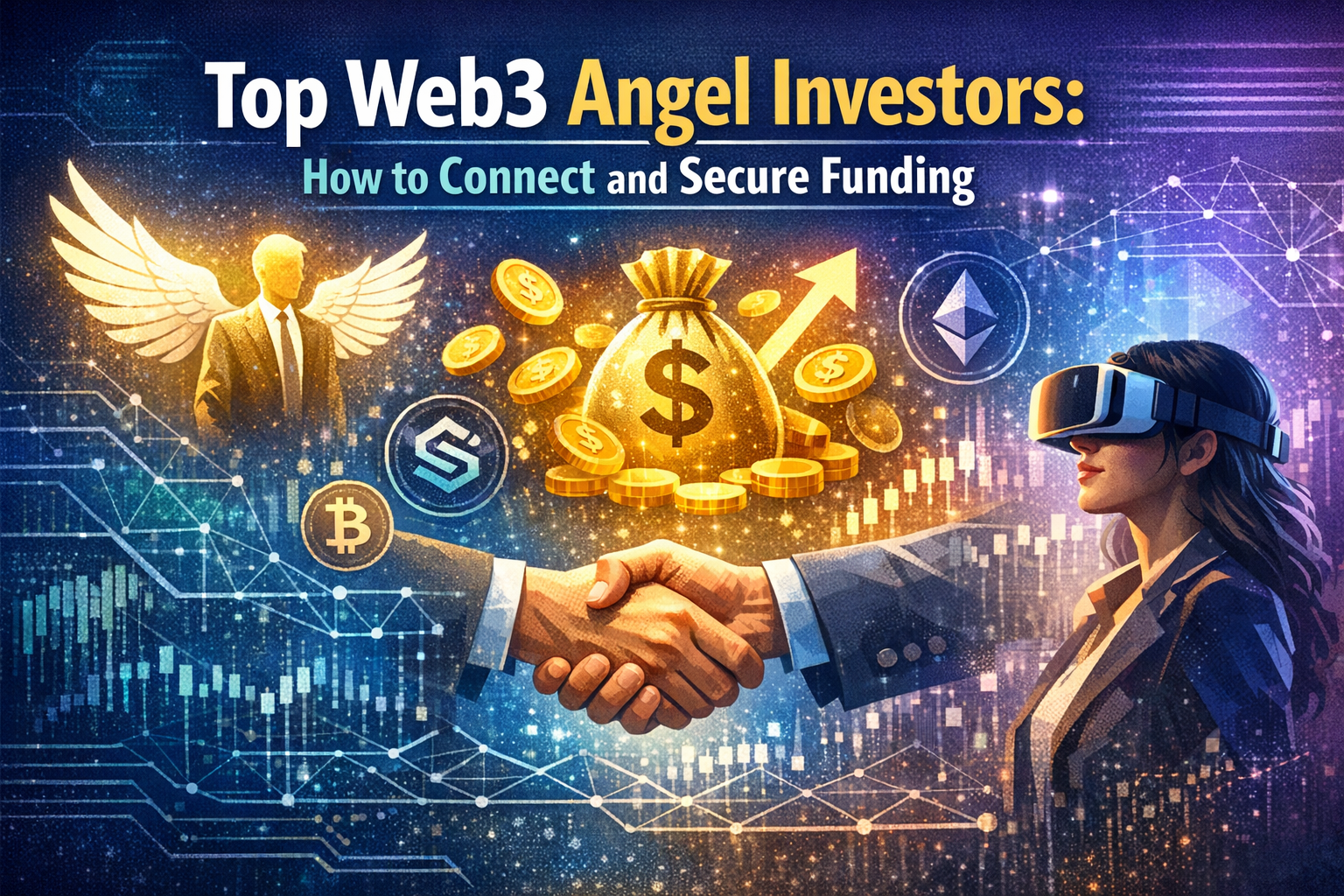
The Web3 ecosystem is exploding with innovation — from decentralized finance (DeFi) protocols to non‑fungible token (NFT) marketplaces and metaverse platforms. While venture capital firms often dominate headlines, many breakthrough projects get their first crucial boost from angel investors who bring not only capital but also strategic insight, network access, and credibility.
For founders, identifying the right angel backers and learning how to approach them can be the difference between a fledgling idea and a scalable, sustainable venture. This guide walks you through the landscape of Web3 angel investing, highlights some of the most influential individual investors, and provides a step‑by‑step playbook for connecting, pitching, and building lasting relationships.
Understanding Angel Investing in Web3
What Makes an Angel Investor “Web3‑Ready”?
- Technical Fluency – Comfort with blockchain fundamentals, smart contracts, and tokenomics.
- Domain Experience – Prior involvement in crypto, DeFi, NFTs, or related sectors.
- Network Access – Ability to introduce founders to developers, other investors, and ecosystem partners.
- Risk Tolerance – Willingness to back early‑stage, high‑volatility projects.
Unlike traditional angels who may focus on SaaS or consumer apps, Web3 angels often evaluate projects based on token design, community governance, and decentralization potential. Their due diligence therefore includes code audits, on‑chain data analysis, and community health metrics.
Why Angel Capital Matters
- Speed – Angels can move faster than institutional VCs, closing rounds in weeks rather than months.
- Flexibility – Terms are usually simpler, allowing for convertible notes, SAFE agreements, or even direct token swaps.
- Mentorship – Many angels are former founders or builders who can provide hands‑on guidance on product‑market fit, token launch strategy, and community growth.
Criteria for Selecting Angel Investors
Before reaching out, founders should evaluate potential angels against a set of criteria that align with their project’s stage and goals.
| Criterion | Why It Matters | How to Verify |
|---|---|---|
| Relevant Portfolio | Demonstrates experience with similar Web3 models. | Review the investor’s public portfolio on platforms like AngelList or Crunchbase. |
| Community Involvement | Active participation in Discord, Twitter, or DAO governance signals commitment. | Check the investor’s social media activity and contributions to open‑source projects. |
| Tokenomics Insight | Ability to advise on token distribution, vesting, and incentives. | Look for published articles, podcasts, or talks on token design. |
| Liquidity Options | Comfort with token‑based compensation or convertible instruments. | Discuss past investments that involved token swaps or equity‑token hybrids. |
| Geographic Reach | Access to regional ecosystems (e.g., Asia‑Pacific, LATAM) can accelerate growth. | Examine the investor’s travel schedule and regional partnerships. |
Top Angel Investors for Web3 Projects
Below is a curated list of some of the most respected individual angels actively investing in Web3. Each entry includes a brief background, notable investments, and a tip on how to approach them.
1. Balaji Srinivasan
- Background – Former general partner at Andreessen Horowitz, now a partner at the crypto‑focused firm a16z Crypto.
- Notable Investments – Coinbase, Uniswap, Compound, Zapper.
- Approach Tip – Emphasize technical depth and scalable token models. He values projects that can demonstrate a clear path to network effects.
2. Linda Xie
- Background – Co‑founder of Scalar Capital and former product lead at MakerDAO. – Notable Investments – Lido, Aave, Gnosis, Arweave.
- Approach Tip – Highlight governance mechanisms and community incentives. She often looks for projects with robust DAO structures.
3. Parker Harris
- Background – Co‑founder of Ethereum and early investor in Filecoin and Polkadot.
- Notable Investments – Filecoin, Polkadot, The Graph, Decentraland.
- Approach Tip – Showcase interoperability and cross‑chain strategies. He appreciates projects that can bridge ecosystems.
4. Michele “Miche” Greco
- Background – Former engineer at Consensys and angel investor in NFT marketplaces.
- Notable Investments – OpenSea, Rarible, Zora, SuperRare.
- Approach Tip – Provide clear metrics on user engagement and secondary market activity.
5. Santiago R.
- Background – Founder of CryptoVentures, a micro‑fund focusing on early‑stage DeFi.
- Notable Investments – SushiSwap, Curve Finance, Yearn Finance.
- Approach Tip – Demonstrate sound token distribution and risk mitigation (e.g., treasury diversification).
6. Arianna McFadden
- Background – Former head of Protocol Labs investments.
- Notable Investments – Filecoin, IPFS, Textile, Helium.
- Approach Tip – Emphasize decentralized infrastructure and developer ecosystems.
7. Jesse Powell
- Background – Co‑founder of Kraken; active angel in NFT gaming and metaverse.
- Notable Investments – Axie Infinity, The Sandbox, Decentraland.
- Approach Tip – Showcase play‑to‑earn economics and sustainable revenue streams.
How to Use This List – Treat each name as a starting point. Research their recent tweets, blog posts, and portfolio updates to tailor your outreach.
How to Build a Compelling Pitch for Web3 Angels
A Web3 pitch must blend traditional startup storytelling with blockchain‑specific nuance.
1. Start with the Problem, Not the Tech
- Example: “Current NFT marketplaces charge 10 % fees, deterring artists from minting multiple pieces.”
- Why: Angels need to see a clear market pain point before evaluating technical solutions.
2. Quantify the Market
- Use on‑chain metrics (e.g., active wallets, transaction volume) and industry reports to back up size estimates.
- Include TAM/SAM/SOM breakdowns that reflect both crypto‑native and mainstream audiences.
3. Explain the Token Model Clearly
- Outline purpose, distribution, vesting, and utility.
- Highlight governance mechanisms that empower token holders.
4. Show Traction with Real Data
- Metrics: active users, daily transaction count, token velocity, community growth rate.
- Proof: audited smart contracts, partnership announcements, listings on reputable exchanges. ### 5. Present the Team
- Emphasize technical credibility (e.g., prior smart‑contract audits, open‑source contributions).
- Highlight domain expertise (e.g., previous DeFi product launches).
6. Financial Projections with Sensitivity Analysis
- Provide revenue forecasts (e.g., platform fees, staking yields).
- Include scenario analysis (base, bull, bear) to demonstrate awareness of market volatility.
7. Ask for the Specific Amount and Use of Funds
- Be explicit: “We are raising $250 k at a $5 M post‑money valuation to fund smart‑contract development, community marketing, and audit costs.”
Leveraging Web3 Communities and Platforms
1. Discord & Telegram
- Most Web3 investors monitor project‑specific Discord servers for real‑time activity.
- Action: Pin a well‑structured “Investor FAQ” channel and keep announcements concise.
2. Twitter (X) & Threads
- Investors often discover angels through thought‑leadership threads.
- Tip: Share bite‑size insights, thread out detailed project updates, and tag relevant investors when appropriate.
3. DAO Governance Portals
- Participation in governance votes can signal commitment and attract angel attention. – Strategy: Propose collaborations that align with investor interests (e.g., co‑funding a treasury).
4. Crypto‑Focused Angel Networks
- Platforms such as AngelList Crypto, CryptoVentures, and MetaMask’s Angel List aggregate accredited angel investors.
- How to Join: Complete the profile, showcase a polished pitch deck, and engage in community discussions.
5. Hackathons & Virtual Conferences
- Events like ETHGlobal, Web3Con, and Consensus host pitch sessions where angels scout talent. – Preparation: Have a concise 2‑minute elevator pitch ready, and a demo or prototype to showcase.
Networking Strategies: Events, Discord, Twitter ### 1. Pre‑Event Research
- Identify which investors will be speaking or sitting on panels.
- Follow them on Twitter and note recent topics they’ve expressed interest in.
2. During the Event
- Ask Insightful Questions that demonstrate deep understanding of the investor’s portfolio.
- Network in Smaller Breakout Rooms — these often have more intimate conversations.
3. Post‑Event Follow‑Up
- Send a personalized email referencing a specific discussion point.
- Attach a one‑pager that includes a link to a demo, tokenomics sheet, and a brief roadmap.
4. Maintain Ongoing Dialogue – Share monthly progress updates (e.g., “We launched v1.2, added 5 k new wallets”).
- Invite investors to participate in governance votes or community AMAs.
Crafting a Winning Outreach Strategy
1. Identify the Right Contact Point
- Use LinkedIn, AngelList, or Crunchbase to locate the investor’s preferred contact method.
- If the investor is active on Discord, a direct message with a concise pitch can work, but keep it under 150 words.
2. Subject Line that Grabs Attention
- Example: “$250K Pre‑Seed Round – Scalable NFT Marketplace with 30% Lower Fees”
3. Body Structure
| Section | Content |
|---|---|
| Hook | One‑sentence value proposition. |
| Problem | Data‑backed pain point. |
| Solution | Brief description of your protocol or platform. |
| Traction | Key metrics (e.g., “10 k active wallets, $2 M volume”). |
| Ask | Amount, valuation, and intended use of funds. |
| CTA | Request a 15‑minute call or a deeper deck review. |
4. Follow‑Up Cadence
- Day 3 – Brief reminder with updated metric.
- Day 10 – Share a new milestone (e.g., partnership announcement). – Day 30 – Offer a virtual demo or walkthrough of the product.
5. Leverage Warm Introductions
- Ask mutual connections for introductions.
- A referral from a respected community member can dramatically increase response rates.
Negotiating Terms and Building Relationships
Web3Startups Raise Venture Capital Funding in 2026: Strategies
Venture Capital vs ICO: Which Funding Is Best for Blockchain Projects?
Simple Online Survey System Using HTML
1. Term Sheet Essentials
- Valuation – Agree on pre‑money and post‑money valuations.
- Instrument – Convertible note, SAFE, or direct token purchase.
- Liquidity – Clearly define token lock‑up periods and vesting schedules.
2. Protecting Founder Interests
- Include anti‑dilution provisions only if necessary.
- Negotiate board representation that reflects the investor’s expertise without over‑governing.
3. Long‑Term Relationship Building
- Keep investors informed with regular on‑chain dashboards.
- Invite them to community events and DAO governance to foster advocacy.
4. Legal Compliance
- Ensure the offering complies with SEC Regulation D, MiCA, or other jurisdictional rules.
- Conduct a legal review of token sale structures to avoid securities classification pitfalls.
Case Studies: Successful Connections
Case Study 1 – Zapper (DeFi Dashboard)
- Investor: Linda Xie (Scalar Capital)
- Outreach: Founder sent a concise Discord DM highlighting a 45 % increase in active wallets over three months.
- Result: $300 k SAFE at a $3 M valuation; later secured a strategic partnership with a major DeFi aggregator.
Case Study 2 – Pixelverse (Metaverse NFT Gaming)
- Investor: Jesse Powell (Kraken)
- Approach: Presented at ETHGlobal with a live demo of in‑game asset tokenization.
- Outcome: Angel round of $500 k, plus a $2 M strategic investment from a gaming studio.
Case Study 3 – Arweave (Permanent Data Storage)
- Investor: Balaji Srinivasan
- Connection: Introduced via a mutual friend in the Ethereum community.
- Impact: Early angel funding enabled the launch of the permanent web, later attracting major institutional investors.
These examples illustrate that clarity, data‑driven storytelling, and community engagement are the common threads linking founders to angel capital in Web3.
Common Mistakes to Avoid
| Mistake | Consequence | Prevention |
|---|---|---|
| Over‑Technical Pitch Without Market Context | Angels lose interest if they can’t see a viable business model. | Balance technical depth with clear market sizing. |
| Neglecting Tokenomics | Poor token design leads to distrust and regulatory risk. | Conduct a professional token audit and present a transparent model. |
| Spamming Investors | Reputation damage and low response rates. | Personalize each outreach and limit frequency. |
| Ignoring Compliance | Potential legal action and loss of funding. | Engage legal counsel early; structure offerings appropriately. |
| Failing to Show Traction | No proof of demand; investors move on. | Publish regular on‑chain metrics and community growth stats. |
| Underestimating Community Management | Community churn can stall growth. | Allocate resources for moderation, events, and feedback loops. |
Tools and Resources
- Pitch Deck Templates – “Web3 Pitch Deck” on Canva, “AngelList Deck Builder”.
- On‑Chain Analytics – Dune Analytics, Nansen, Etherscan API.
- Investor Databases – Crunchbase, AngelList Crypto, PitchBook.
- Legal Frameworks – SEC’s Investor Bulletin, MiCA (EU), TokenTax for compliance tracking.
- Community Platforms – Discord, Telegram, Snapshot for DAO governance.
Future Trends in Web3 Angel Investing
- Hybrid Equity‑Token Structures – More angels will accept token‑based convertible instruments, blurring the line between equity and utility tokens.
- Regulatory‑Ready Offerings – Expect a rise in SAFTs (Simple Agreement for Future Tokens) that comply with securities law while preserving decentralization.
- AI‑Enhanced Due Diligence – Tools that automatically scan smart contracts for vulnerabilities and analyze token distribution patterns will become standard.
- Cross‑Chain Angel Networks – Angels will increasingly diversify across Ethereum, Solana, Polygon, and emerging L2s, seeking interoperable projects.
- Impact‑Focused Investing – Investors will prioritize projects with measurable social or environmental outcomes, such as carbon‑negative blockchains or community‑owned DAOs.
Staying ahead of these trends will position founders to attract not just capital, but also the strategic guidance that fuels sustainable growth.
Conclusion
Connecting with the best angel investors for Web3 projects requires a blend of technical credibility, clear market storytelling, and strategic community engagement. By understanding what angels look for, crafting a pitch that speaks their language, and leveraging the right platforms — from Discord to DAO governance portals — founders can turn early‑stage curiosity into meaningful capital and mentorship.
The roadmap outlined in this guide — starting with research, moving through targeted outreach, negotiating fair terms, and nurturing long‑term relationships — offers a practical framework for any Web3 entrepreneur seeking funding. Remember that relationships are the currency of Web3; treat each interaction as an opportunity to build trust, demonstrate value, and co‑create the future of decentralized innovation.
— Ready to start the conversation? Begin by mapping the investors listed above, tailor your outreach, and watch your Web3 project gain the momentum it deserves.