How Web3 Startups Raise Venture Capital Funding in 2026
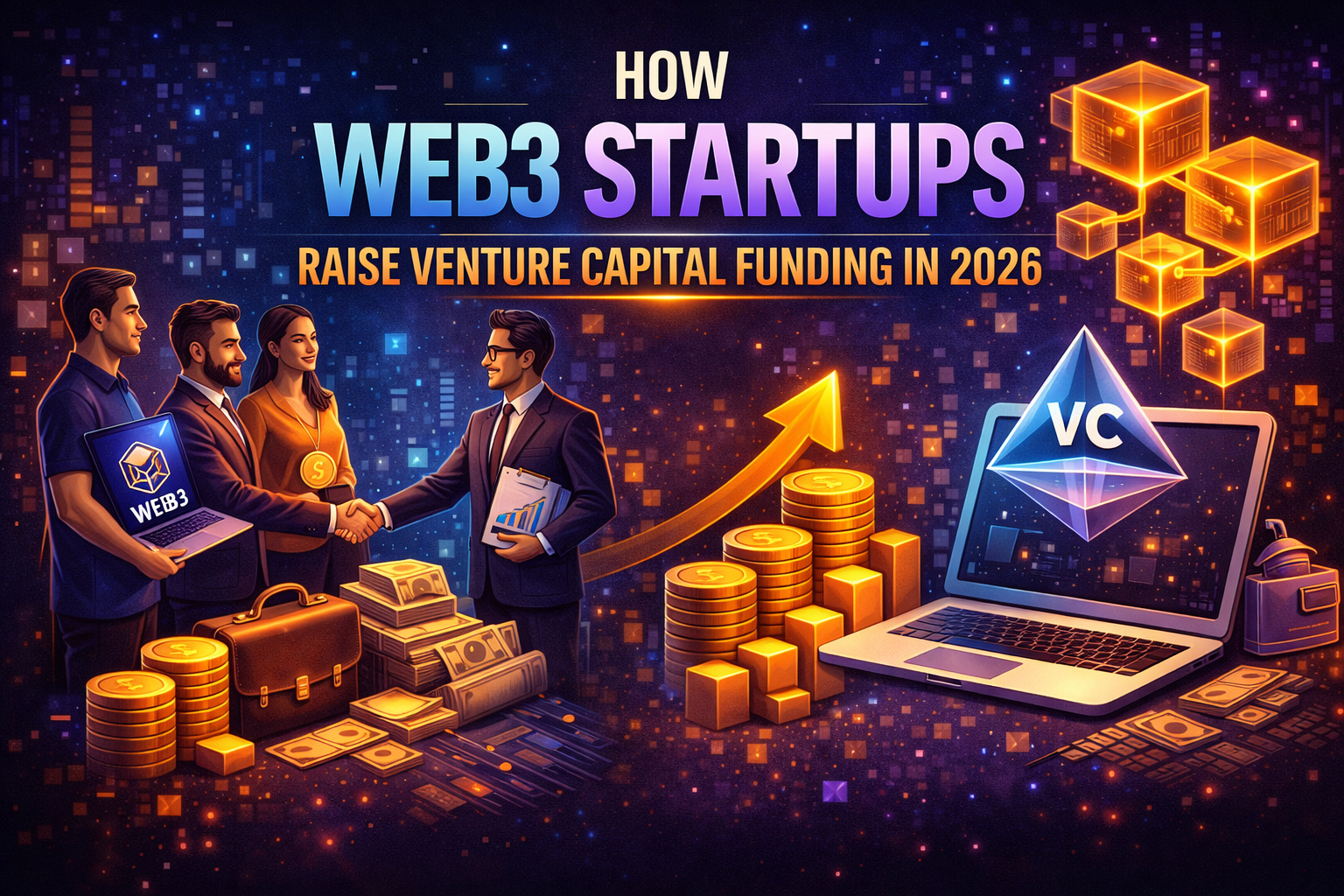
The intersection of blockchain technology, decentralized finance, and traditional venture capital has matured into a sophisticated ecosystem. In 2026, Web3 startups no longer rely on a single funding model; instead, they blend tokenomics, community governance, and institutional capital to secure the resources needed for rapid growth. This guide walks you through the current landscape, the key players, the mechanisms that power fundraising, and the practical steps founders must take to close a deal.
The Evolving Landscape of Web3 Funding From Token Sales to Integrated Capital Strategies In the early days of Web3, initial coin offerings (ICOs) were the go‑to method for raising capital. By 2026, those primitive token sales have been replaced by integrated capital strategies that combine on‑chain token mechanics with traditional equity financing. Founders now design token economies that align incentives for users, developers, and investors, turning the token itself into a valuation lever rather than a mere fundraising vehicle.
Regulatory Maturity
Regulatory bodies in the United States, European Union, and Asia have introduced clear frameworks for digital assets. The Howey Test is now applied to token structures, and many jurisdictions offer “sandbox” programs that let startups test compliant token models before full launch. This regulatory clarity reduces legal risk and makes venture capital firms more comfortable allocating capital to Web3 ventures.
Market Cycles and Investor Sentiment
After a series of boom‑and‑bust cycles, the market has stabilized around fundamentals. Investors now prioritize projects with demonstrable on‑chain metrics, sustainable token circulation, and robust community engagement. Macro‑economic factors such as interest rates and inflation still influence capital allocation, but the risk‑adjusted return profile of Web3 assets is now well‑understood by institutional limited partners (LPs).
Key Players in 2026
Institutional VC Funds with Dedicated Web3 Divisions
Large venture firms — such as Andreessen Horowitz, Paradigm, and a16z — have expanded their Web3 teams and created dedicated funds that focus exclusively on blockchain infrastructure, decentralized finance (DeFi), and metaverse applications. These funds bring deep pockets, extensive networks, and a willingness to lead large rounds.
DAO‑Based Investment Vehicles
Decentralized autonomous organizations (DAOs) have emerged as investment clubs that pool capital from token holders and allocate it according to governance votes. Examples include MetaCartel Ventures and The LAO, which have backed early‑stage protocols and even taken stakes in traditional equity through tokenized agreements.
Corporate Strategic Investors
Tech giants — Microsoft, Google, and Meta — have launched strategic Web3 arms that invest in infrastructure, tooling, and application layers that complement their core businesses. Their investments often come with co‑development agreements, providing startups with access to cloud services, AI models, and massive user bases.
Family Offices and High‑Net‑Worth Individuals
Wealthy investors seeking exposure to the next digital frontier are increasingly allocating capital to crypto‑friendly family offices. These entities often prefer structured investments such as SAFE notes with token warrant coverage, allowing them to participate in upside without directly holding volatile tokens.
Retail Crowdfunding Platforms Platforms like Guild.xyz and Kickstarter’s Web3 integration enable startups to raise modest capital from a broad community of supporters. These campaigns typically issue community tokens that grant early access, governance rights, or revenue sharing, turning backers into an active marketing force.
Funding Mechanisms That Dominate 2026
Token‑Centric Equity Instruments
Startups now issue token‑backed SAFEs or convertible notes that automatically convert into equity when a priced round occurs, while also granting token holders a slice of future token revenue. This hybrid approach aligns financial returns with network effects.
Revenue‑Based Financing on‑Chain
Through smart contracts, companies can lock a portion of on‑chain revenue (e.g., transaction fees) into a revenue‑share token. Investors receive a predictable cash flow stream, and the mechanism can be audited transparently on the blockchain.
NFT‑Backed Loans
Liquidity providers can collateralize NFTs to obtain collateralized loans from decentralized lending protocols. Startups use these loans to fund development without diluting equity, while investors earn interest and gain exposure to high‑value digital collectibles.
Tokenized Equity and Secondary Market Liquidity
Platforms such as Securitize and Polymath enable the issuance of security tokens that represent equity stakes. These tokens can be traded on regulated secondary markets, giving early investors an exit path before an IPO‑style event.
Community Token Sales with Governance Hooks Rather than a one‑off token sale, startups run phased community token distributions that unlock additional rights as milestones are met. This model incentivizes early adopters to stay engaged and helps the project demonstrate measurable progress to investors.
Preparing a Pitch in 2026
Crafting a Credible Tokenomics Model
A well‑designed token economy is the centerpiece of any Web3 pitch. Founders must articulate:
- Supply dynamics (fixed vs. inflationary)
- Distribution schedule (vesting for team, advisors, ecosystem)
- Utility (staking, governance, fee rebates)
- Economic incentives (how token value aligns with network growth)
Building a Data‑Driven Roadmap
Investors now demand on‑chain KPIs alongside traditional metrics. A pitch deck should include:
- Active wallet count
- Transaction volume trends
- Token circulation velocity
- DAO participation rates
Demonstrating Community Health
A vibrant, self‑sustaining community reduces reliance on external marketing spend. Showcase:
- Discord/Telegram activity levels
- Governance proposal approval rates
- User‑generated content volume
Legal Compliance Checklist
- Conduct a token classification analysis to determine whether the token is a security, utility, or commodity.
- Register any securities offering where required, or qualify for an exemption.
- Implement KYC/AML procedures for token sales that involve U.S. investors.
Term Sheet Essentials for Web3 Startups
Valuation Metrics
Traditional post‑money valuation coexists with token‑adjusted valuation. Investors may apply a “token‑adjusted EBITDA” multiple to account for network effects.
Dilution Controls
Because token emissions can dilute token holders, term sheets often include vesting cliffs and caps on future emission rates.
Governance Tokens
Investors may receive a governance token that grants voting rights on protocol upgrades, parameter changes, or fund allocations. These tokens are usually subject to lock‑up periods to prevent immediate control.
Liquidation Preferences
In equity rounds, preferred stock may carry 1x non‑participating liquidation preferences. In tokenized equity, smart contracts enforce these preferences automatically upon acquisition or merger.
Anti‑Dilution Mechanisms
Weighted‑average anti‑dilution provisions protect investors if the startup issues a large number of new tokens at a lower price later.
Token Lock‑Ups
Founders and early team members typically agree to lock their tokens for 12–24 months, with a gradual release schedule to assure investors of long‑term commitment.
Due Diligence in the Web3 Era
Technical Audit
Security firms perform smart contract audits and formal verification of critical contracts. Findings are published publicly, building trust with investors.
Token Audit
Specialist auditors examine token distribution, emission schedules, and economic model to ensure there are no hidden inflationary pressures.
Community Health Review
Investors assess community metrics such as active contributors, moderator turnover, and sentiment analysis across social channels.
Regulatory Risk Assessment
Legal counsel evaluates jurisdictional exposure, especially for tokens that may be deemed securities in certain regions. Strategies include geofencing token sales and establishing offshore holding entities.
Case Studies
1. Decentralized AI Marketplace – “NeuraNet”
NeuraNet raised a $45 M Series A round by issuing a dual‑token structure: a utility token for accessing AI models and a governance token for voting on model upgrades. The round was led by a16z Crypto, with participation from a corporate strategic investor (Microsoft). Tokenomics allocated 30 % of emissions to early contributors, while the remaining 70 % funded ongoing development. Within six months, the platform processed over 10 M API calls, and the governance token’s market cap appreciated by 250 %.
2. Layer‑2 Scaling Solution – “OptimX”
OptimX secured a $70 M strategic investment from a major exchange’s venture arm. The funding took the form of a revenue‑share token that automatically distributed 5 % of transaction fees to token holders. The term sheet included a token‑adjusted valuation of $300 M, reflecting both equity and projected fee revenue. An on‑chain audit confirmed the smart contract’s safety, and the project passed a regulatory sandbox test in the EU, allowing it to launch a compliant token sale to European investors.
3. NFT Gaming Studio – “PixelArena”
PixelArena raised $20 M through a phased community token sale that granted early backers exclusive in‑game items and voting rights on upcoming game mechanics. The sale was structured as a token‑backed SAFE, converting to equity at a $150 M post‑money valuation when a priced round closed. The community token’s liquidity on a regulated exchange provided early investors an exit route after the game’s beta launch, delivering a 3x return within eight months.
Challenges and Risks
Market Volatility
Cryptocurrency price swings can affect token valuations and investor sentiment. Startups must maintain cash buffers and diversify funding sources to weather downturns.
Venture Capital vs ICO: Which Funding Is Best for Blockchain Projects?
Biggest Web3 & AI Funding Rounds: Top 2026 Investment Trends
How to Successfully Pitch Your Web3 Startup to VC Investors
Regulatory Crackdowns
Sudden policy shifts — such as stricter AML requirements or bans on certain token categories — can jeopardize ongoing token sales. Continuous dialogue with regulators and flexible legal structures are essential.
Security Breaches
A single smart‑contract exploit can erode trust and trigger massive capital outflows. Robust audit processes, bug‑bounty programs, and insurance coverage are now standard practice.
Investor Misalignment
Token‑centric investors may prioritize short‑term price action over long‑term protocol health. Founders should align incentives through vesting schedules, governance token design, and transparent communication.
Strategies to Overcome Challenges
- Maintain a Treasury Diversification Plan: Hold a mix of stablecoins, fiat, and diversified crypto assets to fund operations during market dips.
- Proactive Regulatory Engagement: Participate in industry working groups, seek legal counsel familiar with emerging rules, and design token models that can be easily adapted.
- Layered Security: Deploy multi‑signature wallets, formal verification, and third‑party audits; purchase cyber‑insurance to mitigate loss exposure.
- Community Governance Alignment: Implement quadratic voting or delegation mechanisms to ensure that token holders with long‑term interests have greater influence.
Conclusion
Raising venture capital for a Web3 startup in 2026 demands a hybrid skill set that blends traditional fundraising acumen with deep technical understanding of token economics, smart‑contract security, and regulatory compliance. Founders who can articulate a clear tokenomics model, demonstrate robust on‑chain metrics, and align the interests of investors, users, and regulators will attract the capital needed to scale. By studying the evolving roles of institutional VC, DAO funds, and corporate strategics, and by leveraging modern funding mechanisms such as token‑backed SAFEs and revenue‑share tokens, entrepreneurs can craft financing strategies that are both innovative and resilient. The future of Web3 capital is already here — those who master its nuances will shape the next generation of decentralized ecosystems.