
Table of Contents
What Is Semantics Ideas? Meaning, Types, and Examples
Language is the bedrock of human civilization. It allows us to communicate, share knowledge, express emotions, and build complex societies. But what truly underpins the power of language? It’s not just the sounds we make or the symbols we write; it’s the meaning we attach to them. This profound realm of meaning is precisely what the field of semantics explores.
When we talk about “semantics ideas,” we are delving into the very essence of how meaning is created, understood, and interpreted through language. It’s about the concepts, thoughts, and understandings that words, phrases, and sentences evoke in our minds. From the simplest utterance to the most complex philosophical treatise, semantics is the invisible force that allows us to connect with the ideas embedded within linguistic expressions.
This article will embark on a comprehensive journey into the world of semantics. We will define what semantics truly means, explore its fundamental components, and dissect the various types of semantic study that illuminate different facets of meaning. Through clear explanations and practical examples, we will uncover how semantics shapes our perception of the world, drives technological innovation, and forms the very fabric of our shared human experience.
What Exactly is Semantics? A Foundational Understanding
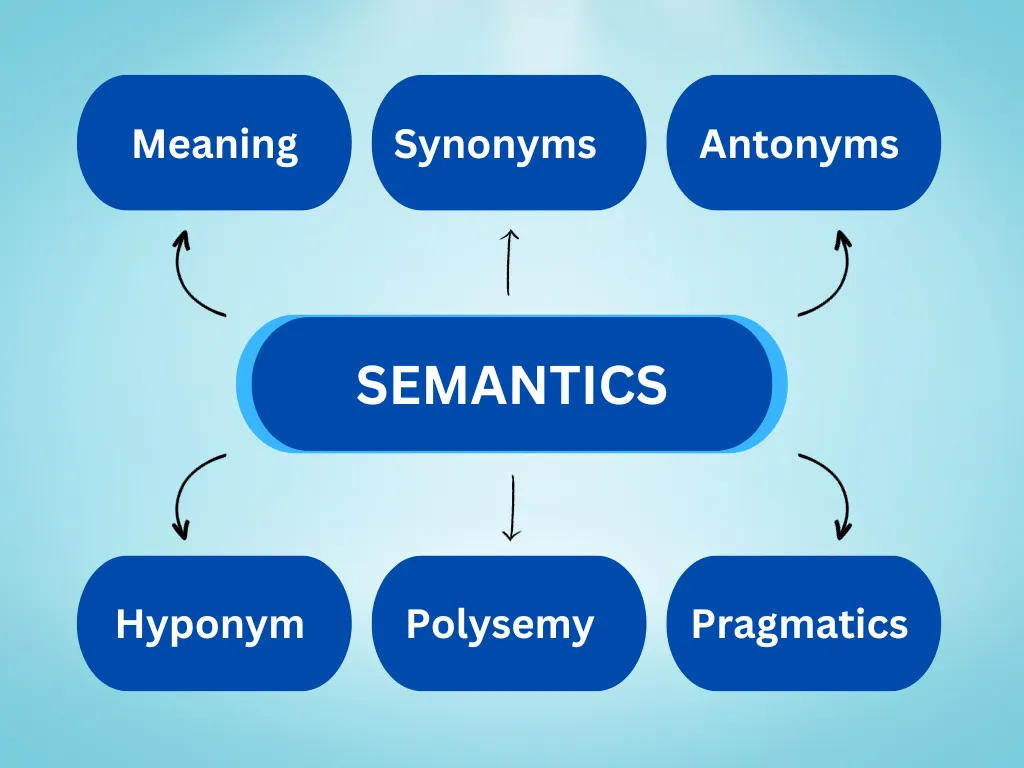
At its core, semantics is the linguistic and philosophical study of meaning. It investigates how meaning is encoded in language and how speakers and listeners (or writers and readers) extract and interpret that meaning. Unlike syntax, which focuses on the grammatical structure and arrangement of words, or phonology, which studies sounds, semantics is solely concerned with the “what” of communication – the ideas being conveyed.
To understand semantics, it’s crucial to differentiate it from two closely related fields:
- Syntax: This is the study of how words are combined to form grammatically correct sentences. For example, “The dog bit the man” is syntactically correct, while “Bit the man dog the” is not. Syntax deals with the rules of sentence structure.
- Pragmatics: This field explores how context influences meaning. It considers the speaker’s intention, shared knowledge, and the situation in which language is used. For instance, “It’s cold in here” could semantically describe the temperature, but pragmatically, it might be a request to close a window or turn up the heat.
Semantics, therefore, sits squarely between the structural rules of language and its contextual application. It aims to systematically analyze how meaning is inherent in linguistic units, independent of their specific use in a particular situation. The “idea” component of semantics refers to the mental representations or concepts that linguistic expressions refer to or evoke. When you hear the word “tree,” the semantic idea is the concept of a large woody plant, regardless of whether you’re imagining an oak, a pine, or a specific tree in your backyard. Semantics seeks to understand how these concepts are encoded, transmitted, and ultimately understood.
The goal of semantics is ambitious: to provide a systematic account of how meaning is generated and interpreted. This involves breaking down meaning into its constituent parts, identifying the relationships between different meanings, and developing theories to explain how we make sense of the world through language.
The Core Components of Meaning: Where Ideas Reside
To grasp the full scope of semantics, we must understand the different levels at which meaning operates. From individual words to entire sentences, meaning is built layer by layer.
Lexical Meaning (Word Semantics)
This is the most fundamental level, dealing with the meaning of individual words. Lexical semantics explores the rich tapestry of concepts that words represent and the intricate relationships between them.
- Denotation: This refers to the literal, dictionary definition of a word. It’s the core concept that the word points to. For example, the denotation of “dog” is a domesticated carnivorous mammal that typically has a long snout, an acute sense of smell, non-retractable claws, and a barking, howling, or whining voice.
- Connotation: Beyond the literal meaning, words often carry emotional, cultural, or associative meanings. These are connotations. While “dog” denotes a specific animal, it can connote loyalty, companionship, or even aggression, depending on context and personal experience. “Home” denotes a place of residence but connotes warmth, security, and family.
- Polysemy: This occurs when a single word has multiple related meanings. The different meanings often stem from a shared core concept.
- Example: The word “bank” can refer to the financial institution (a place to keep money) or the side of a river (the land bordering a body of water). Both meanings relate to a “side” or “edge” in some conceptual way.
- Homonymy: In contrast to polysemy, homonyms are words that sound the same (homophones) or are spelled the same (homographs) but have completely unrelated meanings.
- Example: “Bat” can mean a flying mammal or a piece of sports equipment. There’s no conceptual link between the two. Similarly, “read” (present tense) and “read” (past tense) are homographs but pronounced differently (heteronyms).
- Synonymy: This describes words that have very similar, though rarely identical, meanings.
- Example: “Big” and “large” are synonyms, as are “happy” and “joyful.” While often interchangeable, subtle differences in connotation or usage usually exist.
- Antonymy: This refers to words with opposite meanings.
- Example: “Hot” and “cold,” “up” and “down,” “alive” and “dead.” Antonyms can be graded (e.g., “hot” vs. “warm” vs. “cool” vs. “cold”) or complementary (e.g., “alive” vs. “dead” – no in-between).
- Hyponymy: This describes a hierarchical relationship where one word’s meaning is included within another’s. The more specific word is a hyponym of the more general word.
- Example: “Dog” is a hyponym of “animal.” “Rose” is a hyponym of “flower.” Conversely, “animal” is a hypernym of “dog.”
- Meronymy: This describes a part-whole relationship.
- Example: “Wheel” is a meronym of “car.” “Finger” is a meronym of “hand.”
Sentence Meaning (Compositional Semantics)
Beyond individual words, semantics also investigates how the meanings of words combine to form the meaning of larger units, such as phrases and sentences. This is governed by the Principle of Compositionality, which states that the meaning of a complex expression is determined by the meanings of its parts and the way they are syntactically combined.
- Truth Conditions: A central concept in sentence semantics, particularly in formal approaches, is truth conditions. This refers to the conditions under which a sentence would be considered true or false in the real world.
- Example: The sentence “The cat is on the mat” is true if and only if there is a cat, there is a mat, and the cat’s physical location is on top of the mat.
- Ambiguity: Sentences can sometimes have multiple possible meanings, even if the individual words are clear. This can arise from lexical ambiguity (a word with multiple meanings in the sentence) or structural ambiguity (the way the words are arranged allows for different interpretations).
- Example of lexical ambiguity: “He went to the bank” (river bank or financial institution).
- Example of structural ambiguity: “Flying planes can be dangerous.” Does this mean the act of flying planes is dangerous, or that planes that are flying are dangerous?
Understanding these core components allows us to appreciate the intricate mechanisms through which language conveys ideas, from the simple concept of a “dog” to the complex truth conditions of a philosophical statement.
Diving Deeper: Key Types of Semantics and Their Perspectives on Ideas
The study of semantics is not monolithic; various branches and approaches have emerged, each offering a unique lens through which to examine the nature of meaning and the ideas it represents.
1. Formal Semantics
- Focus: This approach uses tools from logic, mathematics, and computer science to build precise, rigorous models of linguistic meaning. It seeks to understand meaning in terms of truth conditions and logical relations.
- Key Concepts: Truth values, logical operators (AND, OR, NOT), quantifiers (all, some), set theory, lambda calculus.
- Perspective on Ideas: Ideas are treated as abstract entities or propositions whose truth can be evaluated. The goal is to define the conditions under which a sentence accurately describes a state of affairs in a possible world.
- Example: Analyzing the sentence “All birds fly.” A formal semanticist would break this down into logical components: “For every entity x, if x is a bird, then x flies.” This statement is true if the set of all birds is a subset of the set of all flying things. This approach allows for clear identification of counterexamples (e.g., penguins) that make the statement false.
2. Lexical Semantics
- Focus: As discussed earlier, this branch specifically investigates the meaning of individual words (lexemes) and the relationships between them. It delves into the internal structure of word meanings.
- Key Concepts: Denotation, connotation, sense relations (synonymy, antonymy, hyponymy, meronymy), semantic features (e.g., [+animate], [+human], [+male]).
- Perspective on Ideas: Ideas are represented as conceptual units associated with words, often decomposable into smaller, more primitive features. It explores how these word-level ideas are organized in our mental lexicon.
- Example: The word “chair.” Lexical semantics would analyze its denotation (a piece of furniture for sitting, typically with a back and four legs), its semantic features ([+furniture], [+for sitting], [+has back], [+has legs]), and its relationships to other words (hyponym of “furniture,” meronym of “leg,” synonym of “seat” in some contexts). It also considers its polysemy, e.g., “chair a meeting.”
3. Conceptual Semantics
- Focus: Rooted in cognitive linguistics, conceptual semantics explores how meaning is represented in the human mind. It posits that linguistic meaning is fundamentally linked to our conceptual system.
- Key Concepts: Semantic primitives (basic, irreducible conceptual elements), conceptual structures, image schemas (pre-linguistic patterns of experience like SOURCE-PATH-GOAL, CONTAINER, LINK), frames/scripts.
- Perspective on Ideas: Ideas are not just abstract logical entities but mental constructs shaped by our embodied experience and cognitive architecture. Meaning is understood as the mapping between linguistic expressions and these conceptual structures.
- Example: The concept of “grasping.” While physically it means to hold something with your hand, conceptually it extends to “grasping an idea” or “grasping the situation.” Conceptual semantics argues that the physical act of grasping forms the basis for the metaphorical extension to understanding, leveraging an underlying image schema of containment or control.
4. Cognitive Semantics
- Focus: A broader field than conceptual semantics, cognitive semantics views meaning as an emergent property of general cognitive processes, including perception, memory, attention, and reasoning. It emphasizes the role of human experience and embodiment in shaping meaning.
- Key Concepts: Embodiment, metaphor, metonymy, prototypes, frames/scripts, mental spaces, construal (different ways of viewing the same situation).
- Perspective on Ideas: Ideas are not objective truths but are constructed and understood through our subjective experience and cognitive biases. Meaning is dynamic and context-sensitive, heavily influenced by how we perceive and interact with the world.
- Example: Understanding spatial prepositions like “over.” While “the bird flew over the house” implies movement above, “the picture is over the sofa” implies a static position above. Cognitive semantics explains this through different “image schemas” or mental models activated by the context, showing how a single word can evoke different spatial ideas based on the scenario. It also highlights how metaphors like “time is money” (“spending time,” “wasting time”) reveal deeper conceptual mappings in our minds.
5. Computational Semantics
- Focus: This interdisciplinary field combines linguistics with computer science to develop algorithms and computational models that can automatically process, analyze, and understand meaning in natural language.
- Key Concepts: Word embeddings (e.g., Word2Vec, GloVe, BERT), semantic parsing, knowledge graphs, sentiment analysis, named entity recognition, machine translation.
- Perspective on Ideas: Ideas are represented as numerical vectors, graph structures, or logical forms that computers can process. The goal is to enable machines to extract, interpret, and generate meaning in a way that mimics human understanding.
- Example: A search engine understanding that a query like “restaurants near me that serve vegan food” requires not just keyword matching but also identifying “restaurants” as a type of business, “near me” as a location query, and “vegan food” as a dietary preference. Computational semantics uses techniques like semantic parsing to convert this natural language query into a structured query that a database can process, effectively translating a human idea into a machine-understandable command.
6. Cross-Cultural Semantics (Ethnosemantics)
- Focus: This branch investigates how cultural contexts and specific languages influence conceptualization and meaning. It explores the relationship between language, culture, and thought.
- Key Concepts: Linguistic relativity (Sapir-Whorf hypothesis), cultural categories, indigenous knowledge systems, untranslatable words.
- Perspective on Ideas: Ideas are deeply intertwined with the cultural frameworks and linguistic structures of a community. What might be a single concept in one culture could be broken down into multiple distinct ideas in another, or vice-versa.
- Example: The Inuit languages have numerous words for different types of snow (e.g., aput for snow on the ground, qana for falling snow, piqsirpoq for drifting snow). While English speakers can describe these, the existence of distinct lexical items suggests a different cultural categorization and conceptualization of snow, highlighting how cultural needs shape semantic distinctions. Similarly, the German word Schadenfreude (pleasure derived from another’s misfortune) encapsulates an idea that requires a phrase to express in English.
7. Historical Semantics (Diachronic Semantics)
- Focus: This field examines how the meanings of words and phrases change over time. It traces semantic shifts and the evolution of conceptual ideas within a language.
- Key Concepts: Semantic broadening (generalization), semantic narrowing (specialization), amelioration (meaning becomes more positive), pejoration (meaning becomes more negative), semantic bleaching (loss of intensity).
- Perspective on Ideas: Ideas are not static but evolve and transform across generations, reflecting changes in society, technology, and worldview.
- Example: The word “awful” once meant “full of awe” or “awe-inspiring.” Over time, its meaning underwent pejoration and narrowed to “terrible” or “dreadful.” Similarly, “nice” originally meant “ignorant” or “foolish” in the 13th century, undergoing amelioration to its modern meaning of “pleasant” or “agreeable.”
These diverse types of semantics collectively paint a rich picture of how meaning is constructed, processed, and understood, revealing the multifaceted nature of the “ideas” that language conveys.
The Interplay of Semantics with Other Fields: Expanding the Realm of Ideas
Semantics does not exist in a vacuum. Its insights are crucial for, and often informed by, other academic disciplines.
Semantics and Pragmatics
While distinct, semantics and pragmatics are deeply intertwined. Semantics provides the literal meaning, while pragmatics interprets that meaning within a specific context, considering speaker intention, shared knowledge, and social conventions. The idea conveyed often requires both semantic and pragmatic analysis. For instance, “Can you pass the salt?” Semantically, it’s a question about ability. Pragmatically, it’s a request.
Semantics and Syntax
Syntax dictates how words are arranged, and this arrangement directly impacts meaning. A change in word order can drastically alter the idea being expressed. “The dog bit the man” conveys a different idea than “The man bit the dog,” purely due to syntactic structure. Semantic theories often rely on syntactic structures to build meaning representations.
Semantics and Philosophy
Philosophers have long grappled with fundamental questions about meaning: What is truth? How do words refer to objects in the world? What is the nature of concepts? Semantics provides linguistic tools to explore these philosophical inquiries, particularly in the philosophy of language and logic.
Semantics and Psychology (Psycholinguistics)
Psycholinguistics investigates how humans acquire, process, and produce language. Semantic research contributes to understanding how meaning is stored in the mind, how we retrieve word meanings, and how we build mental models of sentences and discourse. Cognitive semantics, in particular, bridges these two fields.
Top 10 Decentralized Apps Shaping Web3’s Future in 2026
Artificial Intelligence Transforming Global Economy in 2026
Smart Contracts Explained: Beginner’s Guide to How They Work in Web3 (2026 Edition)
Practical Applications of Semantic Ideas in the Real World
The theoretical insights of semantics have profound practical implications, driving innovation and improving communication across numerous domains.
Artificial Intelligence & Natural Language Processing (NLP)
This is perhaps the most prominent application. Semantic understanding is the holy grail of AI that interacts with human language.
- Machine Translation: Accurately translating meaning, not just words, across languages.
- Sentiment Analysis: Determining the emotional tone (positive, negative, neutral) of text, crucial for customer feedback and social media monitoring.
- Chatbots and Virtual Assistants: Enabling conversational AI to understand user intent and respond meaningfully.
- Question Answering Systems: Extracting precise answers from large bodies of text.
Information Retrieval and Search Engines
Modern search engines go far beyond keyword matching. They use semantic analysis to understand the meaning behind your query, providing more relevant results. If you search for “best places to eat pizza,” the engine understands “places to eat” as restaurants and “pizza” as a type of food, and might prioritize highly-rated establishments.
Education
Semantics is vital for language acquisition and literacy.
- Vocabulary Instruction: Teaching not just definitions but also connotations, synonyms, and antonyms.
- Reading Comprehension: Helping students understand the deeper meaning and nuances of texts.
- Critical Thinking: Analyzing how language is used to persuade, mislead, or inform.
Law and Policy
Precision in language is paramount in legal documents and policy formulation. Semantic analysis helps ensure that laws are unambiguous, preventing misinterpretations that could have significant consequences. Legal semantics investigates the meaning of legal terms and statutes.
Have any thoughts?
Share your reaction or leave a quick response — we’d love to hear what you think!
-
 0
0
-
 0
0
-
 0
0
-
 0
0
-
 0
0
-
 0
0
