The Barry Goldwater Scholarship and Excellence in Education For Americans 2026: Paving the Way for Future STEM Leaders
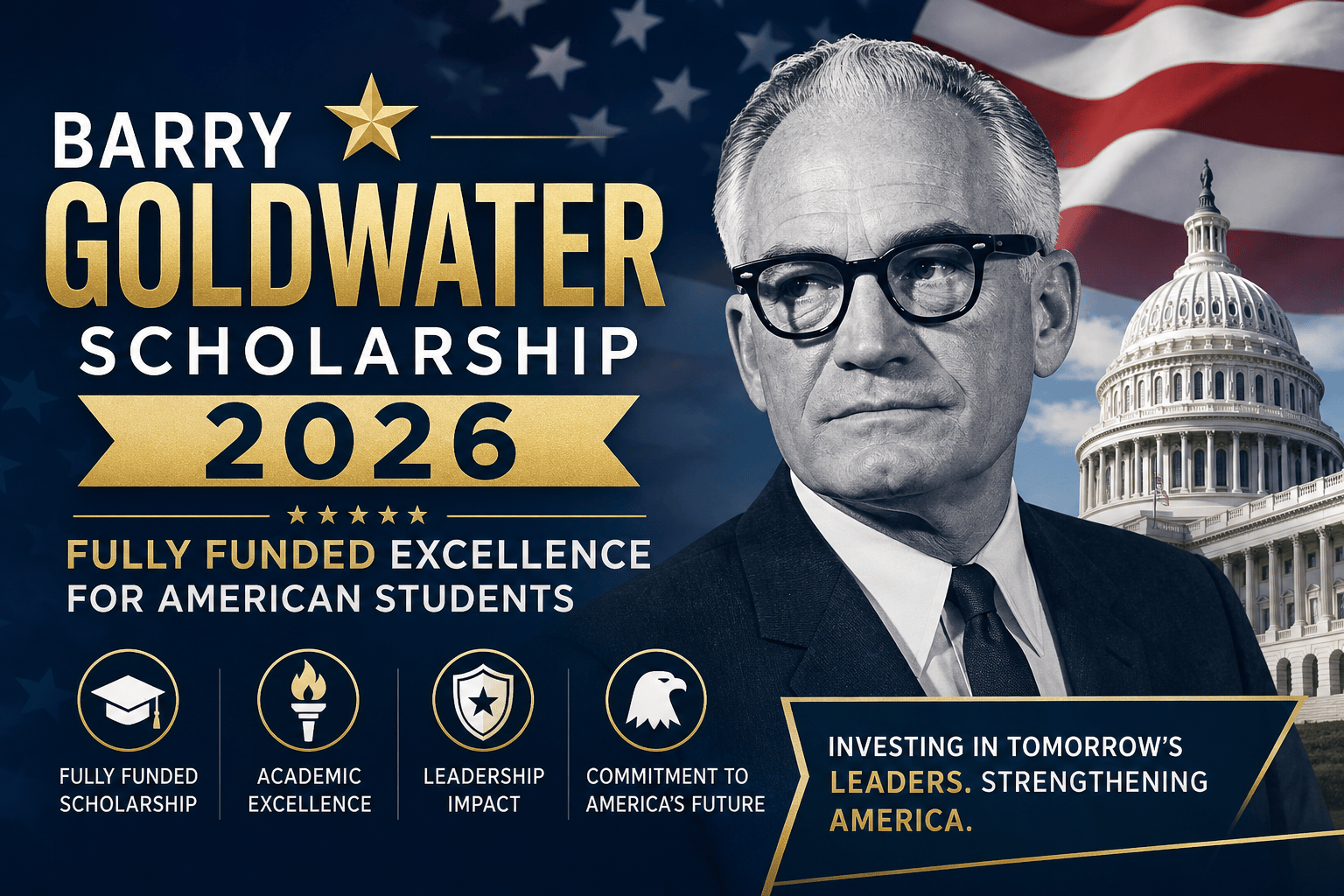
In the relentless pursuit of scientific discovery, technological innovation, and mathematical breakthroughs, a nation’s strength is inextricably linked to the brilliance and dedication of its brightest minds. Recognizing this fundamental truth, the United States Congress established the Barry Goldwater Scholarship and Excellence in Education Foundation in 1986. Named in honor of the late Senator Barry Goldwater, a man renowned for his commitment to public service and his profound interest in science and technology, this prestigious scholarship program stands as a beacon for undergraduate students aspiring to careers in research in the natural sciences, engineering, and mathematics (STEM).
For aspiring American scientists, engineers, and mathematicians eyeing the 2026 application cycle, understanding the profound impact and rigorous demands of the Goldwater Scholarship is the first step toward joining an elite cohort of future leaders. This isn’t merely a financial award; it’s an affirmation of potential, a catalyst for advanced study, and an entry into a distinguished community dedicated to pushing the boundaries of human knowledge. This comprehensive guide will delve into every facet of the Goldwater Scholarship, from its historical roots and unparalleled benefits to the intricate application process and strategies for crafting a winning submission, all with an eye towards the 2026 competition.
What is the Barry Goldwater Scholarship? A Legacy of STEM Excellence
The Barry Goldwater Scholarship is widely considered the premier undergraduate award of its type in the fields of natural sciences, engineering, and mathematics in the United States. Its primary objective is to identify and support college sophomores and juniors who show exceptional promise and who intend to pursue research careers in these critical disciplines.
A Brief History and Enduring Mission
The scholarship was authorized by Congress to honor Senator Barry Goldwater, who served the nation for 56 years as a soldier and statesman, including 30 years in the U.S. Senate. Goldwater was a strong advocate for science and technology, recognizing their vital role in national security and economic prosperity. The Foundation’s mission is clear: to foster and encourage outstanding students to pursue careers in research in the natural sciences, engineering, and mathematics. By doing so, it aims to ensure that the U.S. continues to produce the scientific and technical talent necessary to maintain its global leadership in research and innovation.
Who is the Goldwater Scholarship For?
The Goldwater Scholarship targets a very specific demographic:
- Highly motivated undergraduates: Students who are currently sophomores or juniors.
- STEM-focused individuals: Those majoring in natural sciences, engineering, or mathematics. This includes fields like physics, chemistry, biology, computer science, various engineering disciplines, environmental science, geology, and more. Health professions are generally excluded unless the student’s career goal is research-oriented rather than clinical practice.
- Research-driven aspirations: Crucially, applicants must demonstrate a clear intent to pursue a research career, typically culminating in a Ph.D. (or MD/Ph.D. for those in biomedical fields with a strong research focus). This is not a scholarship for those primarily interested in medical practice, teaching at the K-12 level, or solely applied engineering without a research component.
The scholarship’s prestige stems from its rigorous selection process and the caliber of its recipients. Goldwater Scholars are not just academically strong; they are individuals who have already demonstrated significant engagement in research, possess intellectual curiosity, and articulate a compelling vision for their future contributions to their chosen field.
The Unparalleled Benefits of Being a Goldwater Scholar
Receiving a Goldwater Scholarship is a transformative experience, offering a multitude of advantages that extend far beyond financial relief.
1. Financial Support: A Fully Funded Opportunity
One of the most immediate and impactful benefits is the fully funded financial support. The scholarship provides up to $7,500 per year for tuition, fees, books, room, and board. This amount can significantly alleviate the financial burden of undergraduate education, allowing scholars to focus more intently on their studies and research without the added stress of accumulating debt. For students who are sophomores at the time of application, the scholarship covers their junior and senior years. For juniors, it covers their senior year. While the maximum award is $7,500, the actual amount awarded to a scholar may be less, depending on the scholar’s demonstrated need and the cost of attendance at their institution. Regardless, it represents a substantial investment in the student’s future.
2. National Recognition and Prestige
Being named a Goldwater Scholar is an extraordinary mark of distinction. It signals to graduate schools, fellowship committees, and future employers that an individual possesses exceptional talent and potential in STEM research. This national recognition:
- Enhances graduate school applications: Goldwater Scholars are highly sought after by top-tier Ph.D. programs, often receiving preferential treatment and additional funding opportunities.
- Opens doors to other elite fellowships: Many Goldwater Scholars go on to win other prestigious awards like the Rhodes Scholarship, Marshall Scholarship, Churchill Scholarship, Gates Cambridge Scholarship, and the National Science Foundation Graduate Research Fellowship Program (NSF GRFP). The Goldwater often serves as an excellent stepping stone and a strong indicator of future success in these competitions.
- Boosts career prospects: For those entering industry or government research labs directly after their undergraduate studies, the Goldwater designation provides a significant competitive edge.
3. Mentorship and Networking Opportunities
The Goldwater Foundation fosters a vibrant community of scholars, alumni, and mentors. Recipients gain access to:
- A network of peers: Connecting with other highly motivated and talented STEM students from across the nation. This peer network can be invaluable for collaboration, support, and friendship.
- Alumni connections: The Goldwater alumni network includes leading scientists, engineers, and mathematicians in academia, industry, and government. These connections can provide mentorship, research opportunities, and career guidance.
- Faculty support: The application process itself often strengthens relationships with faculty mentors, who provide guidance and write letters of recommendation. This mentorship continues to be crucial throughout a scholar’s academic and professional journey.
4. Validation of Research Potential
The rigorous selection process means that being chosen as a Goldwater Scholar validates a student’s early research efforts and potential. This can be a tremendous confidence booster, encouraging scholars to pursue more ambitious research projects and commit fully to a research career path. It confirms that their intellectual curiosity and dedication to scientific inquiry are recognized and valued at the highest levels.
5. Preparation for Future Success
The Goldwater Scholarship is not just an award; it’s an investment in the future of American science. By supporting promising undergraduates, the Foundation helps build a pipeline of highly skilled researchers who will contribute to solving global challenges, driving innovation, and advancing fundamental knowledge. Scholars are often better prepared for the demands of graduate school and research careers, having already demonstrated their capabilities and commitment.
Eligibility Criteria for the 2026 Cycle (Anticipated)
While specific dates and minor details can shift, the core eligibility requirements for the Barry Goldwater Scholarship remain remarkably consistent year after year. For students targeting the 2026 cycle, these are the fundamental criteria to meet:
- Citizenship: Applicants must be U.S. citizens, U.S. nationals, or permanent residents. Permanent residents must submit a copy of their Permanent Resident Card (Form I-551).
- Academic Standing: Students must be currently enrolled as a sophomore or junior in a bachelor’s degree program at an accredited institution.
- Sophomore: Defined as a student who plans to complete two additional years of full-time undergraduate study after the Goldwater Scholarship is awarded.
- Junior: Defined as a student who plans to complete one additional year of full-time undergraduate study after the Goldwater Scholarship is awarded.
- GPA: While there’s no strict minimum GPA, successful applicants typically have a very strong academic record, often with a GPA of 3.8 or higher on a 4.0 scale. Excellence in challenging STEM coursework is paramount.
- Field of Study: Applicants must be pursuing a degree in the natural sciences, engineering, or mathematics. This includes fields like:
- Astronomy, Biology, Chemistry, Computer Science (if research-focused), Engineering (all disciplines), Environmental Sciences (if research-focused), Geosciences, Materials Science, Mathematics, Physics, and related interdisciplinary fields.
- Important Note: Students whose career goal is in a health-related field (e.g., medicine, veterinary medicine) are eligible only if their primary career goal is research rather than clinical practice. They must demonstrate a strong commitment to a research career and articulate how their proposed research aligns with the Goldwater mission.
- Research Career Intent: Applicants must intend to pursue a research career in a natural science, engineering, or mathematics field. This is arguably the most critical criterion.
- Institutional Nomination: Perhaps the most distinctive requirement is that students cannot apply directly to the Goldwater Foundation. They must be nominated by their home institution. Each university can nominate a limited number of students (typically up to four, or five if one is a transfer student). This internal selection process is a crucial hurdle.
The Application Process: A Strategic Approach for 2026
Applying for the Goldwater Scholarship is a marathon, not a sprint. It requires meticulous planning, significant effort, and strong institutional support. For the 2026 cycle, students should begin preparing well in advance, ideally in their freshman or sophomore year.
1. The Critical Role of Institutional Nomination
The first and most important step is securing your university’s nomination.
- Identify Your Campus Representative: Most universities have a designated Goldwater Scholarship campus representative, often located in an honors college, scholarship office, or dean’s office. Contact them early in your sophomore year (or even late freshman year).
- Understand the Internal Process: Each institution has its own internal application and selection process, which typically mirrors the national application but with earlier deadlines. This might involve:
- Submitting an internal application form.
- Writing preliminary essays, including a research statement.
- Providing a transcript.
- Securing internal letters of recommendation.
- Participating in an interview with a campus selection committee.
- Why Institutional Support is Vital: Your campus representative and committee will provide invaluable feedback on your application materials, help you refine your essays, and ensure your submission is competitive. They are your first line of defense and advocacy.
2. Key Components of the National Application
Once nominated, you’ll work with your campus representative to finalize the national application. The core components include:
a. The Research Essay (The Heart of Your Application)
This is arguably the most critical part of your application. It’s an essay (typically 3 pages, including references) where you describe a significant research project you have been involved in.
- Choosing a Project: Select a project where you played a substantial role and can articulate your contributions clearly. It doesn’t have to be published, but it should demonstrate your ability to engage in scientific inquiry.
- Clarity and Conciseness: Explain the research problem, your methodology, results, and their significance in a way that is understandable to a broad scientific audience (not just specialists in your field).
- Highlighting Your Contribution: Emphasize your specific role, what you learned, and how you contributed to the project’s success. Avoid simply describing the lab’s work; focus on your intellectual input.
- Future Research Goals: Connect this past research experience to your future aspirations. How has it shaped your research interests? What questions do you want to pursue in graduate school?
b. Letters of Recommendation
You will need three letters of recommendation. These are incredibly important and should come from individuals who know your academic and research abilities well.
- Research Mentors: At least one letter should come from a faculty member with whom you have conducted significant research. This letter should speak to your research aptitude, independence, problem-solving skills, and potential for a research career.
- Professors: Other letters can come from professors who have taught you in challenging STEM courses and can speak to your intellectual curiosity, analytical skills, and academic performance.
- Cultivating Relationships: Start building relationships with professors and mentors early. Engage in class, attend office hours, and actively participate in research. A strong letter comes from someone who knows you beyond your GPA.
- Provide Guidance: When asking for letters, provide your recommenders with your CV, transcript, personal statements, and a clear understanding of the Goldwater Scholarship’s mission and your career goals. Give them ample time to write a thoughtful letter.
c. Academic Transcript
Your transcript provides objective evidence of your academic performance. The Goldwater Foundation looks for:
- Strong GPA: Especially in STEM courses.
- Challenging Coursework: Evidence that you’ve pushed yourself academically, taking advanced courses or honors sections.
- Consistency: A track record of excellent performance throughout your undergraduate career.
d. Extracurricular Activities and Awards
This section allows you to showcase your broader engagement and achievements. Include:
- Research Experiences: List all research projects, internships, REUs (Research Experiences for Undergraduates), and lab work.
- Publications/Presentations: Any posters, talks, or co-authored papers.
- Awards and Honors: Academic achievements, scholarships, departmental awards.
- Leadership and Service: While less central than research, demonstrating leadership in student organizations, tutoring, or community service can show well-roundedness and commitment.
e. Career Goals Statement
This is where you articulate your long-term aspirations.
- Clarity and Specificity: Clearly state your career goal (e.g., “I intend to pursue a Ph.D. in X and conduct research at a university, leading my own lab…”).
- Commitment to Research: Reiterate your dedication to a research career and how the Goldwater Scholarship will help you achieve this.
- Impact: Briefly mention the kind of impact you hope to make in your field.
Crafting a Winning Application: Tips and Strategies for 2026
Success in the Goldwater competition requires more than just good grades and research experience; it demands a compelling narrative and a strategically constructed application.
1. Start Early, Stay Organized
This cannot be overstressed. Begin exploring the Goldwater Scholarship in your freshman year, identify potential research opportunities, and connect with faculty. For the 2026 cycle, sophomores should be actively engaged in research and thinking about their application by early fall 2024. Juniors should have a significant research project underway.
Get Your NUPRC Licence in Nigeria: Step-by-Step Application Guide
How to Get NMDPRA Certificate in Nigeria: Application Guide
Top Reliable VTU Platforms Nigeria: 2026 Guide
2. Seek Mentorship and Feedback
- Campus Representative: Your primary resource. Work closely with them on every aspect of your application.
- Research Mentors: Discuss your application with your research advisors. They can offer insights into your research statement and write strong letters.
- Writing Centers/Peers: Get feedback on your essays from multiple sources. A fresh pair of eyes can catch errors or suggest improvements in clarity and flow.
- Previous Goldwater Scholars: If possible, connect with past scholars from your institution. Their insights can be invaluable.
3. Refine Your Research Statement Iteratively
Your research essay is your opportunity to shine.
- Multiple Drafts: Expect to write many drafts. Start early enough to allow for significant revisions.
- Focus on the “Why”: Don’t just describe what you did; explain why it was important, what challenges you faced, and how you overcame them.
- Show, Don’t Tell: Instead of saying “I am a good problem-solver,” describe a specific instance where you solved a complex research problem.
- Clarity for Non-Specialists: The Goldwater review committee includes scientists from diverse fields. Your essay must be accessible to someone outside your specific sub-discipline. Avoid excessive jargon.
4. Demonstrate Passion and Commitment
The Goldwater Foundation is looking for individuals who are genuinely passionate about research and committed to a long-term career in STEM.
- Authenticity: Let your enthusiasm for your field come through in your essays.
- Consistency: Ensure your research experiences, career goals, and letters of recommendation all tell a consistent story of your dedication to research.
- Future Vision: Clearly articulate your vision for your contributions to science, engineering, or mathematics.
5. Understand the Goldwater Mission
Align your application with the Foundation’s goals. They want to support students who will become future research leaders. Frame your experiences and aspirations in this context. How will your research contribute to national needs or global challenges?
6. Proofread Meticulously
A flawless application demonstrates attention to detail and professionalism. Typos, grammatical errors, or formatting inconsistencies can detract from even the strongest content. Have multiple people proofread your entire application.
Beyond the Scholarship: The Goldwater Community and Impact
Being a Goldwater Scholar is not just about the financial award; it’s about joining a distinguished community. The Goldwater Foundation hosts an annual Scholars Weekend, bringing together current scholars for networking, professional development, and engagement with prominent scientists and policymakers. This community provides lifelong connections and opportunities for collaboration and mentorship.
Goldwater alumni have gone on to achieve remarkable success in diverse STEM fields. They are leading research labs, starting innovative companies, shaping national science policy, and educating the next generation of scientists. The scholarship has a tangible and lasting impact on the trajectory of its recipients and, by extension, on the scientific and technological landscape of the United States.
Conclusion
The Barry Goldwater Scholarship and Excellence in Education program represents a profound investment in the intellectual capital of the United States. For ambitious undergraduates in the natural sciences, engineering, and mathematics, the 2026 application cycle offers an unparalleled opportunity to gain national recognition, substantial financial support, and entry into an elite network of future research leaders.
The path to becoming a Goldwater Scholar is demanding, requiring exceptional academic achievement, significant research experience, and a clear articulation of a research-focused career goal. However, for those who are passionate about discovery, committed to scientific inquiry, and ready to dedicate themselves to solving the complex challenges of our world, the rewards are immeasurable. Start early, seek mentorship, refine your narrative, and demonstrate your unwavering commitment to a research career. The Barry Goldwater Scholarship is more than an award; it’s a launchpad for a lifetime of scientific contribution and excellence.