Best Smartphones for Crypto Traders & Remote Workers in 2026: iPhone vs Samsung vs Google Pixel
The world of work and finance is more mobile than ever. For crypto traders, every second can mean the difference between profit and loss, requiring instant access to market data, exchange platforms, and secure wallet management. Remote workers, on the other hand, demand seamless connectivity, robust productivity tools, and reliable communication from anywhere. In 2026, the smartphone remains the central hub for these demanding professionals, serving as a portable office, a trading desk, and a secure communication device.
Choosing the right smartphone isn’t just about brand preference; it’s about optimizing your workflow, safeguarding your assets, and ensuring uninterrupted productivity. As technology advances at a blistering pace, the lines between personal and professional devices blur, making the selection even more critical.
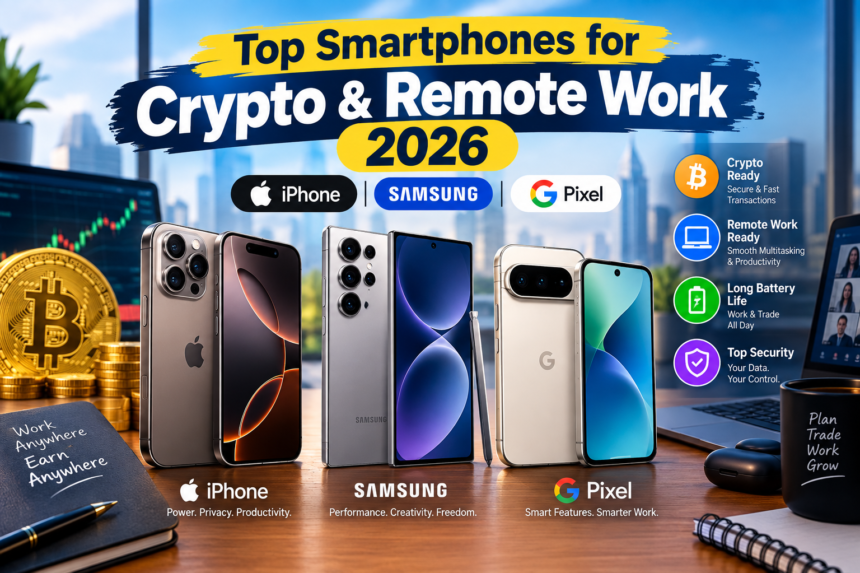
This comprehensive guide delves into the anticipated offerings from the three titans of the smartphone industry – Apple’s iPhone, Samsung’s Galaxy, and Google’s Pixel line – to help you identify the ultimate mobile companion for your crypto trading and remote work needs in 2026. We’ll explore the key features, strengths, and weaknesses of each, focusing on what truly matters to these high-stakes users.
- vivo X500, X500 Pro, X500 Pro Max Series Announced
- WAEC Recruitment Shortlist 2026 Out: Check Your Name & Next Steps
- Recommended Ad Networks for Websites: Boost Your Site’s Revenue
Key Considerations for Crypto Traders & Remote Workers
Before diving into specific models, it’s crucial to understand the non-negotiable features that define a top-tier smartphone for these specialized users.
1. Performance & Speed
For crypto traders, lag can be catastrophic. Executing trades, monitoring real-time charts, and managing multiple exchange apps demand a processor that can handle intense multitasking without a hitch. Remote workers also benefit from snappy performance for video conferencing, large file transfers, and complex document editing on the go.
- Processor Power: High-end chipsets (e.g., Apple’s A-series, Qualcomm’s Snapdragon, Google’s Tensor) are essential.
- RAM: Ample RAM ensures smooth app switching and background processes.
- Storage Speed: Fast UFS or NVMe storage for quick app loading and data access.
2. Security & Privacy
This is paramount for both groups. Crypto traders are constantly interacting with sensitive financial data, private keys, and exchange accounts, making robust security a first line of defense against cyber threats. Remote workers handle confidential company information, client data, and personal communications that require ironclad privacy.
- Hardware-Backed Security: Secure enclaves, dedicated security chips (e.g., Apple’s Secure Enclave, Google’s Titan M2, Samsung Knox).
- Biometric Authentication: Reliable and fast facial recognition (Face ID) or in-display fingerprint sensors.
- Software Updates: Timely and consistent security patches and OS updates.
- Privacy Controls: Granular control over app permissions, data tracking, and location services.
- VPN Support: Native or robust third-party VPN integration.
3. Battery Life
A dead phone is a useless phone. Whether you’re monitoring a volatile market from a cafe or participating in a critical video call from a remote location, all-day battery life is non-negotiable.
- Capacity: Larger battery cells.
- Efficiency: Optimized processors and software for power management.
- Fast Charging: Ability to quickly top up when needed.
- Wireless Charging: Convenience for desk setups.
4. Display Quality
A large, vibrant, and high-resolution display is crucial for analyzing complex charts, reviewing documents, and engaging in clear video calls. High refresh rates contribute to a smoother, less fatiguing viewing experience.
- Size: Generous screen real estate for multitasking.
- Resolution & Brightness: Sharp text, clear images, and visibility in various lighting conditions.
- Refresh Rate: 120Hz or higher for fluid scrolling and responsiveness.
- Color Accuracy: Important for visual clarity and reducing eye strain.
5. Ecosystem & Integration
How well your smartphone integrates with your other devices (laptops, tablets, smartwatches) and cloud services can significantly boost productivity.
- Cross-Device Continuity: Seamless handoff of tasks, shared clipboards, universal messaging.
- Cloud Integration: Easy access to files and backups.
- Peripheral Support: Compatibility with external monitors, keyboards, mice, and other accessories.
6. Connectivity
Reliable and fast internet access is the backbone of remote work and crypto trading.
- 5G: Sub-6GHz and mmWave support for the fastest mobile data speeds.
- Wi-Fi 6E/7: Future-proof wireless connectivity for home and office networks.
- Bluetooth: Latest standards for stable connections with headphones, smartwatches, and other peripherals.
- Satellite Connectivity: Emerging technology for emergency communication in remote areas.
7. Storage
While cloud storage is prevalent, ample local storage is still vital for offline access to documents, large app installations, and media.
- Minimum: 256GB is a good starting point, with 512GB or 1TB being ideal for heavy users.
8. Camera
High-quality cameras are not just for photos. They’re essential for professional video calls, scanning documents, and quickly capturing information.
- Front Camera: High-resolution and good low-light performance for video conferencing.
- Rear Camera: Versatile lenses for document scanning, whiteboards, and general use.
9. Durability & Build Quality
These devices are investments and critical tools. They need to withstand the rigors of daily use and travel.
- Materials: Premium materials like Gorilla Glass, ceramic shield, or strong aluminum/titanium frames.
- IP Rating: Water and dust resistance.
The Contenders: iPhone (Apple)
By 2026, we anticipate Apple to be on the iPhone 18 or 18 Pro series, building upon its legacy of performance, security, and a tightly integrated ecosystem.
Expected 2026 Models: iPhone 18 Pro / iPhone 18 Pro Max (Hypothetical)
These models would likely feature Apple’s A20 Bionic chip or a similar nomenclature, pushing the boundaries of mobile processing power and AI capabilities.
Strengths for Crypto Traders & Remote Workers:
- Unrivaled Security & Privacy: Apple’s Secure Enclave, Face ID, and stringent App Store review process provide a robust security posture crucial for safeguarding crypto assets and sensitive work data. Timely and long-term OS updates ensure ongoing protection against emerging threats. Privacy features like App Tracking Transparency give users significant control over their data.
- Example: For crypto traders, the peace of mind knowing their wallet apps and exchange interfaces are running on one of the most secure mobile platforms is invaluable. Face ID offers quick, secure access without fumbling for passwords.
- Blazing Performance: Apple’s custom A-series chips consistently lead the industry in raw processing power and efficiency. This translates to incredibly smooth multitasking, instant app launches, and seamless execution of demanding trading platforms or complex productivity suites.
- Example: Running multiple crypto charting apps, a video conference, and a document editor simultaneously will experience no slowdowns, ensuring critical information is always accessible.
- Seamless Ecosystem Integration: For users already invested in the Apple ecosystem (MacBooks, iPads, Apple Watches), the iPhone offers unparalleled continuity. Features like Handoff, Universal Clipboard, AirDrop, and iCloud Drive make switching between devices effortless.
- Example: You can start an email on your iPhone, finish it on your MacBook, and transfer large files to your iPad for review with minimal friction.
- Premium Build Quality & Durability: iPhones are known for their robust construction, often featuring ceramic shields and strong metal frames, providing good protection against drops and spills (with high IP ratings).
- Consistent Software Experience: Apple’s unified hardware and software approach ensures a highly optimized and intuitive user experience, with consistent updates bringing new features and security enhancements to all supported devices simultaneously.
Weaknesses for Crypto Traders & Remote Workers:
- Limited Customization: iOS offers less flexibility and customization compared to Android, which might be a drawback for users who prefer to deeply personalize their device interface or use specific widgets.
- Higher Cost: iPhones, especially the Pro and Pro Max models, typically come with a premium price tag, which can be a significant investment.
- Walled Garden: While beneficial for security and integration within Apple’s ecosystem, it can sometimes limit interoperability with non-Apple devices or specific open-source crypto tools that might thrive on Android’s more open nature.
- Portability of Files: While improving, transferring files directly to an external drive or accessing certain file systems can be less straightforward than on Android.
Target User for iPhone:
The iPhone is ideal for crypto traders and remote workers who prioritize uncompromising security, top-tier performance, and a seamlessly integrated, intuitive ecosystem. If you value reliability, long-term software support, and are already part of the Apple family, the iPhone 18 Pro will likely be your ultimate mobile workstation.
The Contenders: Samsung Galaxy (Android)
Samsung’s Galaxy lineup, particularly the S-series Ultra and Foldables, has consistently pushed the boundaries of Android innovation, offering unparalleled display technology and unique productivity features.
Expected 2026 Models: Samsung Galaxy S26 Ultra / Galaxy Z Fold 8 (Hypothetical)
These models would likely feature the latest Qualcomm Snapdragon (or Samsung Exynos in some regions) processors, along with advancements in display technology and the S Pen.
Strengths for Crypto Traders & Remote Workers:
- Industry-Leading Displays: Samsung’s AMOLED displays are consistently among the best, offering incredible brightness, vibrant colors, and high refresh rates (120Hz+). The larger screens on Ultra models and the expansive foldable displays of the Z Fold series provide an unparalleled canvas for viewing complex charts, multiple apps, and detailed documents.
- Example: The Galaxy Z Fold 8’s inner display could effectively serve as a mini-tablet, allowing crypto traders to monitor several exchange apps side-by-side or remote workers to simultaneously view a video conference and edit a spreadsheet.
- Unmatched Flexibility & Customization: Android’s open nature combined with Samsung’s One UI offers extensive customization options, widgets, and the ability to run multiple apps in split-screen or pop-up windows.
- Samsung DeX: This feature transforms your phone into a desktop-like experience when connected to an external monitor, keyboard, and mouse. For remote workers, DeX can turn any display into a temporary workstation, while traders can leverage a larger screen for multi-chart analysis.
- Example: A remote worker can connect their Galaxy S26 Ultra to a hotel TV via DeX and work on a full desktop interface, significantly boosting productivity compared to the phone screen alone.
- S Pen Integration: The S Pen (likely standard on Ultra and Fold models by 2026) offers precision input for note-taking, document annotation, quick calculations, and navigating complex interfaces, making it invaluable for both productivity and quick market analysis.
- Example: Quickly annotating a PDF contract or sketching out a trading strategy directly on your phone screen.
- Robust Security with Samsung Knox: Samsung Knox provides a hardware-backed, multi-layered security platform that is enterprise-grade. Features like Secure Folder allow users to create a separate, encrypted space for sensitive apps and data, ideal for crypto wallets and confidential work files.
- Example: Keeping your primary crypto wallet and exchange apps locked away in a Secure Folder, requiring separate authentication.
- Excellent Battery Life: Samsung’s Ultra models often feature massive batteries, providing exceptional endurance for long workdays or extended trading sessions.
Weaknesses for Crypto Traders & Remote Workers:
- Software Update Consistency: While Samsung has improved, software updates can sometimes be slower or less consistent than Apple or Google, potentially delaying access to the latest features or security patches.
- Bloatware: Samsung phones occasionally come with pre-installed apps (bloatware) that can consume storage and resources, though this has been reduced over time.
- Fragmented Android Ecosystem: While Samsung offers its own robust ecosystem (SmartThings, Galaxy Wearables), it’s not as universally integrated across different hardware brands as Apple’s, and the broader Android ecosystem can be fragmented.
- Cost of Foldables: While innovative, foldable phones like the Z Fold 8 are likely to remain at the premium end of the price spectrum.
Target User for Samsung Galaxy:
The Samsung Galaxy S26 Ultra or Z Fold 8 is perfect for crypto traders and remote workers who demand maximum flexibility, cutting-edge display technology (especially foldables), a desktop-like experience on the go (DeX), and robust hardware-backed security. If you thrive on customization, multi-window multitasking, and the precision of a stylus, Samsung is a strong contender.
The Contenders: Google Pixel (Android)
Google’s Pixel line, powered by its custom Tensor chips, focuses on delivering a pure Android experience, cutting-edge AI capabilities, and a strong emphasis on security and intelligent features.
Expected 2026 Models: Google Pixel 11 Pro (Hypothetical)
The Pixel 11 Pro would likely feature an advanced Tensor G6 chip, further enhancing on-device AI for productivity, photography, and security.
Strengths for Crypto Traders & Remote Workers:
- Pure Android Experience & Timely Updates: Pixel phones are the first to receive new Android versions and monthly security updates directly from Google. This ensures users always have the latest features, performance enhancements, and crucial security patches.
- Example: Accessing new Android privacy controls or productivity features months before other Android devices.
- Advanced On-Device AI with Tensor Chip: Google’s Tensor chips are specifically designed for AI and machine learning tasks. This powers intelligent features like live translation, advanced voice dictation, call screening, and smart summaries, which can be invaluable for remote workers.
- Example: Transcribing a meeting in real-time or using Live Translate during an international video call, enhancing communication efficiency.
- Top-Tier Security with Titan M2: The Pixel’s dedicated Titan M2 security chip provides hardware-backed protection for sensitive data, boot integrity, and biometric authentication. Combined with Google’s rapid software updates, it offers a strong security foundation for crypto and work data.
- Example: The Titan M2 chip protects your device from sophisticated attacks, ensuring the integrity of your operating system and sensitive app data.
- Exceptional Camera for Productivity: While known for photography, Pixel cameras excel in areas useful for remote work, such as scanning documents with high accuracy, participating in high-quality video calls, and quickly capturing information from whiteboards.
- Integrated Google Services: For users deeply embedded in the Google ecosystem (Gmail, Drive, Meet, Calendar), the Pixel offers the most seamless and optimized experience.
- VPN by Google One: Pixel phones often come with a built-in VPN service through Google One, adding an extra layer of security for internet browsing and data transmission, especially useful when connecting to public Wi-Fi networks.
Weaknesses for Crypto Traders & Remote Workers:
- Raw Performance Benchmarks: While Tensor chips offer excellent real-world performance, they might not always match Apple’s A-series in synthetic benchmarks, though this distinction is often negligible in daily use for most apps.
- Battery Life (Historically): While Google has made significant strides, Pixel’s battery life has historically been more varied compared to the top-tier iPhone Pro Max or Galaxy Ultra models, though the latest generations show strong improvement.
- Hardware Innovation: Pixel phones tend to focus more on software and AI innovation rather than groundbreaking hardware features like foldables or stylus integration, which might be a drawback for users seeking those specific functionalities.
- Availability/Repairability: In some regions, Pixel phones might have less widespread availability or repair support compared to Apple or Samsung.
Target User for Google Pixel:
The Google Pixel 11 Pro is the ideal choice for crypto traders and remote workers who prioritize a clean, intelligent Android experience, cutting-edge AI features, and prompt, consistent security updates. If you value smart productivity tools, seamless Google service integration, and a device that’s always at the forefront of Android innovation, the Pixel is an excellent fit.
Deep Dive: Feature Comparison for Crypto Traders & Remote Workers
Let’s directly compare how these three giants stack up on the most critical features for our target audience.
Security for Crypto Assets & Confidential Work Data
- iPhone (Apple): Leads with its hardware-backed Secure Enclave, Face ID, and a tightly controlled App Store. Apple’s ecosystem is designed from the ground up with privacy and security as core tenets, making it extremely difficult for malicious software to penetrate. Regular, long-term software updates are a given.
- Samsung (Knox): Offers enterprise-grade, hardware-backed security with Samsung Knox. Features like Secure Folder provide an isolated, encrypted environment for sensitive apps and data. Biometric options (fingerprint, face) are robust.
- Google Pixel (Titan M2): Boasts the dedicated Titan M2 security chip, ensuring the integrity of the boot process and protecting sensitive user data. Coupled with immediate Android updates directly from Google, it provides a strong and constantly updated security posture.
- Verdict: All three offer excellent security. For sheer ecosystem control and consistent, long-term updates, iPhone often gets the nod. However, Samsung Knox is a formidable, enterprise-proven solution, and Pixel’s Titan M2 with timely updates is equally robust. The choice often comes down to personal preference for the OS and ecosystem.
Performance for Trading & Multitasking
- iPhone (A-series): Consistently delivers the highest raw performance benchmarks. Its optimized hardware and software integration mean incredibly fluid multitasking