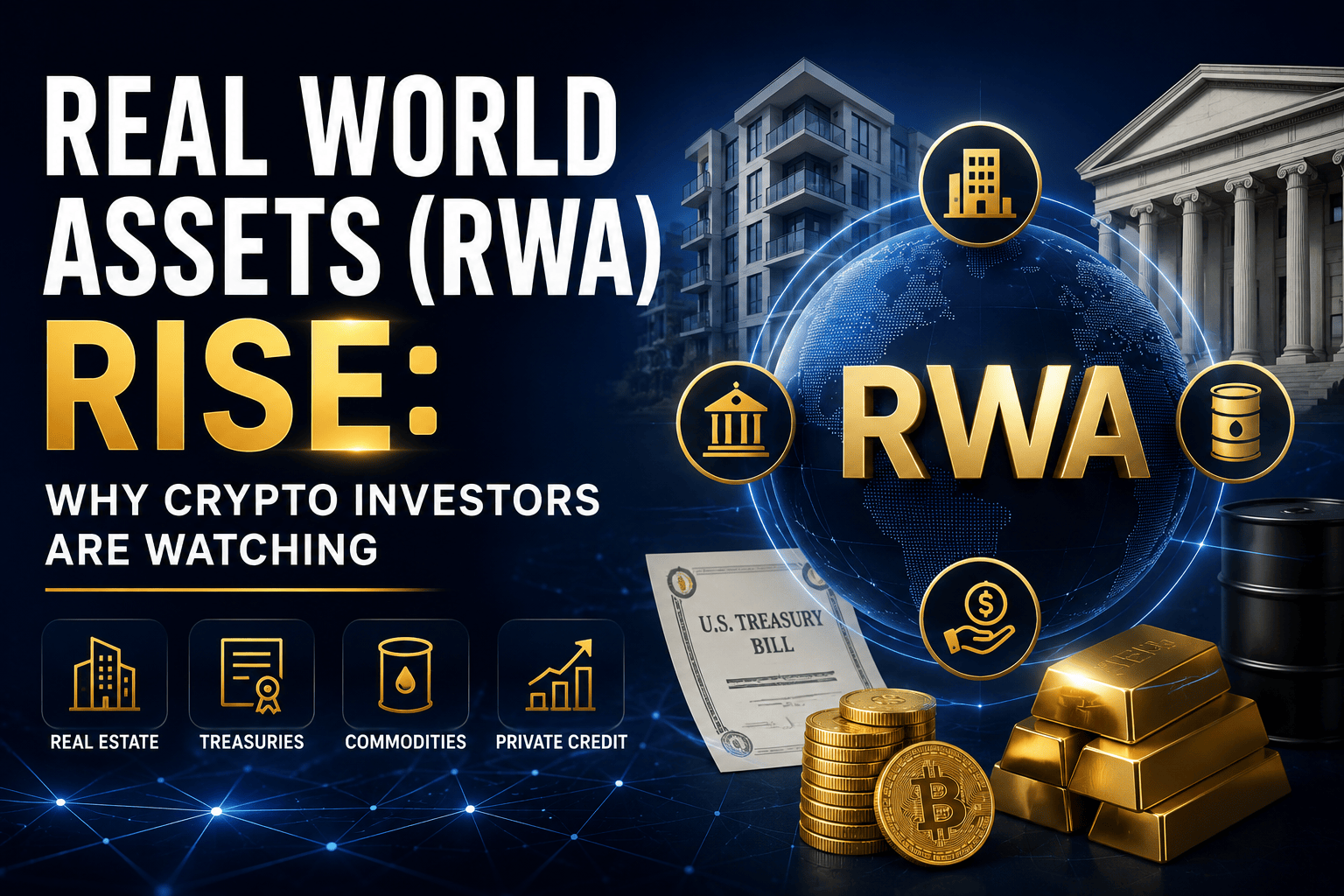
The Rise of Real World Assets (RWA) in Crypto and Why Investors Are Watching
The world of cryptocurrency, once largely confined to digital-native assets and speculative ventures, is undergoing a profound transformation. What began as a revolutionary experiment in decentralized finance (DeFi) is now setting its sights on a far grander prize: the multi-trillion-dollar global economy of tangible assets. This ambitious bridge between the digital and physical realms is being forged by the burgeoning sector of Real World Assets (RWAs) in crypto.
For years, the crypto market was characterized by its volatility, driven primarily by the ebb and flow of digital currencies like Bitcoin and Ethereum, and the often-speculative nature of new altcoin projects. While offering unprecedented opportunities for innovation and wealth creation, this inherent instability often deterred traditional institutional investors and those seeking more predictable returns. Enter Real World Assets – a paradigm shift that promises to inject stability, tangibility, and a vast new ocean of value into the blockchain ecosystem.
Investors, both retail and institutional, are increasingly turning their attention to RWAs, recognizing their potential to unlock unprecedented liquidity, democratize access to exclusive asset classes, and provide a much-needed anchor of stability in the often-turbulent crypto seas. This article will delve deep into what RWAs are, how they work, the forces driving their rapid ascent, the diverse categories being tokenized, the transformative benefits they offer, and the challenges that still lie ahead.
Introduction: Bridging the Digital Divide
From its inception, the cryptocurrency movement has been about disrupting traditional financial systems, offering a decentralized alternative free from intermediaries. Early crypto assets, however, were largely self-referential – their value derived from network effects, technological innovation, or speculative demand within the digital ecosystem itself. While groundbreaking, this limited the direct impact of crypto on the vast majority of the world’s wealth, which remains locked in physical assets.
Real World Assets (RWAs) represent the next evolutionary leap for blockchain technology. At its core, RWA tokenization is the process of creating a digital representation (a token) on a blockchain for a tangible asset that exists in the physical world. This could be anything from real estate and precious metals to fine art, government bonds, or even intellectual property. By bringing these assets onto the blockchain, crypto aims to unlock their dormant value, enhance their liquidity, and make them accessible to a global audience in ways previously unimaginable.
The promise of RWAs is not merely to digitize existing assets, but to revolutionize how ownership is transferred, value is exchanged, and capital is allocated across the globe. It’s about creating a robust, transparent, and efficient financial infrastructure that merges the best of both worlds: the immutability and programmability of blockchain with the inherent value and stability of physical assets. This convergence is why investors, from seasoned institutions to savvy retail participants, are watching this space with bated breath.
What Exactly Are Real World Assets (RWAs)?
In the simplest terms, Real World Assets (RWAs) are any assets that have value outside of the blockchain and are subsequently represented as tokens on a blockchain. Unlike cryptocurrencies that are born digital (e.g., Bitcoin, Ethereum), or NFTs that are digital-native creations (e.g., digital art, metaverse land), RWAs originate in the physical world and are then brought onto the blockchain through a process called tokenization.
The universe of RWAs is incredibly diverse, encompassing virtually anything that holds verifiable value:
- Tangible Assets: Physical commodities like gold, silver, oil, and agricultural products; real estate (residential, commercial, industrial); fine art, collectibles, and luxury goods (e.g., rare wines, classic cars).
- Intangible Assets: Financial instruments like government bonds, corporate debt, private equity shares, venture capital funds, and loans; intellectual property (patents, copyrights, music royalties); carbon credits.
- Future Cash Flows: Revenue streams from businesses, infrastructure projects, or even individual income.
The key characteristic of an RWA token is that it derives its value directly from the underlying physical or traditional financial asset it represents. This link to a tangible, verifiable asset provides a layer of stability and intrinsic value that purely digital assets often lack, making RWA tokens less susceptible to the extreme volatility sometimes seen in the broader crypto market.
Tokenization transforms traditionally illiquid assets into divisible, tradable digital units. For instance, a multi-million dollar commercial building, which might take months or years to sell in the traditional market, can be tokenized into thousands or millions of digital tokens. Each token represents a fractional share of ownership in that building, allowing investors to buy and sell small portions with ease on a blockchain-based marketplace. This fundamental shift in how assets are owned, transferred, and traded is at the heart of the RWA revolution.
The Mechanics of RWA Tokenization: How Does It Work?
Bringing a real-world asset onto the blockchain is a complex process that requires careful consideration of legal, technical, and operational aspects. It’s more than just minting a token; it involves establishing a robust bridge between the physical and digital worlds.
The Tokenization Process
- Legal Structuring and Due Diligence: This is arguably the most critical step. A legal entity (often a Special Purpose Vehicle, or SPV) is typically established to own the physical asset. This SPV then issues digital tokens that represent ownership or a claim on the asset. Extensive legal due diligence is performed on the asset to ensure its authenticity, clear title, and compliance with relevant regulations in all applicable jurisdictions. This step defines the legal rights and obligations associated with holding the token.
- Valuation and Auditing: The underlying asset is professionally valued and often audited by independent third parties to establish its fair market price. For ongoing assets like loans or revenue streams, continuous auditing might be required.
- Custodianship: For physical assets, a trusted custodian is appointed to securely hold and manage the asset. This could be a secure vault for gold, a property management company for real estate, or a bank for financial instruments. The custodian’s role is crucial in ensuring the physical asset exists and is maintained, providing the tangible link to the digital token.
- On-Chain Representation (Minting): Once the legal framework, valuation, and custodianship are in place, the digital tokens are minted on a chosen blockchain. These tokens are typically built using established standards like ERC-20 (for fungible assets) or ERC-721/ERC-1155 (for non-fungible or unique assets) on platforms like Ethereum, Polygon, or Solana. Smart contracts govern the rules of these tokens, including ownership transfer, dividend distribution (if applicable), and redemption mechanisms.
- Ongoing Management and Verification: For many RWAs, especially those with fluctuating values or generating income, there’s a need for continuous data feeds and verification. This is where oracles play a vital role.
Key Players and Technologies
- Oracles: Decentralized oracle networks like Chainlink are indispensable. They provide secure, reliable, and tamper-proof data feeds from the real world to the blockchain. For RWAs, oracles can verify asset prices, interest rates, property status, or even carbon credit validation, ensuring the on-chain representation accurately reflects the off-chain reality.
- Permissioned vs. Permissionless Blockchains: RWAs can be tokenized on both public (permissionless) blockchains like Ethereum and private (permissioned) blockchains used by consortia or institutions. Public blockchains offer greater decentralization and accessibility, while private blockchains can offer enhanced privacy and control, often preferred by institutions for regulatory compliance. Hybrid models are also emerging.
- Legal Frameworks: The regulatory classification of RWA tokens is critical. Many RWA tokens, especially those representing equity or debt, are classified as “security tokens” and are subject to stringent securities laws. This requires compliance with KYC (Know Your Customer) and AML (Anti-Money Laundering) regulations, often implemented through whitelisting mechanisms at the smart contract level.
The successful tokenization of an RWA hinges on the seamless integration of these legal, technical, and operational components, ensuring that the digital token is a legally sound and verifiable representation of its real-world counterpart.
Why Now? The Driving Forces Behind RWA’s Ascent
While the concept of tokenizing assets isn’t entirely new, the current surge in RWA adoption is fueled by a confluence of maturing technologies, shifting market demands, and evolving regulatory landscapes.
Maturation of Blockchain Technology
Early blockchains faced significant hurdles in scalability, transaction costs, and interoperability. However, advancements in recent years have dramatically improved their capabilities:
- Scalability Solutions: Layer 2 solutions (e.g., Optimism, Arbitrum), sharding, and alternative high-throughput blockchains (e.g., Solana, Avalanche) have drastically increased transaction speeds and reduced fees, making it economically viable to process a high volume of RWA transactions.
- Enhanced Security: Continuous development and battle-testing have made leading blockchains more robust and secure, instilling greater confidence in their ability to handle high-value assets.
- Interoperability: Bridges and cross-chain communication protocols are making it easier for assets and data to move between different blockchains, creating a more interconnected and efficient ecosystem for RWAs.
Institutional Interest and Demand
Traditional financial institutions (TradFi) are increasingly exploring blockchain technology, driven by several factors:
- Yield Generation: In a low-interest-rate environment, institutions are actively seeking new avenues for yield. RWAs, particularly tokenized bonds or structured credit, can offer attractive, relatively stable returns compared to volatile crypto-native assets.
- Diversification: RWAs provide a way for institutions to diversify their portfolios by gaining exposure to real-world assets through a digital, more efficient wrapper, without the complexities of traditional asset management.
- Efficiency and Cost Reduction: Blockchain offers the promise of instant settlement, reduced counterparty risk, and fewer intermediaries, leading to significant cost savings in back-office operations, clearing, and settlement.
- Regulatory Clarity (Emerging): While still evolving, regulatory bodies worldwide are beginning to provide frameworks for digital assets, including security tokens. This nascent clarity is crucial for institutions that operate under strict compliance mandates.
DeFi’s Search for Stability and Utility
The decentralized finance (DeFi) sector, initially built on crypto-native assets, is actively seeking to expand its utility and reduce its inherent volatility:
- Stable Collateral: DeFi lending protocols and stablecoins have historically relied on highly volatile crypto assets as collateral. RWAs, such as tokenized T-bills or real estate, offer a more stable and predictable form of collateral, reducing liquidation risks and attracting a broader user base.
- Sustainable Yield: Many DeFi yields are often speculative and unsustainable. Integrating RWAs that generate yield from real-world economic activity (e.g., interest from loans, rental income) provides a more robust and sustainable source of returns for DeFi participants.
- Expanding Addressable Market: By connecting to the multi-trillion-dollar RWA market, DeFi can move beyond its crypto-native niche and tap into a vastly larger pool of capital and assets, increasing its relevance and impact on the global economy.
Democratization of Investment
RWA tokenization has the power to fundamentally change who can invest in what:
- Fractional Ownership: High-value assets like commercial real estate or fine art, traditionally accessible only to ultra-high-net-worth individuals, can be broken down into tiny, affordable tokens. This allows retail investors to own a fraction of these assets, diversifying their portfolios with previously out-of-reach opportunities.
- Lower Entry Barriers: The minimum investment required for many tokenized RWAs is significantly lower than traditional counterparts, opening up exclusive markets to a wider global audience.
- Global Access: Investors from anywhere in the world, subject to local regulations, can potentially access tokenized assets, breaking down geographical barriers and fostering a truly global investment landscape.
These converging forces create a compelling narrative for the rise of RWAs, positioning them as a critical bridge between the established financial world and the innovative frontier of blockchain technology.
Diverse Categories of RWAs Being Tokenized
The scope of Real World Assets being tokenized is vast and continually expanding, demonstrating the versatility of blockchain technology. Here are some of the most prominent categories:
Elizabeth Stark Net Worth 2026: Bitcoin Lightning Network Fortune.
Mariam Naficy Net Worth 2026: Minted Founder, Arcade CEO’s Wealth
Upload O’Level Result on JAMB Portal via Phone 2026: Simple Guide
Real Estate
Real estate is one of the most natural fits for RWA tokenization due to its high value, illiquidity, and often complex ownership transfer processes.
- Examples: Commercial buildings, residential properties, development projects, vacation rentals, and even fractional ownership in large portfolios.
- Benefits:
- Enhanced Liquidity: Selling a token representing a share of a property is far quicker and easier than selling the entire physical property.
- Fractional Ownership: Allows smaller investors to own a piece of high-value properties, democratizing access.
- Global Investment: Investors from across the globe can participate without complex cross-border legal hurdles.
- Transparency: All ownership transfers and rental income distributions can be immutably recorded on the blockchain.
- Projects:
- RealT: Offers fractional, tokenized ownership of U.S. residential real estate, allowing investors to earn rental income.
- Propy: Aims to automate real estate transactions using blockchain, facilitating property sales with crypto and tokenizing property deeds.
Commodities
Tokenizing commodities provides a more accessible and efficient way to invest in physical goods.
- Examples: Gold, silver, rare earth metals, oil, and even agricultural products. Carbon credits, which represent a reduction in greenhouse gas emissions, are also a growing category.
- Benefits:
- Easier Trading: Tokenized commodities can be traded 24/7 on digital exchanges, bypassing traditional market hours.
- Reduced Storage Costs (Indirectly): Investors own a token representing a claim on a physically held asset, often managed by a professional custodian, potentially simplifying logistics and reducing individual storage burdens.
- Transparency and Auditability: Proof of reserves can be regularly audited and verified on-chain.
- Projects:
- PAX Gold (PAXG): An ERC-20 token where each token is backed by one troy ounce of a 400 oz London Good Delivery gold bar stored in secure vaults.
- Kinesis Money: Offers a system where digital assets (KAU for gold, KAG for silver) are 1:1 backed by allocated physical precious metals.
- Toucan Protocol: Focuses on tokenizing carbon credits, bringing them onto the blockchain to enhance transparency and liquidity in carbon markets.
Financial Instruments
This category represents a significant bridge between traditional finance and crypto, offering tokenized versions of established financial products.
- Examples: Government bonds (e.g., U.S. Treasuries), corporate bonds, private credit, venture capital fund shares, private equity, and structured loans.
- Benefits:
- Instant Settlement: Eliminates the T+2 or T+3 settlement times of traditional markets.
- Reduced Intermediaries: Streamlines the issuance and trading process, cutting out brokers and clearinghouses.
- Fractionalization: Allows smaller investors to access high-yield bonds or private markets.
- New Collateral for DeFi: Provides stable, yield-bearing assets for decentralized lending and borrowing.
- Projects:
- Ondo Finance: Connects institutional-grade financial products (like U.S. Treasuries and money market funds) to DeFi, allowing users to earn yield from these traditional assets.
- Centrifuge: Focuses on bringing real-world invoices and assets into DeFi as collateral for borrowing, particularly for small and medium-sized enterprises (SMEs).
- Maple Finance: A decentralized corporate credit market that allows institutions to borrow from DeFi lenders using tokenized real-world assets as collateral.
Art and Collectibles
High-value art and unique collectibles are prime candidates for tokenization, addressing issues of authenticity, liquidity, and accessibility.
- Examples: Master paintings, sculptures, rare wines, luxury watches, and historical artifacts.
- Benefits:
- Fractional Ownership: Makes high-value art accessible to a broader investor base.
- Authenticity Verification: Blockchain can provide an immutable record of provenance and ownership, combating fraud.
- Increased Liquidity: Allows for easier trading of shares in unique, often illiquid assets.
- Projects: While many platforms exist for traditional art investment (e.g., Masterworks), blockchain-native projects are emerging to directly tokenize physical art pieces, using NFTs to represent ownership shares.
Intellectual Property & Royalties
Tokenizing future revenue streams or ownership rights in intellectual property offers new models for financing and distribution.
- Examples: Music royalties, film rights, patents, and licensing agreements.
- Benefits:
- Direct Distribution: Royalties can be automatically distributed to token holders via smart contracts.
- Transparent Tracking: All revenue streams and payouts are recorded on the blockchain.
- New Funding Models: Creators can raise capital by selling future royalty streams as tokens.
These diverse applications highlight the immense potential of RWAs to reshape various industries, making asset ownership and investment more efficient, transparent, and accessible than ever before.
The Transformative Benefits of RWA Tokenization
The integration of Real World Assets into the crypto ecosystem is not merely an incremental improvement; it represents a fundamental shift with far-reaching benefits for investors, asset owners, and the global financial system.
Enhanced Liquidity
One of the most significant advantages of tokenization is its ability to transform illiquid assets into highly liquid ones. Assets like real estate, private equity, or fine art can take months or even years to sell in traditional markets. By tokenizing them, they become divisible and tradable 24/7 on global blockchain-based exchanges, dramatically reducing transaction times and increasing market efficiency. This unlocks capital that would otherwise be tied up for extended periods.
Fractional Ownership
Tokenization democratizes access to high-value assets that were traditionally exclusive to wealthy individuals or institutional investors. A token representing a share of a commercial building, a rare diamond, or a government bond can be purchased for a fraction of the cost of the entire asset. This allows retail investors to diversify their portfolios with assets previously out of reach, lowering entry barriers and fostering financial inclusion on a global scale.
Increased Transparency and Auditability
Blockchain’s immutable ledger provides an unprecedented level of transparency. Every transaction, ownership transfer, and distribution of income related to a tokenized asset is recorded on the blockchain, creating a verifiable and tamper-proof history. This reduces the potential for fraud, enhances trust among participants, and simplifies auditing processes, as all relevant data is publicly accessible (while maintaining privacy where required).
Reduced Costs and Intermediaries
Traditional asset markets are often burdened by multiple intermediaries – brokers, lawyers, custodians, clearinghouses – each adding fees and complexity. Tokenization, powered by smart contracts, can automate many of these functions, streamlining processes like ownership transfer, dividend distribution, and settlement. This disintermediation leads to significantly lower transaction costs, faster settlement times, and greater overall efficiency.
Global Accessibility
Blockchain technology transcends geographical boundaries. Tokenized RWAs can be bought and sold by anyone, anywhere in the world, subject to local regulatory compliance. This opens up new capital pools for asset owners and provides investors with access to a broader range of investment opportunities beyond their local markets, fostering a truly globalized financial ecosystem.
New Collateral Opportunities for DeFi
For the decentralized finance (DeFi) sector, RWAs offer a game-changing opportunity to diversify collateral beyond volatile crypto-native assets. By using tokenized real estate, bonds, or invoices as collateral for loans, DeFi protocols can achieve greater stability, reduce liquidation risks, and attract institutional capital seeking more predictable and secure lending opportunities.