

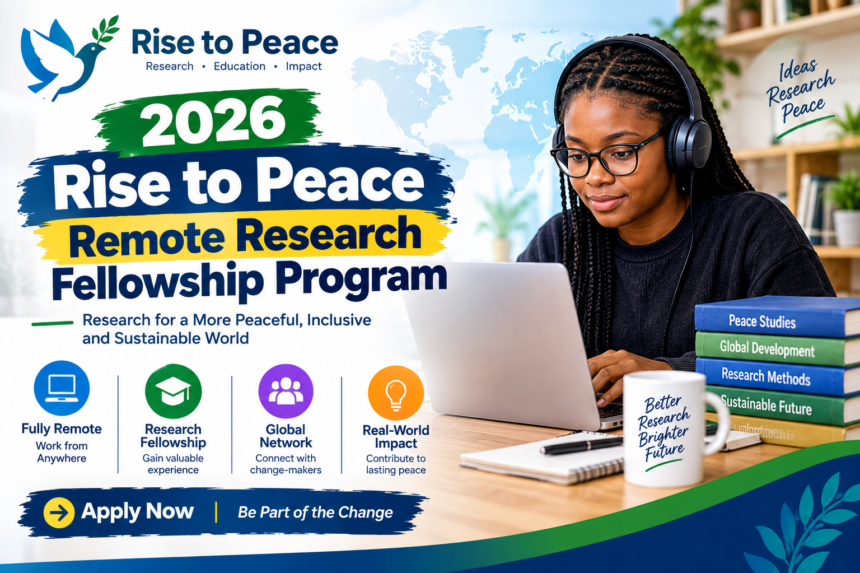
The 2026 Rise to Peace Research Fellowship: A Call for Remote Innovators in Global Peacebuilding
In an increasingly interconnected yet fractured world, the pursuit of peace remains humanity’s most urgent endeavor. From localized conflicts to global geopolitical tensions, the challenges to stability and harmony are multifaceted and constantly evolving. Addressing these complexities requires not only diplomatic efforts and humanitarian aid but also rigorous, innovative, and deeply informed research. It is within this critical context that the 2026 Rise to Peace Research Fellowship (Remote Programme) emerges as a beacon for aspiring scholars and practitioners dedicated to forging a more peaceful future.
This comprehensive remote fellowship offers an unparalleled opportunity for individuals globally to contribute groundbreaking research to the field of peace and conflict studies. Designed to transcend geographical barriers and foster a truly international community of thought leaders, the 2026 program invites a new generation of peacebuilders to engage with pressing global issues, develop cutting-edge solutions, and shape the discourse on peacebuilding from anywhere in the world.
Understanding the Rise to Peace Initiative
The Rise to Peace Initiative was founded on the principle that sustainable peace is not merely the absence of war, but the presence of justice, equity, and human dignity. Established by a consortium of leading academics, former diplomats, and peace activists, its mission is to advance understanding and practice in conflict resolution, post-conflict reconstruction, human rights, and preventive diplomacy. Over the years, Rise to Peace has grown into a respected global platform, known for its commitment to evidence-based research, policy-relevant analysis, and fostering a collaborative environment for peace scholars and practitioners.
The initiative operates with a core belief that intellectual inquiry, when coupled with practical application, can significantly contribute to mitigating violence, building resilient communities, and promoting lasting reconciliation. Through various programs, publications, and partnerships, Rise to Peace has consistently championed interdisciplinary approaches to peacebuilding, recognizing that the roots of conflict are often intertwined with social, economic, environmental, and political factors. The 2026 Research Fellowship is a cornerstone of this commitment, representing a significant investment in nurturing the next wave of experts who will drive the field forward.
- Pixel HiLight Upgraded: Explore Powerful New Features and Enhancements
- Nigerian Air Force Recruitment 2026: Apply, Requirements & Portal Guide
- Android vs iPhone 2026: Best Smartphones for Remote Work & AI Productivity
The 2026 Research Fellowship: An Overview
The 2026 Rise to Peace Research Fellowship is a prestigious, year-long remote program designed to support outstanding early-to-mid career researchers in conducting independent, impactful research related to peace and conflict. This fellowship is more than just a grant; it is a holistic program that offers mentorship, professional development, and a vibrant intellectual community.
The primary objective of the fellowship is to generate new knowledge and innovative approaches that can inform policy and practice in peacebuilding. Fellows are expected to undertake original research projects that align with the core themes of the Rise to Peace Initiative, culminating in significant outputs such as academic papers, policy briefs, or public-facing reports. The remote nature of the program ensures that talent is drawn from diverse geographical and socio-economic backgrounds, fostering a truly global perspective on peace challenges and solutions.
Key Objectives of the Fellowship
- Foster Innovative Research: Encourage and support original research that addresses critical gaps in peace and conflict studies.
- Build a Global Community: Connect fellows from different regions and disciplines, creating a collaborative network of peace scholars.
- Contribute to Policy and Practice: Generate actionable insights and recommendations that can influence policymakers and practitioners.
- Enhance Professional Development: Provide fellows with advanced training, mentorship, and resources to further their careers.
- Promote Dissemination: Support fellows in publishing and presenting their research to wider academic, policy, and public audiences.
Who is This Fellowship For?
The fellowship targets a diverse group of individuals who possess a strong academic background, demonstrated research capabilities, and a deep commitment to peace. Ideal candidates include:
- PhD Candidates: Those in the advanced stages of their doctoral research who can benefit from dedicated time and resources to complete their dissertations or spin off related projects.
- Postdoctoral Researchers: Individuals who have recently completed their PhDs and are looking to develop an independent research agenda.
- Early-to-Mid Career Academics: University lecturers, research associates, or assistant professors seeking to expand their research portfolio.
- Experienced Practitioners: Professionals working in NGOs, international organizations, or government agencies with a strong research interest and a desire to bridge the gap between practice and academia.
The remote format is particularly beneficial for those who may not be able to relocate for a traditional fellowship, offering flexibility to balance research with existing professional or personal commitments.
Core Themes and Research Areas
The 2026 Rise to Peace Research Fellowship encourages proposals that explore a wide range of topics within peace and conflict studies. While innovative and interdisciplinary proposals are always welcome, research should generally align with the initiative’s overarching mission. The following themes represent key areas of interest, though this list is not exhaustive:
Conflict Resolution and Mediation
Research focusing on theories and practices of conflict resolution, negotiation, mediation, and dialogue processes. This could include studies on track-one, track-two, or multi-track diplomacy, the role of third parties, or innovative approaches to de-escalation.
Post-Conflict Reconstruction and Development
Investigations into the challenges and successes of societies transitioning from conflict to peace. Topics might include disarmament, demobilization, and reintegration (DDR), security sector reform (SSR), economic recovery, infrastructure rebuilding, and the role of international aid.
Human Rights and Transitional Justice
Studies examining the protection and promotion of human rights in conflict and post-conflict settings. This includes research on accountability mechanisms, truth commissions, reparations, memorialization, and legal frameworks for transitional justice.
Environmental Peacebuilding
Exploring the nexus between environmental degradation, resource scarcity, and conflict, and how environmental cooperation can be leveraged for peace. This could involve research on climate change adaptation, water diplomacy, land use conflicts, or sustainable resource management in fragile states.
Gender and Peace
Analysis of the differential impacts of conflict on men, women, and gender non-conforming individuals, and the critical role of gender perspectives in peace processes, security, and post-conflict recovery. Research on women’s leadership in peacebuilding, gender-based violence, and the implementation of UNSCR 1325 is particularly relevant.
Technology and Peace/Conflict
Investigating the dual-use nature of technology in peace and conflict. This includes studies on cyber warfare, disinformation campaigns, the use of AI in conflict prediction, digital peacebuilding initiatives, online activism, and the ethical implications of emerging technologies.
Peace Education and Youth Engagement
Research into the role of education in fostering cultures of peace, preventing radicalization, and promoting reconciliation. This also encompasses studies on youth participation in peace processes, intergenerational dialogue, and the empowerment of young peacebuilders.
The Role of International Organizations and Regional Bodies
Examining the effectiveness, challenges, and evolving mandates of international and regional organizations (e.g., UN, AU, EU, ASEAN) in conflict prevention, peacekeeping, and peacebuilding efforts.
Preventive Diplomacy and Early Warning Systems
Studies on strategies and mechanisms for preventing conflicts before they escalate, including early warning systems, diplomatic interventions, and the role of civil society in early response.
Structure and Components of the Fellowship
The 2026 Rise to Peace Research Fellowship is structured to provide a comprehensive and supportive environment for fellows to conduct high-quality research and engage with a global community.
Independent Research Project
At the core of the fellowship is the fellow’s independent research project. Each fellow will develop and execute a research plan under the guidance of a dedicated mentor. This involves:
- Research Design: Fellows will refine their research questions, methodologies, and data collection strategies.
- Data Collection and Analysis: Utilizing remote access to digital libraries, databases, and virtual interview tools, fellows will conduct their research.
- Writing and Drafting: Fellows will produce a substantial research output, typically a long-form academic paper, a series of policy briefs, or a comprehensive report.
- Mentorship: Each fellow will be paired with a leading expert in their field who will provide regular guidance, feedback, and intellectual support throughout the fellowship period.
Virtual Workshops and Seminars
The program includes a series of mandatory and optional virtual workshops and seminars designed to enhance fellows’ research skills, broaden their knowledge, and facilitate peer learning. These may cover:
- Advanced Research Methodologies: Training in qualitative, quantitative, and mixed-methods approaches relevant to peace and conflict studies.
- Academic Writing and Publication: Workshops on structuring academic papers, navigating the peer-review process, and publishing in reputable journals.
- Policy Brief Writing: Training on translating academic research into concise, impactful policy recommendations for non-academic audiences.
- Presentation Skills: Sessions on effectively communicating research findings to diverse audiences, including virtual presentations.
- Expert Guest Lectures: Regular seminars featuring prominent scholars, policymakers, and practitioners sharing their insights on contemporary peace challenges.
- Peer Review Sessions: Opportunities for fellows to present their work-in-progress and receive constructive feedback from their peers and mentors.
Networking and Collaboration
Despite its remote nature, the fellowship places a strong emphasis on fostering a vibrant and connected community.
- Fellows’ Community Platform: An exclusive online platform where fellows can interact, share resources, discuss ideas, and collaborate on projects.
- Interdisciplinary Connections: Opportunities to connect with fellows working on diverse topics and methodologies, encouraging cross-pollination of ideas.
- Virtual Coffee Breaks and Social Events: Informal online gatherings to build rapport and personal connections among fellows.
- Opportunities for Joint Publications: Encouragement and support for fellows to collaborate on research papers or policy briefs.
Dissemination and Impact
A key goal of the fellowship is to ensure that research findings reach relevant audiences and contribute to real-world impact.
- Publication Support: Assistance with identifying suitable publication outlets, manuscript preparation, and navigating the submission process.
- Policy Engagement: Opportunities to present research findings to policymakers, government officials, and international organizations through virtual briefings or roundtables.
- Public Outreach: Support for fellows to translate their research into accessible formats for the general public, such as blog posts, op-eds, or podcast appearances.
- Annual Virtual Symposium: A culminating event where all fellows present their final research projects to a wider audience of academics, practitioners, and the public.
The Remote Advantage: Why a Virtual Fellowship?
The decision to offer the 2026 Rise to Peace Research Fellowship as a fully remote program is a deliberate choice rooted in a commitment to accessibility, inclusivity, and leveraging modern technology for global collaboration.
Global Reach and Diversity
A remote program eliminates geographical barriers, allowing Rise to Peace to attract the brightest minds from every corner of the globe. This ensures a diverse cohort of fellows, bringing a rich tapestry of perspectives, experiences, and regional insights to the study of peace. Such diversity is crucial for understanding and addressing the multifaceted nature of global conflicts.
Flexibility and Work-Life Balance
For many talented researchers, traditional residential fellowships pose significant challenges related to relocation, family commitments, or existing professional responsibilities. The remote format offers unparalleled flexibility, enabling fellows to pursue their research goals without disrupting their lives, thus making the fellowship accessible to a broader pool of candidates.
Cost-Effectiveness
By removing the need for travel, accommodation, and relocation expenses, the remote fellowship significantly reduces the financial burden on both the fellows and the sponsoring institution. This allows resources to be directed more effectively towards research support, stipends, and program development.
Leveraging Digital Tools for Collaboration
The digital age provides an array of sophisticated tools for virtual collaboration, communication, and resource sharing. Video conferencing platforms, shared document editors, online research databases, and dedicated community portals enable seamless interaction and teamwork among fellows and mentors, regardless of their physical location.
Inclusivity and Accessibility
Remote fellowships inherently promote inclusivity by accommodating individuals with disabilities, those in remote areas with limited access to traditional academic centers, or those facing visa restrictions. This commitment to accessibility ensures that talent is recognized and supported wherever it exists.
Eligibility Criteria and Application Process
The 2026 Rise to Peace Research Fellowship seeks highly motivated and qualified individuals. Prospective applicants are encouraged to carefully review the criteria and prepare a comprehensive application.
Who Should Apply?
Successful candidates typically possess:
- Academic Background: A Master’s degree is the minimum requirement, with a strong preference for candidates holding or pursuing a PhD in peace and conflict studies, international relations, political science, sociology, anthropology, law, economics, or a related field. Postdoctoral researchers are highly encouraged to apply.
- Research Experience: Demonstrated experience in conducting independent research, including familiarity with research methodologies, data analysis, and academic writing. A track record of publications or significant research outputs is a strong asset.
- Commitment to Peace Studies: A clear passion for and commitment to contributing to the field of peace and conflict studies, as evidenced by academic work, professional experience, or volunteer activities.
- Strong English Communication Skills: As the program is conducted entirely in English, excellent written and oral communication skills are essential for participation in workshops, presentations, and research output.
- Technical Capacity: Access to a reliable internet connection and familiarity with virtual communication and collaboration tools.
Application Requirements
A complete application package will typically include:
- Curriculum Vitae (CV) / Resume: A detailed CV highlighting academic qualifications, research experience, publications, professional history, and any relevant awards or honors.
- Research Proposal (2000-2500 words): This is the most critical component. It should clearly outline:
- Title and Abstract: A concise summary of the proposed research.
- Introduction and Background: The research problem, its significance, and how it relates to existing literature.
- Research Questions: Clear, focused, and answerable questions.
- Methodology: Detailed explanation of the research design, data collection methods (e.g., interviews, surveys, archival research, discourse analysis), and analytical framework.
- Expected Outcomes and Impact: What new knowledge will be generated, and how will it contribute to policy or practice in peacebuilding?
- Timeline: A feasible plan for completing the research within the fellowship period.
- Bibliography: Relevant academic sources.
- Statement of Purpose (1000-1200 words): An essay explaining your motivation for applying, your long-term career goals, how the fellowship aligns with your academic and professional aspirations, and how your background and experiences make you a suitable candidate.
- Letters of Recommendation (2): Confidential letters from academic supervisors or professional mentors who can speak to your research abilities, intellectual capacity, and commitment.
- Writing Sample: A recent academic paper, thesis chapter, or published article (preferably single-authored) that demonstrates your research and writing skills.
Selection Process and Timeline
Applications will undergo a rigorous multi-stage selection process:
- Initial Review: An expert panel will review all applications against the eligibility criteria and the quality of the research proposal.
- Shortlisting: A select number of candidates will be shortlisted for interviews.
- Interviews: Virtual interviews will be conducted to assess candidates’ research ideas, communication skills, and fit with the fellowship’s objectives.
- Final Selection: Successful candidates will be notified, and the fellowship will commence in early 2026.
- Application Window: Typically opens in Q2 of the preceding year (e.g., Spring 2025 for the 2026 fellowship) with a deadline in Q3/Q4. Specific dates will be announced on the Rise to Peace website.
Benefits of Becoming a Rise to Peace Fellow
The 2026 Rise to Peace Research Fellowship offers a comprehensive package of benefits designed to support fellows’ research and career development.
- Generous Financial Stipend: A competitive stipend will be provided to cover living expenses and allow fellows to dedicate significant time to their research.
- Expert Mentorship: Personalized guidance from leading scholars and practitioners in the field, offering invaluable intellectual support and career advice.
- Access to Resources: Full remote access to extensive digital libraries, academic databases, research software, and other essential tools.
- Publication and Dissemination Opportunities: Support for publishing research in reputable academic journals, contributing to Rise to Peace publications, and presenting at virtual conferences.
- Enhanced Professional Network: Opportunities to connect with a global network of peers, mentors, and alumni, fostering collaborations that extend beyond the fellowship period.
- Contribution to Real-World Impact: The chance to contribute directly to policy debates and practical peacebuilding efforts through impactful, evidence-based research.
- Career Advancement: The fellowship serves as a significant credential, enhancing fellows’ profiles for future academic positions, research grants, or leadership roles in peacebuilding organizations.
- Professional Development: Participation in workshops and seminars designed to hone research, writing, and presentation skills.
Preparing a Winning Application
Securing a competitive fellowship like the 2026 Rise to Peace Research Fellowship requires careful preparation and strategic presentation of your qualifications.
Crafting a Compelling Research Proposal
Your research proposal is the cornerstone of your application. It must demonstrate originality, intellectual rigor, and feasibility.
- Originality: Propose a research question that addresses a gap in existing literature or offers a novel perspective on an established issue.
- Relevance: Clearly articulate how your research aligns with the core themes of the Rise to Peace Initiative and its potential impact on peacebuilding.
- Methodological Soundness: Present a clear, well-justified methodology that demonstrates your understanding of research design and your ability to execute the project. Be realistic about what can be achieved remotely.
- Feasibility: Ensure your proposed timeline and resources are realistic for a year-long remote fellowship.
- Impact: Articulate the potential academic, policy, and practical implications of your research.
Highlighting Relevant Experience
Your CV and statement of purpose should clearly showcase your research experience, academic achievements, and any professional or volunteer work related to peace and conflict. Quantify your achievements where possible (e.g., “Led a team of 3 researchers,” “Published 2 peer-reviewed articles”).
Strong Statement of Purpose
This is your opportunity to tell your story. Express your passion for peace studies, explain why this specific fellowship is crucial for your career trajectory, and demonstrate how your values and goals align with the mission of Rise to Peace. Be authentic and articulate.
Securing Strong Recommendations
Choose recommenders who know your work well and can speak specifically to your research abilities, intellectual curiosity, work ethic, and potential to succeed in a demanding research environment. Provide them with your research proposal and statement of purpose to help them write a tailored and impactful letter.
Attention to Detail
Proofread all your documents meticulously. A well-presented, error-free application reflects professionalism and attention to detail, which are crucial qualities for a research fellow.
Impact and Future Outlook
The 2026 Rise to Peace Research Fellowship is more than an individual opportunity; it is an investment in the collective future of peacebuilding. The research generated by these fellows will not only enrich academic discourse but also provide critical insights for practitioners and policymakers grappling with complex global challenges. By fostering a diverse and interconnected community of scholars, the fellowship aims to create a lasting legacy of collaborative inquiry and impactful action.
The Rise to Peace Initiative envisions a future where evidence-based research consistently informs peace processes, where innovative solutions emerge from global collaborations, and where a new generation of leaders is equipped to navigate and transform conflict. The 2026 cohort will play a vital role in shaping this future, contributing to a deeper understanding of peace and conflict dynamics and offering pathways towards more just and sustainable peace worldwide.
Conclusion
The 2026 Rise to Peace Research Fellowship (Remote Programme) represents a unique and powerful opportunity for dedicated scholars and practitioners to advance the critical field of peace and conflict studies. By embracing a remote format, the fellowship opens its doors to a global talent pool, fostering diversity, flexibility, and innovative collaboration. If you are passionate about contributing to a more peaceful world through rigorous research, possess a strong academic background, and are eager to join a vibrant international community, this fellowship offers an unparalleled platform to realize your potential. Prepare your application with care, articulate your vision for peace, and seize the chance to become a part of the Rise to Peace movement. The journey towards a more peaceful future begins with informed inquiry, and your research could be the next crucial step.


