Connect with us

Scholarships & Fellowships

Saudi Arabia 2026 Fully Funded Scholarship for Nigerians: Apply Now!

Published

on

Saudi Arabia 2026 Fully Funded Scholarship for Nigerians

Saudi Arabia Opens 2026 Fully Funded Scholarship for Nigerians: Your Comprehensive Guide

The pursuit of higher education is a transformative journey, and for many Nigerians, the dream of studying abroad, particularly in a globally recognized institution, remains a significant aspiration. For years, Saudi Arabia has been a beacon for international students, offering world-class education coupled with generous scholarships. In 2026, this opportunity is set to expand significantly, with a fully funded scholarship program specifically opening its doors to Nigerian students. This presents a remarkable chance for ambitious individuals to access quality education, immerse themselves in a new culture, and gain invaluable international experience without the burden of financial constraints.

This comprehensive guide is designed to equip Nigerian students with all the essential information they need to navigate the application process for the 2026 Saudi Arabian fully funded scholarships. We will delve into the eligibility criteria, the application procedure, the incredible benefits offered, and provide tips to strengthen your application.

Understanding the Saudi Arabian Scholarship Landscape

Saudi Arabia has a long-standing commitment to fostering international academic exchange. The Kingdom invests heavily in its educational institutions, which boast state-of-the-art facilities, renowned faculty, and a diverse student body. Scholarships are a cornerstone of this strategy, aimed at attracting bright minds from around the world, including Nigeria, to contribute to academic excellence and cultural understanding.

The 2026 scholarship initiative for Nigerians signifies a targeted effort to enhance bilateral relations and provide a platform for Nigerian students to excel in various fields. These scholarships are typically offered by prestigious Saudi universities, often funded by the Saudi government or affiliated organizations.

Eligibility Criteria: Are You Qualified?

Meeting the eligibility criteria is the first crucial step in your scholarship application journey. While specific details for the 2026 intake will be officially released, we can outline the general requirements based on previous scholarship programs. It is imperative to check the official scholarship portals for the most up-to-date and precise information once it becomes available.

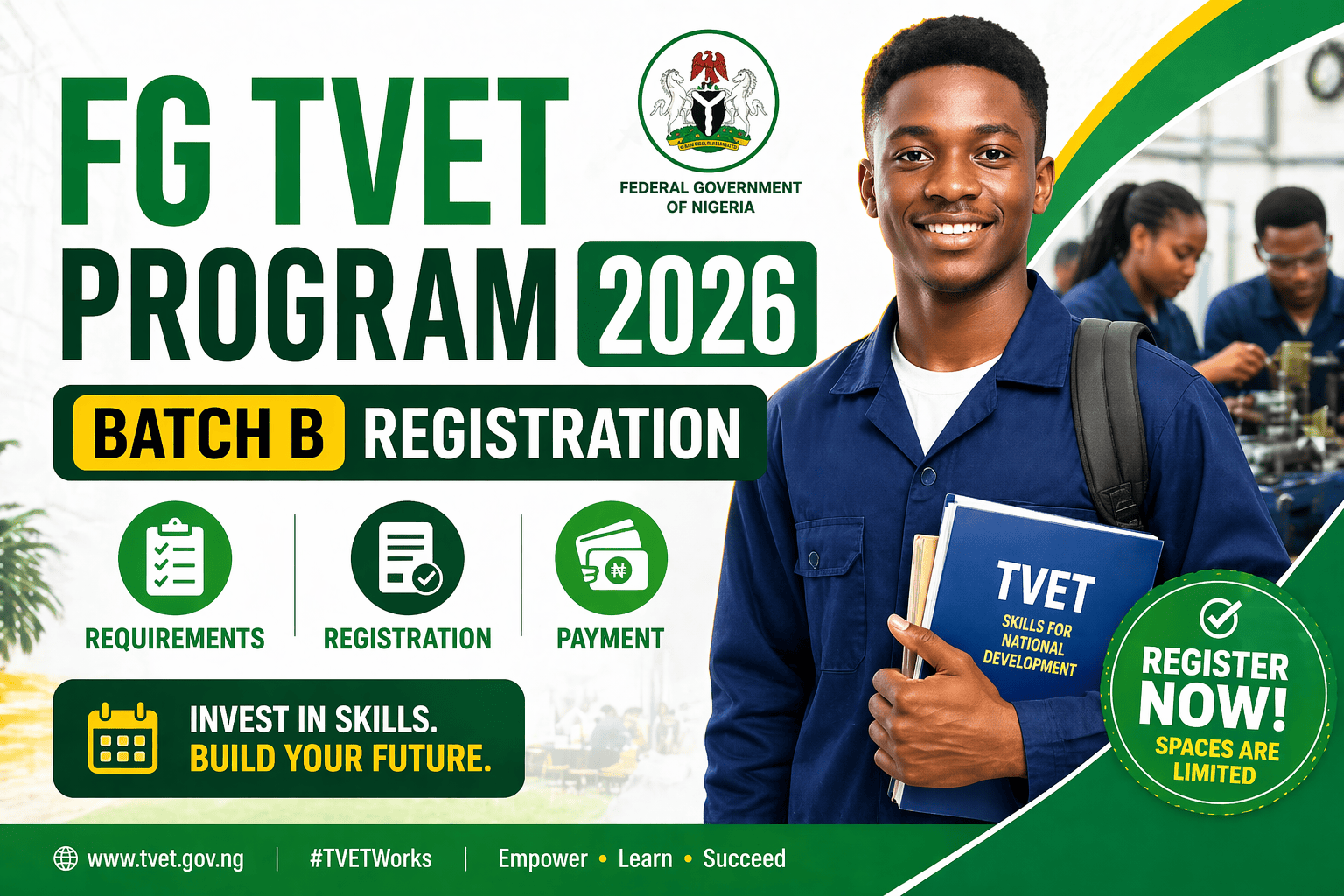
FG TVET Program 2026: Batch B Registration, Requirements & Payment

Google Play Production Access: Why More Testing Is Crucial

AdSense Revenue Calculator: Estimate Your 2026 Earnings Now

General Academic Requirements:

  • Academic Excellence: A strong academic record is paramount. Applicants are typically required to have achieved excellent grades in their secondary education (for undergraduate programs) or their bachelor’s degree (for postgraduate programs). A minimum GPA or a specific percentage in relevant subjects will be stipulated.
  • Relevant Field of Study: Scholarships are often tied to specific fields of study that align with Saudi Arabia’s development goals and academic strengths. These can include, but are not limited to:
    • Engineering (various disciplines)
    • Computer Science and IT
    • Medicine and Health Sciences
    • Business Administration and Economics
    • Islamic Studies and Arabic Language
    • Sciences (Physics, Chemistry, Biology, Mathematics)
    • Humanities and Social Sciences
  • Age Limit: There might be age restrictions for applicants, particularly for undergraduate programs. This is usually set to ensure applicants are at the appropriate stage of their academic career.
  • Nationality: As this scholarship is specifically for Nigerians, proof of Nigerian nationality will be required.

Language Proficiency:

  • English Proficiency: For programs taught in English, applicants will need to demonstrate proficiency through standardized tests like IELTS or TOEFL. The required scores will vary depending on the university and program.
  • Arabic Proficiency (if applicable): For programs taught in Arabic, a certain level of proficiency in the Arabic language might be required, or applicants may be offered a preparatory Arabic language course upon arrival.

Other Important Requirements:

  • Good Conduct: Applicants are generally expected to have a clean record and provide a certificate of good conduct.
  • Medical Fitness: A medical examination may be required to ensure the applicant is in good health to undertake their studies.
  • No Prior Scholarships: In some cases, applicants who have previously received scholarships from Saudi Arabia might not be eligible.
  • Commitment to Return: While not always a strict requirement, some scholarships may encourage or expect recipients to return to their home country after completing their studies to contribute to national development.

How to Apply: A Step-by-Step Guide

The application process for Saudi Arabian scholarships is generally structured and requires meticulous attention to detail. Here’s a breakdown of the typical steps involved:

Step 1: Identify the Scholarship Provider and Program

The first and most critical step is to identify which Saudi universities are offering scholarships for Nigerian students in 2026 and which specific programs are available. This information will be released on official channels. Keep an eye on:

  • Saudi Cultural Mission in Nigeria: This is often the primary point of contact for scholarship information.
  • Websites of Saudi Universities: Major universities like King Fahd University of Petroleum and Minerals (KFUPM), King Saud University (KSU), Umm Al-Qura University (UQU), Islamic University of Madinah (IUM), and others will have dedicated scholarship sections on their websites.
  • Ministry of Education, Saudi Arabia: The official ministry website might also publish announcements.

Step 2: Review Program Details and Admission Requirements

Once you’ve identified potential programs, thoroughly review the admission requirements for each. Pay close attention to:

  • Specific academic prerequisites for the chosen course.
  • Required GPA or percentage.
  • English or Arabic language proficiency scores.
  • Application deadlines.

Step 3: Prepare Necessary Documents

Gathering all required documents well in advance is crucial. Common documents include:

  • Completed Application Form: This will usually be an online form.
  • Academic Transcripts and Certificates: Official copies of your secondary school or university results. These may need to be attested by relevant authorities.
  • Passport: A valid international passport with sufficient remaining validity.
  • Passport-Sized Photographs: Recent photographs meeting specific requirements.
  • Statement of Purpose/Motivation Letter: A well-written essay explaining your academic goals, why you chose the program and university, and how the scholarship will help you.
  • Letters of Recommendation: From former teachers, professors, or employers who can attest to your academic abilities and character.
  • English Language Proficiency Test Scores (IELTS/TOEFL): If applicable.
  • Arabic Language Proficiency Test Scores: If applicable.
  • Curriculum Vitae (CV) or Resume: Outlining your academic and any relevant work experience.
  • Medical Certificate: If required.
  • Certificate of Good Conduct: From your local police or relevant authority.
  • Birth Certificate or National ID.

Note: Ensure all documents are translated into English (or Arabic, if required) and notarized or attested as per the scholarship provider’s instructions.

Step 4: Complete and Submit the Online Application

Most scholarship applications are submitted online through the respective university or scholarship portal.

  • Create an Account: You will likely need to create an account on the application portal.
  • Fill in the Application Form: Accurately and completely fill out all sections of the online form. Double-check for any errors.
  • Upload Documents: Upload scanned copies of all required documents in the specified format (usually PDF).
  • Submit: Submit your application before the deadline.

Step 5: Attend Interviews and Entrance Exams (If Applicable)

Some universities or programs may require applicants to undergo interviews (online or in person) or take entrance examinations to assess their suitability. Be prepared to articulate your goals and demonstrate your knowledge.

Step 6: Await the Decision and Follow-Up

After submitting your application, you will need to wait for the scholarship committee’s decision. This can take several weeks or months. Keep an eye on your email and the application portal for updates. If successful, you will receive an offer letter detailing the next steps, including visa application procedures.

Benefits of the Saudi Arabian Fully Funded Scholarship

The Saudi Arabian fully funded scholarship is not just about tuition fees; it’s a comprehensive package designed to ensure students can focus entirely on their academic pursuits and personal development. The benefits typically include:

  • Full Tuition Fee Waiver: This is the most significant benefit, covering the entire cost of your academic program.
  • Monthly Stipend: A generous monthly allowance to cover living expenses, such as accommodation, food, and personal necessities.
  • Accommodation: Provided on-campus or subsidized off-campus housing, often furnished and equipped with essential amenities.
  • Health Insurance: Comprehensive medical coverage for the duration of your studies.
  • Round-Trip Airfare: An annual return ticket to your home country, allowing you to visit family.
  • Book Allowance: A stipend to purchase academic books and materials.
  • Visa and Residence Permit: Assistance with obtaining and renewing your student visa and residence permit.
  • Access to University Facilities: Full access to libraries, laboratories, sports facilities, and other campus resources.
  • Cultural and Social Activities: Opportunities to participate in various cultural exchange programs, trips, and social events organized by the university.
  • Pre-Sessional Arabic Language Courses: For programs taught in Arabic, students may be provided with intensive Arabic language training before commencing their academic studies.

Types of Programs Available

Saudi Arabian universities offer a wide array of programs at both undergraduate and postgraduate levels. For the 2026 intake, Nigerian students can expect opportunities in:

Undergraduate Programs:

These scholarships are ideal for high school graduates seeking to pursue their bachelor’s degrees. Programs can range from engineering and computer science to business, arts, and Islamic studies.

Examples:

  • Bachelor of Science in Computer Engineering
  • Bachelor of Medicine, Bachelor of Surgery (MBBS)
  • Bachelor of Business Administration
  • Bachelor of Arts in English Literature
  • Bachelor of Islamic Studies

Postgraduate Programs:

For those who have completed their bachelor’s degrees, master’s and doctoral programs offer advanced specialization.

Examples:

  • Master of Science in Petroleum Engineering
  • Master of Science in Data Science
  • Master of Public Health
  • Master of Business Administration (MBA)
  • Doctor of Philosophy (PhD) in Chemical Engineering
  • Doctor of Philosophy (PhD) in Islamic Economics

Tips for a Successful Application

Securing a fully funded scholarship is competitive. Here are some tips to enhance your application:

1. Start Early and Research Thoroughly:

  • Don’t wait for the official announcement. Begin researching Saudi universities and their programs now.
  • Understand the academic strengths of each university and align them with your interests.

2. Craft a Compelling Statement of Purpose:

  • This is your chance to shine. Clearly articulate your academic and career aspirations.
  • Explain why you are passionate about the chosen field and the specific university.
  • Demonstrate how this scholarship will enable you to achieve your goals and contribute to Nigeria’s development.
  • Be authentic and avoid generic statements.

3. Secure Strong Letters of Recommendation:

  • Choose recommenders who know you well academically and can speak to your strengths, work ethic, and potential.
  • Provide them with your CV, statement of purpose, and details about the scholarship to help them write a tailored recommendation.

4. Excel in Standardized Tests:

  • If English or Arabic proficiency tests are required, prepare diligently. Aim to exceed the minimum score requirements.
  • Practice with past papers and consider taking preparatory courses.

5. Maintain a High Academic Record:

  • Your grades are a primary indicator of your academic capability. Strive for excellence in all your studies.

6. Highlight Extracurricular Activities and Leadership Experience:

  • Universities look for well-rounded individuals. Showcase any involvement in clubs, volunteer work, leadership roles, or relevant internships. These demonstrate initiative, teamwork, and commitment.

7. Proofread Everything Meticulously:

  • Typos and grammatical errors can create a negative impression. Proofread your application form, statement of purpose, and any other written materials multiple times. Ask a trusted friend or mentor to review them as well.

8. Understand the Cultural Context:

  • Familiarize yourself with Saudi culture and Islamic values. This can be beneficial during interviews and in your statement of purpose, showing your respect and willingness to adapt.

9. Be Patient and Persistent:

  • The application process can be lengthy. Stay organized, keep track of deadlines, and remain patient while awaiting a response.

What to Expect After Receiving the Scholarship

Congratulations! If you are successful, you will receive an official offer letter. The next steps typically involve:

  • Accepting the Offer: Formally accept the scholarship offer by the stipulated deadline.
  • Visa Application: The university or the Saudi Cultural Mission will guide you through the student visa application process. This usually involves submitting your passport, offer letter, and other required documents to the Saudi embassy or consulate in Nigeria.
  • Pre-Departure Preparations: You will receive information regarding travel arrangements, arrival procedures, and orientation programs.
  • Arrival and Orientation: Upon arrival in Saudi Arabia, you will typically attend an orientation session covering academic expectations, university regulations, cultural norms, and campus life.
  • Commencement of Studies: You will then begin your academic journey, fully supported by the scholarship.

Conclusion

The 2026 Saudi Arabian fully funded scholarship for Nigerian students represents an extraordinary opportunity to access world-class education and gain invaluable international experience. By understanding the eligibility criteria, meticulously preparing your application, and highlighting your academic achievements and personal aspirations, you can significantly increase your chances of success. This scholarship is not merely a financial aid; it is an investment in your future and a gateway to personal and professional growth. Start your preparation now, stay informed about official announcements, and embark on what could be a life-changing educational adventure.

Click to comment

Leave a Reply

Your email address will not be published. Required fields are marked *

Prove your humanity: 5   +   7   =  

Scholarships & Fellowships

Tech Internship vs Fellowship: Which Builds Stronger Career Experience?

Deciding between a tech internship vs fellowship can shape the entire trajectory of your career. Discover the key differences in mentorship, projects, and networking to find out which pathway builds the strongest experience for your goals.

Published

on

Tech Internship vs Fellowship

Tech Internship Programs vs Fellowship Opportunities: Which Helps Build Stronger Experience?

The path to a successful career in technology is no longer linear. A decade ago, the formula was straightforward: earn a computer science degree, secure a summer internship at a recognizable tech company, and transition into a full-time software engineering or product role.

Today, the early-career landscape is far more diverse—and competitive. While traditional tech internships remain a cornerstone of professional development, tech fellowships have emerged as a powerful alternative. Programs like the Major League Hacking (MLH) Fellowship, the Kleiner Perkins Fellowship, and various open-source or civic tech fellowships now compete directly for the industry’s top talent.

For students, self-taught developers, bootcamp graduates, and career switchers, this abundance of choice raises a critical question: Which pathway builds stronger, more marketable experience?

To answer this, we must look beyond the prestige of brand names and analyze how each model shapes your technical skills, professional network, portfolio, and long-term career trajectory.


1. Defining the Models: Internships vs. Fellowships

Before comparing their impact, we must establish clear definitions. While both pathways offer hands-on learning, their structural blueprints, funding models, and core philosophies differ significantly.

+------------------------+------------------------------------------+------------------------------------------+
| Feature                | Tech Internship Programs                 | Tech Fellowship Opportunities            |
+------------------------+------------------------------------------+------------------------------------------+
| Core Focus             | Integration into an existing company     | Project-based learning, research, or     |
|                        | workflow and corporate environment.      | open-source contribution.                |
+------------------------+------------------------------------------+------------------------------------------+
| Primary Deliverable    | Shipped features, bug fixes, or internal | Open-source code, research papers,       |
|                        | tools for a specific employer.           | prototypes, or community-driven products.|
+------------------------+------------------------------------------+------------------------------------------+
| Mentorship Structure   | 1:1 manager or "buddy" within a team.    | Cohort-based, with industry mentors,     |
|                        |                                          | advisors, and peer-to-peer learning.     |
+------------------------+------------------------------------------+------------------------------------------+
| Typical Duration       | 10 to 12 weeks (usually summer).         | Highly variable (8 weeks to 1 year).     |
+------------------------+------------------------------------------+------------------------------------------+
| Primary Outcome        | Direct return offer for full-time employment.| Broad industry network, portfolio piece, |
|                        |                                          | or entrepreneurial launchpad.            |
+------------------------+------------------------------------------+------------------------------------------+

What is a Tech Internship?

A tech internship is a temporary employment arrangement, typically lasting 10 to 12 weeks during the summer. Interns are embedded directly into an engineering, product, or design team within a single company.

The primary goal of an internship program is mutual evaluation: the company assesses the intern’s technical capabilities and cultural fit, while the intern evaluates the company’s work environment. The ultimate success metric for most internships is a return offer—either for another internship or a full-time position upon graduation.

What is a Tech Fellowship?

A tech fellowship is a competitive, cohort-based program that focuses on professional development, specialized project work, or research. Fellowships are often sponsored by venture capital firms, non-profit foundations, educational organizations, or consortiums of tech companies.

Rather than working as a standard employee, fellows often work on open-source software, build independent projects, conduct research, or rotate across multiple startups. The primary goal of a fellowship is talent incubation and leadership development, with a heavy emphasis on community, mentorship, and portfolio building.


2. Technical Skill Acquisition: Depth vs. Breadth

The strength of your technical experience is directly tied to the code you write, the systems you design, and the tools you master. Both internships and fellowships build technical competence, but they do so through different architectural lenses.

How Internships Build Technical Depth

Internships excel at teaching you how software is built at scale within a commercial environment. When you join an engineering team at a company like Stripe, Microsoft, or a mid-sized SaaS startup, you are introduced to:

  • Legacy Codebases: You learn to navigate, debug, and extend codebases that have been written by hundreds of engineers over several years.
  • Production Workflows: You gain hands-on experience with continuous integration and continuous deployment (CI/CD) pipelines, automated testing suites, and rigorous code review processes.
  • Enterprise Tooling: You work with industry-standard monitoring, logging, and cloud infrastructure tools (e.g., Datadog, AWS, Kubernetes) that are rarely used in academic or personal projects.

The Trade-off: Interns are often assigned highly scoped, low-risk projects. You might spend ten weeks building a single internal dashboard or migrating a minor service. While you learn how a massive engineering organization operates, your creative agency and architectural ownership may be limited.

How Fellowships Build Technical Breadth and Autonomy

Fellowships, particularly those focused on open-source or rapid prototyping, prioritize “zero-to-one” development and deep technical autonomy. For example, in the MLH Fellowship, fellows contribute directly to major open-source projects like React, Jest, or Flask.

  • Architectural Ownership: Fellows are often responsible for designing systems from scratch. You aren’t just fixing bugs; you are making high-level decisions about database schemas, API design, and state management.
  • Diverse Tech Stacks: Because fellowships are project-centric rather than company-centric, you may work across multiple languages, frameworks, and paradigms over the course of a single program.
  • Public-Facing Portfolios: The code you write during an open-source or project-based fellowship is public. You can link directly to your pull requests on GitHub, allowing future employers to see exactly how you write code, document your work, and interact with other contributors.

The Trade-off: Fellowships can sometimes lack the operational discipline of a corporate engineering team. If your fellowship does not emphasize strict testing, code reviews, or agile methodologies, you may develop self-taught habits that require correction when you enter a traditional corporate environment.


3. Mentorship and the Support Ecosystem

Technical growth does not happen in a vacuum. The quality of guidance you receive can accelerate your career by years.

         [Corporate Internship]                  [Cohort Fellowship]
         
          +------------------+                  +------------------+
          |  Hiring Manager  |                  | Industry Mentors |
          +--------+---------+                  +--------+---------+
                   |                                     |
         +---------v---------+                  +--------v---------+
         |  Direct Mentor /  |                  |  Global Cohort   |
         |   "Buddy" (1:1)   |                  |   Peer Network   |
         +---------+---------+                  +--------+---------+
                   |                                     |
         +---------v---------+                  +--------v---------+
         |   Internal Team   |                  | Specialized Tech |
         |   Siloed Focus    |                  | Ecosystem Access |
         +-------------------+                  +------------------+

The Internship Mentorship Model: Structured and Siloed

In an internship, you are typically assigned a direct mentor (often called an “intern buddy”) and a hiring manager.

  • The Advantage: This mentorship is highly tactical. Your mentor helps you set up your local development environment, explains the nuances of the company’s proprietary systems, and provides feedback on your pull requests. This mirrors the exact relationship you will have as a junior engineer.
  • The Disadvantage: Your mentorship is confined to the boundaries of your team and company. If your manager is busy or lacks strong coaching skills, your learning experience can suffer significantly. Furthermore, the advice you receive is often optimized for success within that specific company, rather than the industry at large.

The Fellowship Mentorship Model: Networked and Holistic

Fellowships leverage a cohort-based model, connecting you with a diverse web of mentors, industry leaders, and peers.

  • The Advantage: A fellowship cohort acts as a professional accelerator. For instance, in the Kleiner Perkins Fellowship, you are mentored not just by engineers at your host startup, but also by venture capitalists, founders, and product executives across the entire KP portfolio. You receive career coaching, architectural advice, and leadership training that spans multiple industries.
  • The Disadvantage: Mentorship in fellowships is often less hands-on when it comes to daily coding struggles. You are expected to be highly self-directed; mentors are there to guide your high-level strategy, not to help you debug a syntax error at 2:00 AM.

4. Career Trajectory: The “Return Offer” vs. “The Golden Ticket”

Ultimately, both experiences are investments in your future employability. However, they position you for the job market in fundamentally different ways.

Internships: The Direct Pipeline to Conversion

The primary business objective of a corporate internship program is recruitment. Companies invest heavily in interns because it is the most reliable way to source entry-level talent.

  • The Conversion Rate: At major tech companies, conversion rates (the percentage of interns who receive full-time return offers) regularly exceed 60% to 70%.
  • The De-risked Job Search: If you perform well during your summer internship, you can secure a full-time job offer by August of your senior year. This eliminates the stress of senior-year job hunting and technical interviewing.
  • The Brand Equity: Having a brand-name internship (e.g., Google, Uber, Airbnb) on your resume acts as a permanent stamp of approval. It signals to all future recruiters that you have passed a highly competitive screening process and worked within a world-class engineering environment.

Fellowships: The Multi-Directional Launchpad

Fellowships rarely offer a direct, single-track path to a specific full-time role. Instead, they act as a “golden ticket” that opens doors across an entire ecosystem.

  • Access to Elite Networks: Fellowships are highly prestigious and selective. Being named a Thiel Fellow, a Coding It Forward Fellow, or an MLH Fellow instantly distinguishes you from the sea of standard applicants.
  • Entrepreneurial and Venture Opportunities: If your goal is to found a startup, join an early-stage team, or work in venture capital, a fellowship is vastly superior to a corporate internship. You are plugged directly into funding networks, pitch competitions, and founder communities.
  • Flexibility Across Companies: Instead of being locked into a return offer with one company, fellowship alumni networks (like those of the Neo Fellowship or Pear VC Fellowship) actively help you secure interviews at dozens of top-tier startups and tech giants simultaneously.

5. Comparative Case Studies: When to Choose Which

To make this choice concrete, let’s analyze three common profiles of early-career tech professionals and evaluate which pathway offers the stronger experience for each.

Case Study A: The Traditional Computer Science Student

  • Profile: A junior majoring in Computer Science at a state university. They have a solid GPA, know their data structures and algorithms, and want a stable, high-paying software engineering role at a mid-to-large-sized tech company upon graduation.
  • The Verdict: Choose the Tech Internship.
  • Why: For this profile, the structured pipeline of a corporate internship is unmatched. The primary goal is to secure a return offer and get a recognizable brand on their resume. The specialized, self-directed nature of a fellowship is an unnecessary risk when a standard software engineering internship at a company like Salesforce or Adobe provides a direct, well-paved road to a six-figure starting salary.

Case Study B: The Non-Traditional Developer or Career Switcher

  • Profile: A self-taught developer or bootcamp graduate with a background in marketing. They have built several personal projects but struggle to get past automated resume screening tools because they lack a formal CS degree.
  • The Verdict: Choose the Tech Fellowship.
  • Why: Traditional corporate internship programs are notoriously difficult to access without a university affiliation; many explicitly require applicants to be enrolled in an active degree program. Fellowships (especially open-source programs like the MLH Fellowship or Outreachy) are far more inclusive. They evaluate applicants based on code portfolios and raw drive rather than university pedigree. Contributing to major open-source projects during a fellowship provides these candidates with public, verifiable, enterprise-grade code contributions that prove they can perform at a professional level.

Case Study C: The Aspiring Founder or R&D Specialist

  • Profile: An undergraduate student working on novel machine learning models or dreaming of launching their own SaaS startup. They find corporate bureaucracy stifling and want to maximize their creative freedom and network.
  • The Verdict: Choose the Tech Fellowship.
  • Why: A traditional internship will likely relegate this student to maintaining existing enterprise code, which can stifle their entrepreneurial drive. A fellowship like the Kleiner Perkins, Neo, or Thiel Fellowship will surround them with venture capitalists, founders, and brilliant peers who can become co-founders, advisors, or early investors. The autonomy of a fellowship allows them to build, iterate, and ship novel technology rather than optimizing a legacy database query.

6. The Hybrid Approach: How to Combine Both for Maximum Impact

You do not necessarily have to choose one over the other. In fact, the most competitive candidates often leverage both pathways at different stages of their educational or early-career journeys.

Here is a highly effective, multi-year roadmap that combines the strengths of both models:

[Year 1-2: Exploration]  -->  [Year 2-3: Acceleration]  -->  [Year 3-4: Consolidation]

  MLH or Open-Source            Elite Fellowship              Big Tech Internship
     Fellowship                   (e.g., KP, Neo)             or High-Growth Startup
  (Builds public code,          (Builds elite network,        (Secures return offer,
   portfolio, & confidence)      broad industry exposure)      validates scale skills)

Phase 1: The Early-Stage Fellowship (Years 1 & 2)

In your freshman or sophomore year of college (or the first six months of your self-taught journey), securing a traditional corporate internship is incredibly difficult due to lack of experience.

  • Strategy: Apply for open-source and project-based fellowships. These programs act as an on-ramp. They teach you Git workflows, collaborative coding, and system design in a supportive environment. The public contributions you make here will make your resume stand out dramatically when you apply for roles the following year.

Phase 2: The Prestigious Network Fellowship (Year 3)

As you gain technical confidence, target fellowships sponsored by venture capital firms or elite tech organizations.

  • Strategy: Participate in a program that exposes you to high-growth startups, founders, and executive mentorship. This builds your industry context, refines your soft skills, and expands your professional network beyond your local region.

Phase 3: The Corporate or High-Growth Internship (Year 4 / Prior to Graduation)

With a robust public portfolio and an elite network already established, you are now a prime candidate for the most competitive internship programs in the world.

  • Strategy: Secure a summer internship at a high-growth startup or tech giant. Use this period to master enterprise-scale engineering, understand corporate dynamics, and secure a high-paying full-time return offer. You enter the internship not as a novice, but as an experienced developer who has already shipped production-grade code and navigated complex technical ecosystems.

Conclusion: Which Builds Stronger Experience?

The question of whether a tech internship or a fellowship builds “stronger” experience ultimately depends on how you define strength in the context of your personal career goals.

  • Choose a Tech Internship if your priority is structural stability, corporate validation, and a direct path to a full-time role. Internships build deep, specialized technical skills within established engineering ecosystems. They teach you how to be a highly effective cog in a massive, successful machine.
  • Choose a Tech Fellowship if your priority is technical autonomy, public portfolio building, and access to an elite, multi-directional professional network. Fellowships build broad, versatile technical skills and foster an entrepreneurial mindset. They teach you how to build the machine itself.

By understanding the unique architectural blueprints of both pathways, you can strategically navigate your early career—building a resume that is not only technically formidable but perfectly aligned with the future you want to create.

Continue Reading

Scholarships & Fellowships

AI Research Scholarships vs Blockchain Fellowships: Which Has Better Future Opportunities?

Are you torn between the exciting worlds of machine learning and Web3? Discover whether prestigious AI research scholarships or fast-paced blockchain fellowships offer the best funding, career growth, and long-term opportunities for your future.

Published

on

AI Research Scholarships vs Blockchain Fellowships

The global technology landscape is undergoing a massive paradigm shift, driven by two monumental forces: Artificial Intelligence (AI) and Decentralized Ledger Technology (Blockchain). As these industries scale at unprecedented rates, the demand for highly specialized talent has skyrocketed. To capture this intellectual capital, academic institutions, corporate giants, and decentralized foundations are pouring billions of dollars into funding programs.

For researchers, developers, and graduate students, this funding boom presents a critical career crossroads. Should you pursue prestigious AI research scholarships, aligning yourself with institutional giants, deep learning breakthroughs, and corporate research labs? Or should you secure a blockchain fellowship, embedding yourself in the fast-paced, open-source world of Web3, cryptography, and decentralized finance (DeFi)?

This comprehensive analysis compares AI research scholarships and blockchain fellowships across funding structures, career trajectories, intellectual freedom, and long-term market viability to help you determine which path offers the best future opportunities. In this guide, we will explore how AI research scholarships stack up against decentralized fellowships.


1. Understanding AI Research Scholarships

Highly competitive AI research scholarships are structured funding opportunities designed to support academic inquiry, algorithmic development, and applied machine learning research. These programs are typically hosted by elite universities, government bodies, or the research arms of Big Tech conglomerates like Google, Meta, Microsoft, and NVIDIA.

Many academic institutions offer AI research scholarships to attract global talent. When evaluating AI research scholarships, it is important to look at the computing resources provided, as access to high-performance clusters is vital for training modern deep learning models.

Key Characteristics of AI Scholarships

  • Academic Rigor: Most AI scholarships are tied to formal graduate programs (Master’s or Ph.D. tracks) and require a commitment to peer-reviewed publication at top-tier conferences like NeurIPS, ICML, or CVPR.
  • Institutional Backing: These programs are deeply integrated with traditional academic infrastructure, offering access to massive supercomputing clusters, proprietary datasets, and world-renowned faculty advisors.
  • Long-Term Horizon: AI research scholarships often fund multi-year research endeavors, focusing on fundamental questions in machine learning, natural language processing (NLP), computer vision, and AI alignment.

Prominent Examples of AI Research Scholarships

  • The DeepMind Fellowship: Designed to support underrepresented groups in machine learning, providing full tuition, a living stipend, and mentorship from leading DeepMind researchers.
  • The NVIDIA Graduate Fellowship Program: Awarding up to $50,000 per year to Ph.D. students working on GPU-accelerated computing, deep learning architectures, and graphics hardware.
  • The Meta Ph.D. Fellowship: A highly competitive global program covering tuition and fees for two academic years, accompanied by a generous annual stipend and opportunities to intern at Meta AI (FAIR). For more details on securing these, check out our guide on Google, Microsoft, and Meta tech scholarships.
  • Government Grants: Publicly funded fellowships, such as the National Science Foundation Graduate Research Fellowship Program in the United States, support graduate research in computational science by offering three years of financial support.

2. Understanding Blockchain Fellowships

Blockchain fellowships represent a newer, more agile paradigm of research and development funding. Emerging from the open-source ethos of Web3, these programs are funded by protocol foundations (such as the Ethereum Foundation or Solana Foundation), venture capital firms, and decentralized autonomous organizations (DAOs).

Unlike traditional academic scholarships, blockchain fellowships prioritize rapid deployment, open-source contribution, and practical implementation over theoretical publications. To explore more options, read our guide on Web3 fellowship programs.

Key Characteristics of Blockchain Fellowships

  • Open-Source and Public Goods Ethos: Most blockchain fellowships require fellows to build open-source software, contribute to core protocol development, or write public-facing research papers.
  • Decentralized and Remote-First: These programs are rarely tied to a physical campus. Fellows often work from anywhere in the world, collaborating asynchronously via GitHub, Discord, and governance forums.
  • Rapid Commercialization: The gap between research and product launch in blockchain is incredibly narrow. A breakthrough in cryptography can be implemented into a live protocol within months, often accompanied by token launches or venture funding.

Prominent Examples of Blockchain Fellowships

  • The Ethereum Foundation Fellowship Program: A program designed to support developers, researchers, and community leaders building public goods on the Ethereum network, with a strong focus on scaling, security, and cryptography.
  • The Web3 Foundation Grants and Fellowships: Focused on supporting research and development in the Polkadot and Kusama ecosystems, particularly in areas like interoperability and consensus mechanisms.
  • The Solana Foundation Fellowship: Aimed at developers and researchers looking to optimize high-throughput state machines, decentralized infrastructure, and parallel execution environments.
  • The Chainlink Labs Research Fellowship: Supporting academic-grade research into decentralized oracle networks, smart contract security, and cross-chain communication protocols.

3. Head-to-Head Comparison

To understand which pathway offers better long-term opportunities, we must evaluate them across several critical dimensions. Before choosing, you must compare how AI research scholarships differ from Web3 opportunities in terms of financial compensation, career trajectories, intellectual property (IP) ownership, and technological longevity.

Feature AI Research Scholarships Blockchain Fellowships
Primary Funding Source Big Tech, Universities, Government Agencies Protocol Foundations, DAOs, Web3 VCs
Average Duration 1 to 5 years (often tied to degree completion) 3 to 12 months (project-based or cohort-based)
Primary Output Peer-reviewed papers, patents, proprietary code Open-source code, EIPs, live protocol deployments
IP Ownership Highly restricted (owned by university or sponsor) Open-source (MIT, Apache 2.0, or Creative Commons)
Financial Structure Fixed stipends, tuition coverage, health insurance Token grants, stablecoin stipends, milestone payouts
Risk Profile Low risk, stable, highly structured High risk, highly volatile, entrepreneurial

4. Deep Dive: Financial Structures and Compensation

The financial models of these two pathways reflect their underlying industry philosophies.

AI Research Scholarships: Stability and Institutional Security

AI Research Scholarships offer financial predictability. When you secure AI research scholarships from Meta or Google, you receive a guaranteed annual stipend (typically ranging from $40,000 to $60,000 USD), full tuition coverage, and comprehensive health benefits.

While this compensation is modest compared to industry salaries, AI research scholarships provide a secure, risk-free environment to focus entirely on research. Furthermore, these programs often serve as direct pipelines to highly lucrative corporate internships, where monthly compensation can exceed $10,000 USD, culminating in starting salaries of $200,000 to $500,000+ USD upon graduation.

Blockchain Fellowships: High Upside and Tokenomics

Blockchain fellowships operate on a different financial spectrum. While some offer standard fiat stipends, many distribute funding in cryptocurrency (stablecoins like USDC or native protocol tokens like ETH, SOL, or DOT).

The base compensation of a blockchain fellowship can vary wildly, from $5,000 for a short-term developer grant to $100,000+ for senior research fellowships. However, the true financial allure lies in the upside potential. Fellows who develop critical infrastructure or novel cryptographic primitives often spin their research out into independent startups.

By securing venture capital or launching a utility token, a blockchain fellow can transition from researcher to founder almost overnight, unlocking equity and token allocations that dwarf traditional academic compensation.


5. Career Trajectories and Industry Placement

Where do these pathways lead? The career destinations for AI scholars and blockchain fellows diverge significantly in culture, expectations, and daily operations.

[AI Research Scholarship] ──> Ph.D. / Postdoc ──> Big Tech Research (Google, Meta) OR Academia
                                      
[Blockchain Fellowship]   ──> Core Dev / Founder ──> Web3 Startups, VC Research, or DAO Governance

The AI Career Path: Corporate Labs and Academic Prestige

Securing AI research scholarships is often seen as the golden ticket to the upper echelons of corporate research and academia. Graduates who held AI research scholarships are highly coveted by top-tier corporate labs. The typical trajectory looks like this:

  1. The Corporate Research Scientist: Joining elite industrial labs like Google DeepMind, OpenAI, Anthropic, or Microsoft Research. Here, you will work on frontier models, utilizing massive compute budgets that are unavailable anywhere else.
  2. The Academic Tenure Track: Becoming a professor at a major research university. This path allows you to mentor the next generation of researchers, secure public grants, and maintain a high degree of intellectual independence.
  3. The AI Startup Founder: While some AI scholars launch startups, the capital-intensive nature of AI (requiring millions of dollars in compute infrastructure) means founders are heavily reliant on venture capital from day one.

The Blockchain Career Path: Decentralized Founders and Core Devs

A blockchain fellowship bypasses traditional institutional hierarchies. The typical trajectory includes:

  1. Core Protocol Developer: Becoming a maintainer of a major blockchain network. Your code will secure billions of dollars in TVL (Total Value Locked), and your decisions will shape the governance of global networks.
  2. Web3 Entrepreneur: Launching a decentralized application (dApp), Layer-2 scaling solution, or cryptographic service. Because Web3 projects are highly modular, small teams can achieve massive market caps with minimal overhead.
  3. Cryptographic Researcher in Industry: Working for specialized research firms like Paradigm, ConsenSys, or a16z Crypto, where you bridge the gap between academic cryptography and market-ready products.

6. Intellectual Freedom and IP Ownership

One of the most overlooked aspects of choosing a funding path is the ownership of the intellectual property you create.

AI: The Golden Cage of Proprietary IP

In the AI sector, intellectual property is fiercely guarded. Under most AI research scholarships, the sponsoring institution retains the intellectual property rights. If you are funded by a corporate AI scholarship, your research is often subject to strict non-disclosure agreements (NDAs) and patent filings. Even university-based scholarships are bound by university technology transfer offices, which claim ownership over any patents or commercial technologies developed on campus.

While you will receive academic credit through authorship, you may not have the freedom to take your models, datasets, or codebases with you if you decide to launch a competing venture. This “golden cage” restricts your ability to freely distribute your work or commercialize it on your own terms.

Blockchain: The Open-Source Revolution

In stark contrast, the blockchain ecosystem is built almost entirely on open-source software. Blockchain fellowships are designed to fund public goods.

When you write code or design a cryptographic scheme under a blockchain fellowship, your work is typically published under permissive open-source licenses (such as MIT or Apache 2.0). This means:

  • Anyone in the world can view, fork, and build upon your work.
  • You retain complete freedom to use your research to launch your own commercial projects.
  • Your reputation is established publicly on GitHub, making your contributions verifiable by any potential employer or investor globally.

7. Preparing Winning Applications

Securing funding in either of these fields requires a strategic approach tailored to what selection committees value most.

How to Secure AI Research Scholarships

To win AI research scholarships, you need a compelling research proposal. Sponsoring committees look for candidates who demonstrate a deep understanding of algorithmic design, neural network optimization, or natural language processing. Furthermore, successful applicants for AI research scholarships usually have strong recommendation letters from established academics and a track record of publications, even if only at local workshops. If you want to maximize your chances, learn how to apply and win top AI research fellowships. If you are an international student, understanding how to secure a technology scholarship abroad can also give you a significant advantage.

How to Secure Blockchain Fellowships

For blockchain fellowships, the application process is highly practical. Instead of long academic proposals, selection committees want to see your GitHub contributions, smart contract deployments, or cryptographic proofs. Building a public portfolio of open-source contributions is the single most effective way to stand out. Be prepared to explain how your work benefits the broader decentralized ecosystem and how you plan to deploy your solutions in real-world environments.


8. The Convergence: Where AI and Blockchain Meet

While it is tempting to view these two fields as mutually exclusive, some of the most exciting future opportunities lie at their intersection. Researchers who can bridge the gap between AI and blockchain are becoming highly sought after. Some hybrid programs are now emerging that combine AI research scholarships with decentralized protocols.

                    ┌─────────────────────────┐
                    │      AI RESEARCH        │
                    │   - Machine Learning    │
                    │   - Neural Networks     │
                    └────────────┬────────────┘
                                 │
                                 ▼
                    ┌─────────────────────────┐
                    │      CONVERGENCE        │
                    │   - Decentralized AI    │
                    │   - ZK-Machine Learning │
                    │   - DePIN Compute       │
                    └────────────┬────────────┘
                                 │
                                 ▼
                    ┌─────────────────────────┐
                    │  BLOCKCHAIN FELLOWSHIP  │
                    │   - Cryptography        │
                    │   - Smart Contracts     │
                    └─────────────────────────┘

Zero-Knowledge Machine Learning (ZKML)

One of the hottest research areas today is ZKML. Machine learning models are traditionally black boxes, and running them requires trusting the host provider. By applying Zero-Knowledge Proofs (ZKPs)—a foundational blockchain technology—to machine learning, researchers can prove that an AI model ran a specific input and generated a specific output without revealing the underlying model weights or private user data.

Decentralized Physical Infrastructure Networks (DePIN)

AI requires astronomical amounts of compute power. Blockchain fellowships are currently funding projects that build decentralized compute marketplaces (e.g., Render Network, Akash, and Bittensor). These protocols allow individuals to lease out their idle GPU capacity to AI researchers, creating a decentralized alternative to AWS and Google Cloud.

AI Agents and Web3 Micro-payments

As autonomous AI agents become more sophisticated, they will need a native financial system to transact with other agents and services. Blockchains provide the perfect, trustless, API-friendly payment rails for AI agents to execute micro-transactions, secure API keys, and purchase decentralized storage.


9. Which Path Has Better Future Opportunities?

To determine which path is right for you, let us look at the specific profiles that excel in each domain.

Choose AI research scholarships if:

  • You love deep academic research: You want to spend years deeply understanding neural network architectures, optimization theory, or cognitive science.
  • You want access to massive scale: You want to train models with billions of parameters on state-of-the-art supercomputers.
  • You value stability and prestige: You prefer a structured career path with guaranteed funding, clear milestones, and a highly respected title at a top-tier institution or tech giant.
  • Your focus is long-term: Ultimately, AI research scholarships cater to those who want to solve foundational problems that may not see commercial application for a decade.

Choose a Blockchain Fellowship if:

  • You are a builder and entrepreneur: You want to write code, deploy it to a live network, and see people use it immediately.
  • You are passionate about cryptography and math: You love zero-knowledge proofs, consensus mechanisms, game theory, and mechanism design.
  • You value freedom and open-source: You want to own your intellectual property, work remotely from anywhere in the world, and contribute to public goods.
  • You have a high risk tolerance: You are comfortable with market volatility and want to capture the massive financial upside of launching new protocols.

Conclusion

Both AI research scholarships and blockchain fellowships offer extraordinary avenues for intellectual growth, financial reward, and global impact.

AI Research Scholarships remain the gold standard for those seeking institutional prestige, deep scientific inquiry, and access to the unprecedented computational resources of Big Tech. It is a highly stable, elite pathway that shapes the cognitive infrastructure of the future.

Blockchain fellowships, on the other hand, offer an unparalleled launchpad for builders, cryptographers, and self-starters who want to bypass traditional gatekeepers. It is a high-velocity, open-source ecosystem where research is rapidly transformed into economic reality.

Ultimately, the “better” opportunity depends on your personal risk profile, your preferred working style, and your vision for the future of technology. Whether you choose to build the minds of tomorrow through AI or the trustless systems of tomorrow through Blockchain, you will be positioning yourself at the absolute frontier of human innovation.

Continue Reading

Scholarships & Fellowships

Digital Training Academy 2026: FG Opens Portal for 36,000 Nigerians

Get ready to boost your skills! The Federal Government has officially opened the portal for the **Digital Training Academy** 2026, offering 36,000 Nigerians an incredible chance to acquire in-demand digital skills and shape their future.

Published

on

Digital Training Academy 2026

In an ambitious move to bridge the digital skills gap and empower its burgeoning youth population, the Federal Government of Nigeria has officially opened the portal for the Digital Training Academy (DTA) 2026. This landmark initiative aims to equip an astounding 36,000 Nigerians with in-demand digital skills, fostering innovation, creating employment opportunities, and positioning the nation as a formidable player in the global digital economy.

This program is more than just a training scheme; it’s a strategic investment in human capital, designed to cultivate a generation of digitally proficient professionals and entrepreneurs capable of driving Nigeria’s economic diversification and sustainable development. For many young Nigerians, this represents a golden opportunity to acquire skills that are not only relevant today but are also future-proof, opening doors to local and international career prospects through the Digital Training Academy.

Understanding the Digital Training Academy (DTA) Initiative

The Digital Training Academy is a flagship program spearheaded by the Federal Government, often in collaboration with relevant ministries, agencies, and private sector partners. Its core vision is to transform Nigeria into a leading digital economy by empowering its citizens with the necessary knowledge and tools to thrive in the 21st century.

Vision and Mission of the DTA

The DTA’s vision is to create a digitally literate and skilled workforce that can drive innovation, create wealth, and contribute significantly to Nigeria’s Gross Domestic Product (GDP). Its mission is to provide accessible, high-quality digital skills training across various domains, targeting a diverse demographic of Nigerians, particularly the youth through the Digital Training Academy.

Objectives of the Program

The overarching objectives of the Digital Training Academy include:

  • Bridging the Digital Skills Gap: Addressing the disparity between available skills and industry demands, particularly in emerging technologies.
  • Job Creation and Entrepreneurship: Equipping participants with skills that lead directly to employment or enable them to start their own digital businesses.
  • Economic Diversification: Reducing reliance on oil by fostering growth in the technology and digital services sectors.
  • Youth Empowerment: Providing young Nigerians with pathways to meaningful careers and economic independence.
  • Global Competitiveness: Enhancing Nigeria’s position in the global digital landscape by producing world-class talent.
  • Digital Inclusion: Ensuring that a broad spectrum of Nigerians, irrespective of their background or location, has access to digital education.

The Driving Force: Federal Government’s Commitment

This initiative underscores the Federal Government’s unwavering commitment to leveraging technology for national development. Recognizing the transformative power of digital skills, the government has allocated significant resources and forged strategic partnerships to ensure the DTA’s success. This is a long-term strategy aimed at building a sustainable digital ecosystem across the country, complementing other vital programs like the FG TVET Program 2026. The Digital Training Academy represents a cornerstone of this strategy.

The 2026 Cohort: A Landmark Opportunity for 36,000 Nigerians

The announcement to train 36,000 Nigerians in the 2026 cohort marks a significant scale-up from previous digital skills initiatives. This ambitious target reflects the government’s determination to make a substantial impact on the nation’s digital literacy and employment landscape through the Digital Training Academy.

Significance of the 36,000 Target

Training 36,000 individuals is not merely a number; it represents:

  • Massive Impact: A direct upliftment for 36,000 households and communities across Nigeria.
  • Economic Multiplier Effect: Each trained individual has the potential to create further jobs, contribute to local economies, and attract investment.
  • Human Capital Development: A significant boost to Nigeria’s overall human capital index, making the workforce more attractive to foreign direct investment.
  • Decentralized Development: The program aims to ensure equitable distribution across all states, fostering digital development even in remote areas.

This cohort is poised to be a game-changer, creating a ripple effect that will resonate through various sectors of the Nigerian economy. It’s an opportunity for individuals to redefine their career trajectories and for Nigeria to solidify its place in the global digital arena, thanks to the Digital Training Academy.

Key Training Tracks and Modules Offered

The Digital Training Academy 2026 offers a diverse range of training tracks, carefully curated to align with current global industry demands and future technological trends. These tracks are designed to provide participants with practical, hands-on experience, making them job-ready upon completion.

High-Demand Digital Skill Categories

The program is expected to cover a comprehensive array of digital skills, including but not limited to:

  1. Software Development (Web & Mobile):
    • Front-end Development: HTML, CSS, JavaScript, React, Angular, Vue.js.
    • Back-end Development: Python (Django, Flask), Node.js (Express), PHP (Laravel), Java (Spring Boot).
    • Mobile App Development: Android (Kotlin/Java), iOS (Swift/Objective-C), Cross-platform (React Native, Flutter).
    • Version Control: Git and GitHub.
  2. Data Science & Analytics:
    • Data Collection & Cleaning: SQL, Python (Pandas), R.
    • Statistical Analysis: Hypothesis testing, regression analysis.
    • Machine Learning: Supervised and unsupervised learning, deep learning fundamentals.
    • Data Visualization: Tableau, Power BI, Matplotlib, Seaborn.
    • Big Data Technologies: Introduction to Hadoop, Spark.
  3. Cybersecurity:
    • Network Security: Firewalls, intrusion detection systems.
    • Ethical Hacking & Penetration Testing: Vulnerability assessment, penetration testing methodologies.
    • Information Security Management: Risk assessment, compliance (GDPR, ISO 27001).
    • Incident Response: Digital forensics, incident handling.
  4. Digital Marketing:
    • Search Engine Optimization (SEO): On-page, off-page, technical SEO.
    • Social Media Marketing (SMM): Content creation, ad campaigns, analytics.
    • Content Marketing: Strategy, creation, distribution.
    • Email Marketing: Campaign management, automation.
    • Paid Advertising (PPC): Google Ads, Facebook Ads.
    • Analytics: Google Analytics.
  5. UI/UX Design:
    • User Research: Persona creation, user flows.
    • Wireframing & Prototyping: Figma, Adobe XD, Sketch.
    • Usability Testing: A/B testing, user interviews.
    • Design Principles: Information architecture, interaction design.
  6. Cloud Computing:
    • Introduction to Cloud Platforms: AWS, Azure, Google Cloud.
    • Cloud Services: IaaS, PaaS, SaaS.
    • Cloud Architecture & Deployment: Basic concepts.
  7. Artificial Intelligence (AI) & Machine Learning (ML) Fundamentals:
    • Introduction to AI Concepts: Neural networks, natural language processing.
    • ML Algorithms: Regression, classification, clustering.
    • Tools & Frameworks: TensorFlow, Keras, PyTorch (introductory level).

How Training Tracks are Chosen

The selection of these training tracks is typically based on:

  • Market Research: Identifying current and future job market demands locally and internationally.
  • Industry Consultation: Engaging with tech companies, startups, and industry experts.
  • Global Trends: Monitoring emerging technologies and their potential impact.
  • Government Priorities: Aligning with national development goals and digital transformation agendas.

Each track is designed with a modular approach, allowing for flexibility and depth, ensuring that participants gain both foundational knowledge and specialized skills through the Digital Training Academy.

Eligibility Requirements for Applicants

To ensure the program benefits those who are most prepared and committed, certain eligibility criteria have been established for the Digital Training Academy. Prospective applicants are strongly advised to review these requirements carefully before commencing their application.

General Eligibility Criteria

  1. Nigerian Citizenship: Applicants must be citizens of Nigeria, residing within the country.
  2. Age Requirement: Typically, applicants should fall within a specific age bracket, often between 18 and 35 years old, although this may vary slightly depending on the specific program guidelines.
  3. Educational Background: A minimum of a Senior Secondary School Certificate (SSCE) or its equivalent is usually required. Some specialized tracks might require higher educational qualifications (e.g., OND, HND, B.Sc.) or demonstrable foundational knowledge.
  4. Basic Digital Literacy: While the program aims to build advanced skills, a foundational understanding of computer usage, internet navigation, and basic software applications (like Microsoft Office Suite) is often a prerequisite for the Digital Training Academy.
  5. Commitment and Availability: Applicants must demonstrate a strong commitment to completing the intensive training program and be available for the duration of the course, which may include virtual or in-person sessions.

Required Documents

Applicants should prepare the following documents, typically in digital format (scanned copies or clear photographs), for upload during the application process:

  • Valid Means of Identification: National ID Card, Voter’s Card, International Passport, or Driver’s License.
  • Academic Certificates: SSCE, OND, HND, B.Sc. certificates, or other relevant qualifications.
  • Birth Certificate or Declaration of Age.
  • Passport Photograph: Recent, clear, and professionally taken.
  • Proof of Residency: Utility bill or a letter from a community leader (if required).
  • Curriculum Vitae (CV) / Resume: Highlighting any relevant experience or projects, even if informal.
  • Personal Statement/Letter of Motivation: A brief essay explaining why you want to join the program, your career aspirations, and how you believe the DTA will help you achieve them. This is a critical part of your application to the Digital Training Academy.

It is crucial to have all documents ready and in the specified format (e.g., PDF, JPEG) to avoid delays during the application process.

Step-by-Step Guide: How to Apply for DTA 2026

The application process for the Digital Training Academy 2026 is designed to be straightforward and accessible. Following these steps carefully will ensure a smooth application experience.

Step 1: Access the Official Portal

The first and most critical step is to locate and access the official application portal for the Digital Training Academy. The Federal Government will announce the specific URL through official channels, including government websites, national newspapers, and reputable news outlets.

  • Action: Visit the official DTA portal. (e.g., [Official DTA Portal Link - To be announced by FG])
  • Caution: Beware of fraudulent websites. Always verify the URL from official government sources, such as the official Nigerian government portal.

Step 2: Create an Account

New applicants will typically need to create an account on the portal. This usually involves providing basic information and setting up login credentials.

  • Action: Click on “Register” or “Sign Up.”
  • Input: Your full name, valid email address, phone number, and choose a secure password.
  • Verification: You may receive an email or SMS with a verification link or code to activate your account.

Step 3: Complete the Application Form

Once your account is active, log in and proceed to fill out the comprehensive application form. This form will gather detailed information about your personal, educational, and professional background.

  • Personal Details: Full name, date of birth, gender, state of origin, local government area, contact address.
  • Educational Background: Details of your secondary and tertiary education, including institutions attended, qualifications obtained, and dates.
  • Skills & Interests: Indicate your current digital literacy level, any prior experience (even self-taught or informal), and your preferred training tracks. Be honest and specific about your interests.
  • Motivation/Essay Questions: Some applications may include short essay questions asking about your motivations, career goals, and how you plan to utilize the training provided by the Digital Training Academy.

Step 4: Upload Required Documents

This section requires you to upload the scanned copies of your supporting documents as outlined in the eligibility criteria.

  • Action: Navigate to the “Document Upload” section.
  • Format: Ensure all documents are in the specified format (e.g., PDF for certificates, JPEG for passport photo) and within the allowed file size limits.
  • Clarity: Ensure all uploaded documents are clear, legible, and accurately reflect the originals.

Step 5: Review and Submit Your Application

Before final submission, thoroughly review all the information you have provided. Any errors or omissions could lead to disqualification.

  • Action: Carefully check every field for accuracy, spelling, and completeness.
  • Confirmation: Once satisfied, click the “Submit” button. You should receive a confirmation email or an on-screen message indicating successful submission, often with an application reference number. Keep this number safe for your Digital Training Academy application.

Important Dates and Deadlines

The Federal Government will announce the specific opening and closing dates for the application portal. It is crucial to apply well before the deadline to avoid last-minute technical issues.

  • Application Window: Pay close attention to the official announcements for the exact start and end dates.
  • Early Application: It is always advisable to apply early to allow time for troubleshooting any technical difficulties or clarifying doubts.

Selection Process and What to Expect After Applying

After the application portal closes, a rigorous selection process will commence to identify the most suitable candidates from the thousands of applicants for the Digital Training Academy.

Phase 1: Initial Screening

  • Automated Checks: Applications will first undergo an automated screening to verify basic eligibility criteria (e.g., age, educational qualification, complete documentation).
  • Document Verification: Submitted documents will be reviewed for authenticity and compliance.

Phase 2: Aptitude and Digital Literacy Assessments

  • Online Tests: Shortlisted candidates may be invited to take online aptitude tests designed to assess their logical reasoning, problem-solving skills, and foundational digital literacy. These tests help gauge a candidate’s potential to absorb and apply complex digital concepts.
  • Technical Assessments (for specific tracks): For certain specialized tracks (e.g., software development), a basic technical assessment might be administered to evaluate existing knowledge or aptitude for coding/design.

Phase 3: Interviews (if applicable)

  • Virtual or In-Person: A subset of candidates may be invited for virtual or in-person interviews. These interviews aim to assess communication skills, motivation, commitment, and alignment with the program’s objectives.
  • Panel Interview: Interviews are typically conducted by a panel of experts from the DTA or partner organizations, assessing suitability for the Digital Training Academy.

Phase 4: Final Selection and Notification

  • Merit-Based Selection: The final selection will be based on a combination of academic qualifications, assessment scores, interview performance, and overall suitability for the chosen training track.
  • Notification: Successful candidates will be notified via email and/or SMS. The official DTA website will also likely publish a list of selected participants for the Digital Training Academy. Unsuccessful applicants may also receive a notification.

Onboarding and Program Commencement

  • Orientation: Selected participants will undergo an orientation program to familiarize them with the DTA curriculum, rules, expectations, and resources of the Digital Training Academy.
  • Logistics: Information regarding training schedules, platforms (online/physical), and any required equipment will be provided.
  • Program Start: The training will officially commence shortly after the onboarding phase, adhering to the announced timelines.

Benefits of Participating in the DTA

Enrolling in the Digital Training Academy 2026 offers a multitude of benefits that extend beyond mere skill acquisition, impacting participants’ personal and professional lives profoundly.

1. Acquisition of In-Demand Digital Skills

  • Market Relevance: Participants gain practical skills in areas highly sought after by employers globally, such as AI, cybersecurity, data science, and web development, through the Digital Training Academy.
  • Hands-on Experience: The curriculum is designed to be practical, ensuring participants can apply their knowledge to real-world scenarios.

2. Certification and Recognition

  • Industry-Recognized Certificates: Upon successful completion, participants receive certificates that validate their new skills, enhancing their credibility and marketability.
  • Pathway to Global Certifications: The DTA training may also serve as a foundational step towards obtaining more advanced, internationally recognized certifications (e.g., AWS Certified Developer, Google Data Analyst Professional Certificate), building on the skills learned at the Digital Training Academy.

3. Job Placement Assistance and Entrepreneurship Support

  • Career Guidance: The DTA often includes career counseling, resume building workshops, and interview preparation sessions.
  • Industry Linkages: Partnerships with tech companies, startups, and established businesses facilitate internship opportunities and direct job placements.
  • Entrepreneurial Mentorship: For those interested in starting their own ventures, the program may offer mentorship, business development training, and access to incubation hubs, facilitated by the Digital Training Academy.

4. Networking Opportunities

  • Peer-to-Peer Learning: Connect with a diverse group of aspiring digital professionals, fostering collaboration and knowledge sharing.
  • Industry Connections: Interact with trainers, mentors, and industry leaders, building a valuable professional network that can open doors to future opportunities after the Digital Training Academy.

5. Access to Resources and Tools

  • Learning Platforms: Access to premium online learning platforms, software licenses, and development tools.
  • Mentorship: Opportunity to be mentored by experienced professionals in their respective fields.
  • Community Support: Be part of a vibrant digital community that offers ongoing support and learning opportunities, a key aspect of the Digital Training Academy.

6. Personal and Professional Development

  • Problem-Solving Skills: Develop critical thinking and problem-solving abilities essential in the tech world.
  • Communication & Teamwork: Enhance soft skills crucial for success in any professional environment.
  • Increased Earning Potential: Digital skills are highly valued, leading to significantly higher earning potential and improved quality of life.

Challenges and Considerations

While the Digital Training Academy presents an incredible opportunity, it’s important to acknowledge potential challenges and considerations that both the program organizers and participants might face.

1. Internet Access and Infrastructure

  • Connectivity Gaps: Despite advancements, reliable and affordable internet access remains a challenge in some parts of Nigeria, which could impact online learning components.
  • Mitigation: The government may need to explore partnerships for subsidized data plans or establish community learning centers with high-speed internet to support participants of the Digital Training Academy.

2. Power Supply

  • Electricity Instability: Inconsistent power supply can disrupt learning schedules and impact the ability of participants to engage fully, especially with practical, computer-intensive tasks.
  • Mitigation: Participants might need to invest in personal power solutions (e.g., inverters, power banks), or the program could provide access to solar-powered learning hubs.

3. Participant Commitment and Retention

  • Program Intensity: Digital skills training can be rigorous and demanding. Maintaining motivation and commitment throughout the program duration is crucial for success in the Digital Training Academy.
  • Mitigation: Strong mentorship, peer support groups, and engaging curriculum design can help improve retention rates.

4. Scalability and Sustainability

  • Maintaining Quality: Scaling up to 36,000 participants while maintaining high-quality instruction and support is a significant logistical challenge for the Digital Training Academy.
  • Long-term Funding: Ensuring sustainable funding models beyond the initial cohort is vital for the program’s longevity and continued impact.

5. Ensuring Equitable Access

  • Geographical Distribution: Ensuring that participants are genuinely selected from all states and regions, including underserved communities, requires careful planning and outreach.
  • Gender Balance: Actively encouraging female participation in typically male-dominated tech fields is important for inclusive growth.

Addressing these challenges proactively will be key to the DTA’s long-term success and its ability to deliver on its promise of transforming Nigeria’s digital landscape.

Tips for a Successful Application

To maximize your chances of being selected for the Digital Training Academy 2026, consider these practical tips:

  1. Read Instructions Carefully: Thoroughly go through all guidelines, eligibility criteria, and application instructions provided on the official portal. Don’t skip any sections.
  2. Prepare Documents in Advance: Gather and digitize all required documents (ID, certificates, passport photo, CV) well before the application window opens. Ensure they meet specified format and size requirements.
  3. Craft a Compelling Personal Statement: If required, dedicate time to writing a genuine and articulate statement of purpose. Highlight your passion for digital technology, your career aspirations, and how the DTA aligns with your goals. Be specific and avoid clichés when applying for the Digital Training Academy.
  4. Be Honest and Accurate: Provide truthful information in your application. Any discrepancies or false information can lead to disqualification.
  5. Showcase Relevant Experience (Even Informal): If you have any self-taught skills, completed online courses, personal projects, or volunteer experience related to digital technology, mention them. This demonstrates initiative and passion.
  6. Proofread Everything: Before submitting, meticulously proofread your entire application for any grammatical errors, typos, or incomplete sentences. A polished application reflects professionalism.
  7. Apply Early: Don’t wait until the last minute. Applying early allows you to address any technical issues, clarify doubts, and ensures your application is processed without the stress of a deadline rush.
  8. Practice for Assessments: If aptitude or digital literacy tests are part of the selection process, try to find practice tests online to familiarize yourself with the format and types of questions.
  9. Stay Updated: Regularly check the official DTA portal and government communication channels for updates, announcements, and FAQs.

By following these tips, you can present a strong and well-prepared application, significantly increasing your chances of joining the Digital Training Academy 2026.

Conclusion

The Federal Government’s opening of the Digital Training Academy 2026 portal for 36,000 Nigerians is a monumental step towards building a digitally empowered nation. This initiative is a beacon of hope for countless young individuals seeking to carve out a successful career in the rapidly evolving digital landscape. By providing access to high-demand skills, fostering innovation, and promoting entrepreneurship, the DTA is poised to be a catalyst for economic growth and national development.

For aspiring digital professionals across Nigeria, this is not just a training program; it is an an invitation to be part of a transformative journey offered by the Digital Training Academy. The opportunity to acquire world-class skills, gain industry recognition, and connect with a vibrant network of peers and mentors is invaluable. As Nigeria continues its march towards a robust digital economy, the DTA stands as a testament to the nation’s commitment to its youth and its future.

Continue Reading

Trending