
Table of Contents
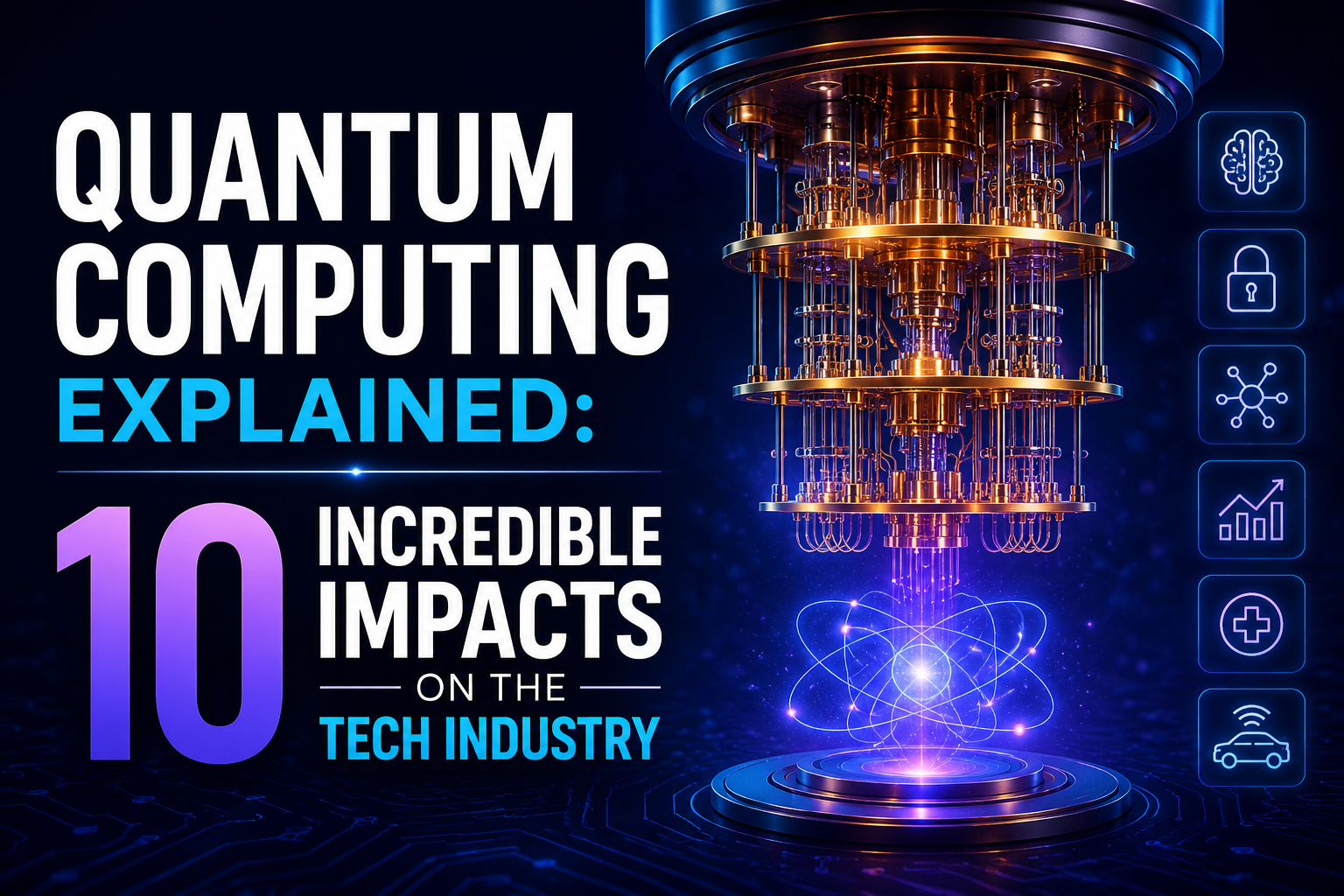
The term “Quantum Computing Explained” has been buzzing in tech circles for years, often accompanied by whispers of revolutionary breakthroughs and paradigm shifts. But what exactly is Quantum Computing Explained, and why is it poised to reshape the technology industry as we know it? This article delves into the fundamental concepts of Quantum Computing Explained, explores its potential applications, and examines the profound implications it holds for various sectors within the tech landscape.
Table of Contents
The Classical Computing Conundrum
Before we venture into the quantum realm, it’s essential to understand the limitations of our current computing technology. Classical computers, the ones we use every day, operate on bits. A bit is the smallest unit of data and can exist in one of two states: 0 or 1. This binary system forms the bedrock of all digital information processing.
While classical computers have achieved incredible feats, they face inherent limitations when tackling certain types of complex problems. These problems often involve an exponentially growing number of possibilities that a classical computer would need to explore sequentially. Think of trying to find the optimal route for a delivery truck visiting hundreds of locations, or simulating the intricate interactions of molecules for drug discovery. For these computationally intensive tasks, even the most powerful supercomputers can take an unfeasibly long time, or simply be incapable of providing a solution.
Entering the Quantum Realm: Qubits and Their Superpowers
Quantum Computing Explained offers a fundamentally different approach by harnessing the principles of quantum mechanics, the physics that governs the behavior of matter and energy at the atomic and subatomic levels. The core of a quantum computer is the qubit, the quantum equivalent of a classical bit.
Unlike a classical bit that can only be 0 or 1, a qubit can exist in a superposition of both states simultaneously. This means a qubit can represent 0, 1, or a combination of both. Imagine a spinning coin: until it lands, it’s neither heads nor tails, but a probabilistic mix of both. This ability to be in multiple states at once is a game-changer.
Superposition: The Power of Parallelism
The power of superposition lies in its ability to dramatically increase the amount of information a system can hold and process. With just a few qubits, a quantum computer can explore a vast number of possibilities concurrently.
- 1 qubit: Can be in a superposition of 0 and 1.
- 2 qubits: Can be in a superposition of 00, 01, 10, and 11. This is 4 states.
- 3 qubits: Can be in a superposition of 8 states.
- n qubits: Can be in a superposition of $2^n$ states.
This exponential growth means that as the number of qubits increases, the computational power of a quantum computer grows dramatically. A quantum computer with just a few hundred qubits could potentially outperform the most powerful supercomputers in existence today.
Entanglement: The Spooky Connection
Another crucial quantum phenomenon that quantum computers leverage is entanglement. When two or more qubits become entangled, their fates are linked, no matter how far apart they are. Measuring the state of one entangled qubit instantaneously influences the state of the other(s).
This “spooky action at a distance,” as Albert Einstein famously called it, allows quantum computers to perform complex correlations and computations that are impossible for classical computers. Entangled qubits can be used to represent complex relationships between data points, enabling more sophisticated problem-solving.
Quantum Interference: Guiding Towards the Solution
Quantum computers also utilize quantum interference. Just as waves can interfere constructively (amplifying each other) or destructively (canceling each other out), the quantum states within a quantum computer can interfere. Quantum algorithms are designed to amplify the probability of measuring the correct answer while suppressing the probability of measuring incorrect ones. This process guides the computation towards the desired solution.
How Quantum Computers Work (The Simplified View)
Building and operating a quantum computer is an incredibly complex undertaking. At a high level, the process involves:
- Initialization: Qubits are prepared in a known initial state, often all zeros.
- Quantum Gates: Similar to logic gates in classical computers, quantum gates are applied to the qubits to manipulate their quantum states. These gates perform operations like superposition, entanglement, and rotations.
- Computation: A sequence of quantum gates forms a quantum algorithm, designed to solve a specific problem.
- Measurement: At the end of the computation, the qubits are measured. This measurement collapses their superposition into a definite classical state (0 or 1). Due to the probabilistic nature of quantum mechanics, the measurement might need to be repeated multiple times to obtain the most likely correct answer.
The challenge lies in maintaining the delicate quantum states of the qubits, which are highly susceptible to environmental noise (heat, vibrations, electromagnetic fields). This is why quantum computers often require extreme conditions, such as near-absolute zero temperatures and sophisticated shielding.
The Quantum Advantage: What Problems Can They Solve?
The unique capabilities of quantum computers open doors to solving problems that are currently intractable for classical computers. Here are some key areas where Quantum Computing Explained is expected to make a significant impact:
1. Drug Discovery and Materials Science
Simulating the behavior of molecules and materials at the quantum level is incredibly difficult for classical computers. Quantum computers, by their very nature, are adept at this.
- Drug Discovery: Quantum computers can accurately model how drug molecules interact with biological targets, accelerating the discovery of new medicines and therapies. This could lead to breakthroughs in treating diseases like cancer, Alzheimer’s, and infectious diseases.
- Materials Science: Designing new materials with specific properties (e.g., superconductors, more efficient catalysts, lighter and stronger alloys) can be revolutionized. This could impact everything from energy storage to aerospace engineering.
Example: Imagine trying to design a new catalyst for a chemical reaction. A classical computer would struggle to simulate the complex electron interactions within the catalyst. A quantum computer could model these interactions with unprecedented accuracy, allowing scientists to design more efficient and environmentally friendly catalysts.
2. Optimization Problems
Many real-world challenges involve finding the best possible solution from a vast number of options. These are known as optimization problems.
- Logistics and Supply Chain: Optimizing delivery routes, managing inventory, and streamlining supply chains can lead to significant cost savings and efficiency gains.
- Financial Modeling: Portfolio optimization, risk management, and fraud detection can be enhanced by quantum computing’s ability to analyze complex financial markets.
- Traffic Flow: Optimizing traffic light timings and routing can alleviate congestion in urban areas.
Example: A shipping company needs to find the most efficient routes for its fleet of thousands of trucks to deliver millions of packages daily. This is a classic Traveling Salesperson Problem, which becomes exponentially harder with more destinations. A quantum computer could potentially find a near-optimal solution much faster than any classical algorithm.
3. Cryptography and Cybersecurity
This is a double-edged sword. While quantum computers pose a threat to current encryption methods, they also offer new possibilities for secure communication.
- Breaking Current Encryption: Many of the encryption algorithms that secure our online communications (like RSA) rely on the difficulty of factoring large numbers. Shor’s algorithm, a quantum algorithm, can factor large numbers exponentially faster than any known classical algorithm, rendering these encryption methods vulnerable.
- Quantum-Resistant Cryptography: The development of “post-quantum cryptography” is a race against time. These are new cryptographic algorithms designed to be resistant to attacks from both classical and quantum computers.
- Quantum Key Distribution (QKD): QKD uses quantum mechanics to generate and distribute cryptographic keys in a way that is theoretically unhackable. Any attempt to eavesdrop on the key distribution would inevitably disturb the quantum states, alerting the parties involved.
Example: If a quantum computer capable of running Shor’s algorithm becomes widely available, sensitive data encrypted today could be decrypted in the future. This necessitates a transition to quantum-resistant encryption methods for long-term data security.
4. Artificial Intelligence and Machine Learning
Quantum Computing can accelerate and enhance AI and ML algorithms.
- Faster Training: Quantum algorithms could speed up the training of complex machine learning models, especially those involving large datasets and intricate patterns.
- Improved Pattern Recognition: Quantum computers may excel at identifying subtle patterns and correlations in data that are currently missed by classical algorithms.
- New AI Paradigms: Quantum mechanics might inspire entirely new approaches to AI, leading to more powerful and capable intelligent systems.
Example: Training a deep learning model to recognize objects in images can be computationally intensive. Quantum machine learning algorithms could potentially reduce the training time significantly, allowing for faster iteration and development of AI applications.
5. Scientific Research and Simulation
Beyond drug discovery, quantum computers can advance fundamental scientific understanding.
- Particle Physics: Simulating the behavior of subatomic particles and their interactions can lead to new insights into the fundamental laws of the universe.
- Cosmology: Modeling the early universe and complex astrophysical phenomena could become more feasible.
- Climate Modeling: More accurate and detailed climate simulations could improve our understanding of climate change and its impacts.
The Current State of Quantum Computing
Quantum Computing is no longer just a theoretical concept; it’s a rapidly evolving field with significant investment and progress.
Hardware Development
Several companies and research institutions are at the forefront of building quantum hardware. Different approaches are being explored, each with its own advantages and challenges:
- Superconducting Qubits: Used by companies like IBM and Google, this approach involves using superconducting circuits cooled to near absolute zero. It’s currently one of the most mature technologies.
- Trapped Ions: Companies like IonQ use electromagnetic fields to trap individual ions, which then act as qubits. This method offers high qubit connectivity and coherence times.
- Photonic Qubits: Companies like Xanadu use photons (particles of light) as qubits. This approach has the potential for room-temperature operation and integration with existing fiber optic infrastructure.
- Topological Qubits: Microsoft is investing heavily in this approach, which aims to create qubits that are inherently more stable and resistant to errors.
Quantum Software and Algorithms
Alongside hardware, significant effort is being put into developing quantum software and algorithms.
- Quantum Programming Languages: Languages like Qiskit (IBM), Cirq (Google), and PennyLane are emerging to allow developers to write and run quantum programs.
- Quantum Cloud Platforms: Companies are offering access to their quantum hardware via cloud platforms, enabling researchers and developers to experiment without needing to own their own quantum computers.
- Algorithm Development: Researchers are continuously developing new quantum algorithms for specific problems, pushing the boundaries of what’s possible.
Challenges and the Road Ahead
Despite the rapid progress, quantum computing is still in its nascent stages. Several significant challenges remain:
- Scalability: Building quantum computers with a large number of stable and interconnected qubits is a major hurdle.
- Error Correction: Qubits are prone to errors due to decoherence. Developing robust quantum error correction mechanisms is crucial for reliable computation.
- Coherence Times: Qubits need to maintain their quantum state for long enough to perform complex computations. Improving coherence times is an ongoing area of research.
- Cost and Accessibility: Quantum computers are currently extremely expensive to build and maintain, limiting access to a few select organizations.
- Talent Gap: There is a significant shortage of skilled quantum engineers, physicists, and computer scientists.
Implications for the Tech Industry
The advent of practical quantum computing will have profound and far-reaching implications for the entire tech industry.
1. New Hardware Paradigms
The development of quantum computers represents a new frontier in hardware. Companies that can master quantum hardware development, fabrication, and control will be at the forefront of innovation. This will likely lead to specialized quantum processors designed for specific tasks, complementing classical processors rather than replacing them entirely.
2. The Rise of Quantum Software and Services
As quantum hardware becomes more accessible through cloud platforms, a new ecosystem of quantum software developers and service providers will emerge. This includes:
- Quantum Algorithm Developers: Experts who can design and optimize quantum algorithms for specific industry problems.
- Quantum Cloud Providers: Companies offering access to quantum hardware and development tools.
- Quantum Consulting Services: Firms helping businesses understand and leverage quantum computing for their specific needs.
3. Revolutionizing AI and Data Analytics
Quantum Computing will supercharge AI and data analytics. Companies that can integrate quantum capabilities into their AI platforms will gain a significant competitive advantage in areas like:
- Predictive Analytics: More accurate and faster predictions in finance, healthcare, and marketing.
- Personalization: Deeper understanding of customer behavior for hyper-personalized experiences.
- Drug and Material Discovery: Accelerating R&D cycles for life sciences and materials companies.
4. Redefining Cybersecurity
The threat to current encryption will necessitate a massive shift in cybersecurity strategies.
- Quantum-Resistant Cryptography Adoption: Tech companies will need to invest heavily in migrating their systems and products to quantum-resistant encryption.
- New Security Solutions: The development of quantum-safe security solutions and services will become a major market.
- Quantum Key Distribution (QKD) Integration: Secure communication networks could increasingly incorporate QKD for enhanced security.
5. Impact on Cloud Computing
Cloud providers will play a crucial role in democratizing access to quantum computing. They will offer quantum computing as a service, allowing businesses to experiment and deploy quantum applications without the need for massive upfront investment in hardware. This will integrate quantum capabilities into existing cloud infrastructure, making them more accessible to a wider range of users.
6. Talent Acquisition and Education
The demand for quantum expertise will skyrocket. Tech companies will need to invest in training and recruiting individuals with specialized knowledge in quantum physics, computer science, and mathematics. Universities and educational institutions will need to adapt their curricula to prepare the next generation of quantum professionals.
7. Investment and Innovation
The potential for transformative impact will drive significant investment in quantum computing research and development. Startups focused on quantum hardware, software, and applications will attract substantial venture capital. Established tech giants will continue to invest heavily in their own quantum initiatives.
The Hybrid Future: Quantum and Classical Collaboration
It’s important to note that quantum computers are unlikely to replace classical computers entirely. Instead, we are heading towards a hybrid computing future. Classical computers will continue to excel at tasks they are good at, such as running operating systems, user interfaces, and general-purpose computing. Quantum computers will act as specialized accelerators, offloading specific, computationally intensive tasks where they offer a significant advantage.
This hybrid approach will require sophisticated software and middleware to manage the seamless integration of classical and quantum resources. Developers will need tools that allow them to identify suitable quantum workloads and orchestrate their execution on quantum hardware.
Conclusion
Quantum Computing represents a paradigm shift with the potential to solve some of the world’s most complex problems. While still in its early stages, the progress in hardware, software, and algorithm development is undeniable. The tech industry is on the cusp of a quantum revolution, which will redefine innovation across drug discovery, materials science, AI, cybersecurity, and beyond. For a deeper dive into related technological advancements, consider exploring Top 10 Emerging Technologies Revolutionizing the World by 2030.
Companies that proactively explore and invest in understanding quantum computing, building the necessary talent, and developing strategies for its integration will be best positioned to thrive in this exciting new era. The journey from theoretical possibility to widespread practical application will be challenging, but the rewards – a deeper understanding of the universe and the ability to solve previously insurmountable problems – are immense. The quantum future is not a distant dream; it is rapidly becoming a tangible reality that will reshape the technological landscape for decades to come.
Have any thoughts?
Share your reaction or leave a quick response — we’d love to hear what you think!
-
 0
0
-
 0
0
-
 0
0
-
 0
0
-
 0
0
-
 0
0
