
Table of Contents
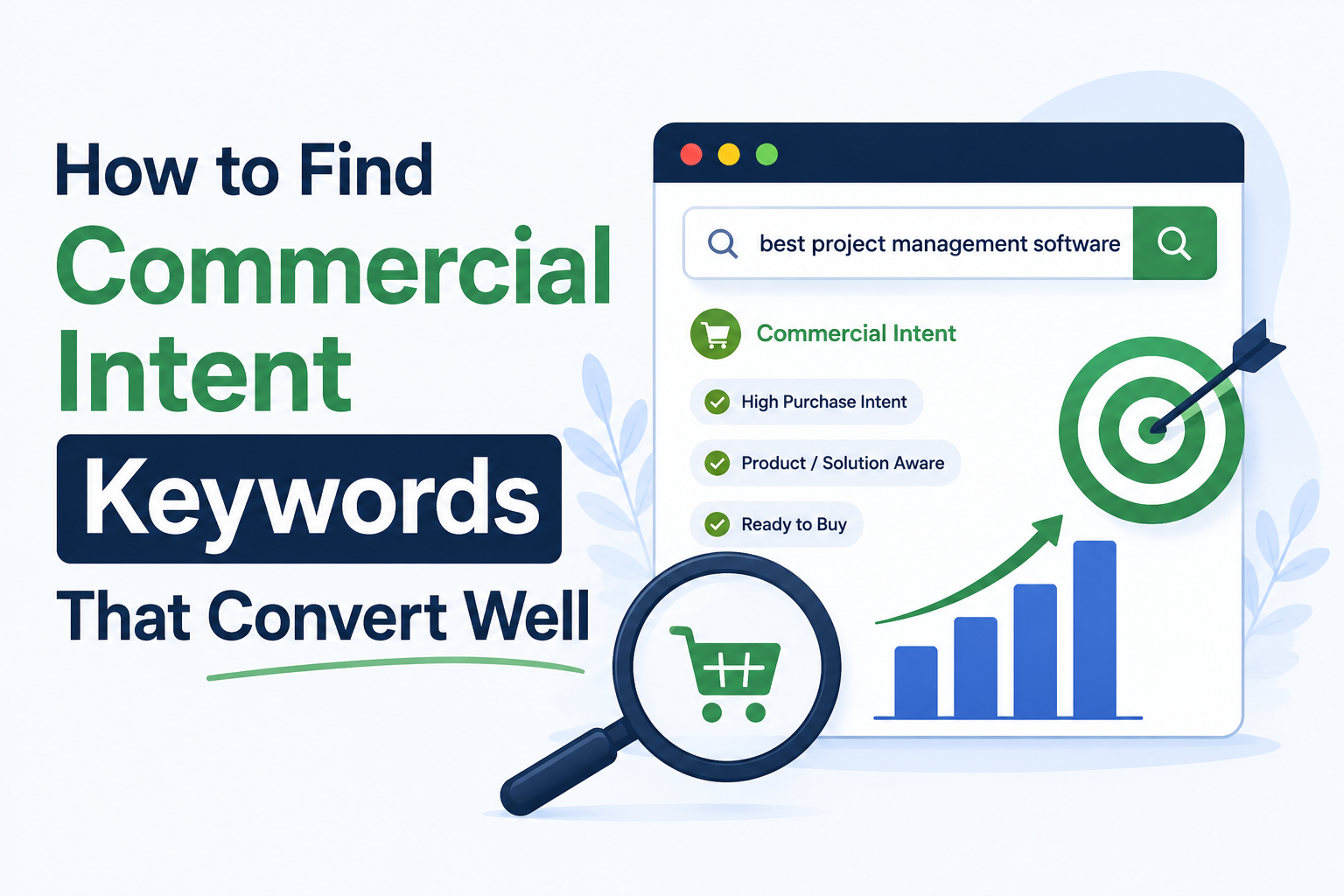
How to Find Commercial Intent Keywords That Actually Convert
In the vast ocean of digital marketing, traffic is often hailed as the ultimate prize. But what if that traffic isn’t leading to sales, sign-ups, or inquiries? What if your website is bustling with visitors, yet your conversion rates remain stubbornly low? The answer often lies not in the quantity of your traffic, but in its quality – specifically, the commercial intent behind the keywords that bring people to your site.
Commercial intent keywords are the holy grail for businesses aiming to boost their bottom line. These are the search queries used by individuals who are actively looking to buy a product, subscribe to a service, or engage with a business. Unlike broad informational searches, commercial intent keywords signal a user’s readiness to take action, making them invaluable for driving actual conversions.
This comprehensive guide will equip you with the strategies, tools, and insights needed to unearth these high-value keywords, optimize your content, and transform curious visitors into loyal customers.
Introduction: The Power of Commercial Intent
Imagine two people searching on Google. One types “what is content marketing,” while the other types “best content marketing agency for SaaS.” Both are interested in content marketing, but their immediate needs and intentions are vastly different. The first user is in the early stages of research, seeking information. The second, however, is likely evaluating options, comparing providers, and inching closer to making a hiring decision.
The second search query is a prime example of a commercial intent keyword. It signals a clear desire to purchase a service. For businesses, targeting these keywords means connecting with potential customers at the precise moment they are most receptive to a sales message. It’s about moving beyond vanity metrics like traffic volume and focusing on the metrics that truly matter: conversions, leads, and revenue.
Understanding and leveraging commercial intent keywords is not just a strategic advantage; it’s a fundamental shift in how you approach SEO and content creation. It ensures your efforts are aligned with the ultimate goal of any business: growth and profitability.
Understanding the Buyer’s Journey and Intent Types
Before we dive into finding commercial intent keywords, it’s crucial to understand the different stages of a buyer’s journey and the types of search intent associated with each. Users rarely go from knowing nothing about a product to making a purchase in a single step. Instead, they typically move through a funnel, and their search queries evolve as they progress.
Here are the primary types of search intent:
Informational Intent
Users with informational intent are looking for answers, explanations, or general knowledge. They are in the awareness or early consideration stage of their journey.
- Characteristics: Often include “what is,” “how to,” “why,” “examples of,” “guide to,” “tips for.”
- Examples:
- “What is cloud computing?”
- “How to fix a leaky faucet?”
- “Benefits of a plant-based diet.”
- Conversion Potential: Low direct conversion. Great for building brand authority, educating your audience, and attracting top-of-funnel traffic that you can nurture over time.
Navigational Intent
Users with navigational intent are trying to reach a specific website, page, or brand. They already know where they want to go.
- Characteristics: Often include brand names, website names, or specific product lines.
- Examples:
- “Facebook login”
- “Amazon homepage”
- “Nike official website”
- Conversion Potential: High for returning customers or those already familiar with your brand. Less relevant for attracting new customers through organic search unless they are specifically looking for your brand.
Transactional/Commercial Intent
This is where the magic happens for conversions. Users with transactional intent are ready to make a purchase, sign up for a service, or complete a specific action that leads to a conversion. They are at the decision stage.
- Characteristics: Often include “buy,” “order,” “shop,” “coupon,” “discount,” “deal,” “for sale,” “price,” “cost,” “hire,” “service,” “get a quote.”
- Examples:
- “Buy ergonomic office chair”
- “iPhone 15 deals”
- “Hire local plumber”
- “Best web design services”
- Conversion Potential: Very high. These users are actively seeking to convert.
Investigational/Comparison Intent
Also known as “commercial investigation,” these users are in the consideration stage, evaluating different options before making a purchase. They are very close to transactional intent.
- Characteristics: Often include “best,” “top,” “review,” “comparison,” “vs,” “alternative,” “cheap,” “affordable,” “premium,” “software for,” “pricing.”
- Examples:
- “Best CRM software for small business”
- “Samsung Galaxy S24 review”
- “Ahrefs vs SEMrush”
- “WordPress hosting pricing”
- Conversion Potential: High. These users are informed and actively narrowing down their choices, making them prime targets for conversion-focused content.
For the purpose of driving conversions, our primary focus will be on transactional and investigational intent keywords. These are the queries that indicate a user is ready to open their wallet or commit to a service.
Why Commercial Intent Keywords Are Gold for Conversions
Targeting commercial intent keywords isn’t just a good idea; it’s a fundamental pillar of any successful conversion-focused SEO strategy. Here’s why they are so valuable:
- Higher Conversion Rates: Users searching with commercial intent are further down the sales funnel. They’ve likely done their initial research and are now looking for a solution. This means they are much more likely to convert into a customer, lead, or subscriber compared to someone with purely informational intent.
- Lower Bounce Rates: Because your content directly addresses their immediate need to buy or evaluate, users are more likely to stay on your page, explore your offerings, and engage with your calls to action. This leads to a more engaged audience and better user experience signals for search engines.
- Better ROI on Ad Spend (PPC): If you’re running paid advertising campaigns, bidding on commercial intent keywords ensures your ads are shown to the most qualified audience. This dramatically improves your click-through rates (CTR) and conversion rates, leading to a much better return on your advertising investment.
- Directly Addresses User Needs at the Point of Decision: By ranking for these keywords, you position your business as the direct solution to a user’s problem or desire at the critical moment they are ready to act. This direct alignment between search query and offering is a powerful conversion driver.
- Attracts High-Quality Leads: Instead of sifting through a large volume of general inquiries, commercial intent keywords help you attract leads who are genuinely interested in what you offer and are closer to making a purchasing decision. This saves time and resources for your sales team.
The Core Strategies for Unearthing Commercial Intent Keywords
Now that we understand the immense value of commercial intent keywords, let’s explore the practical strategies to find them.
1. Leverage Buyer-Centric Modifiers
One of the most straightforward ways to identify commercial intent keywords is by looking for specific words and phrases that signal a user’s readiness to buy or evaluate. These are known as “modifiers.”
- Transactional Modifiers: These words explicitly indicate a desire to purchase.
- Keywords: “buy,” “order,” “shop,” “coupon,” “discount,” “deal,” “for sale,” “price,” “cost,” “get a quote,” “sign up,” “subscribe,” “download” (for software/apps).
- Examples:
- “Buy organic coffee beans online”
- “iPhone 15 pro max discount”
- “Web hosting deals”
- “Get a quote for home insurance”
- “Sign up for email marketing software”
- Product/Service Specific Modifiers (Investigational/Comparison): These indicate a user is evaluating options or looking for the best solution.
- Keywords: “best,” “top,” “review,” “comparison,” “vs,” “alternative,” “cheap,” “affordable,” “premium,” “rental,” “hire,” “service,” “company,” “provider,” “software for,” “platform for.”
- Examples:
- “Best noise-cancelling headphones 2024”
- “CRM software reviews”
- “HubSpot vs Salesforce”
- “Affordable SEO services”
- “Project management software for small teams”
- Location-Based Modifiers: Crucial for local businesses, these indicate a user is looking for a service or product in a specific geographic area.
- Keywords: “[service] near me,” “[product] in [city/state],” “[company] [city],” “[city] [service].”
- Examples:
- “Electrician near me”
- “Pizza delivery in Brooklyn”
- “Dentist London”
- “Plumbing services Seattle”
- Problem/Solution Modifiers (with commercial intent): While some problem-based searches are informational, when combined with a desire for a service or product, they become commercial.
- Keywords: “fix [problem] service,” “solution for [pain point],” “repair [item].”
- Examples:
- “Data recovery service for hard drive”
- “Pest control for termites”
- “iPhone screen repair cost”
Start by brainstorming your core products or services, then combine them with these modifiers. This simple exercise can generate a significant list of potential commercial intent keywords.
2. Analyze Competitor SERP & Ad Strategies
Your competitors have likely already invested time and money into identifying keywords that convert. Learning from their successes (and failures) can provide a significant shortcut.
- Identify Top Competitors: Use tools like SEMrush, Ahrefs, Moz, or SpyFu to identify your main organic and paid search competitors. Simply enter your domain and see who ranks for similar terms.
- Examine Their Organic Rankings:
- “Top Pages” Report: Look at your competitors’ highest-traffic pages. Which of these are product pages, service pages, or comparison guides? Analyze the keywords these pages rank for.
- “Organic Keywords” Report: Filter for keywords with high commercial intent modifiers. Pay attention to keywords that drive significant traffic to their “money pages” (pages designed to convert).
- Scrutinize Their PPC Ads:
- Ad Copy Analysis: Competitors are paying for these clicks, so their ad copy often reveals their most valuable commercial intent keywords. Look for strong calls to action and direct sales language.
- Bidding Keywords: Tools like SEMrush’s “Advertising Research” or Ahrefs’ “Paid Search” allow you to see what keywords your competitors are actively bidding on. These are almost certainly high-commercial intent terms, as no one wants to pay for clicks that don’t convert.
- Look at Landing Pages: When you find a competitor’s ad or a high-ranking commercial page, visit their landing page. What CTAs are they using? What language do they employ to persuade visitors to convert? This provides insight into the user’s mindset and the conversion funnel.
By reverse-engineering your competitors’ strategies, you can uncover valuable keywords that are already proven to drive conversions in your niche.
3. Utilize Keyword Research Tools Effectively
While manual analysis is helpful, dedicated keyword research tools are indispensable for comprehensive commercial intent keyword discovery.
- Google Keyword Planner:
- Pros: Free, directly from Google, provides search volume, competition levels (low, medium, high for paid), and bid estimates.
- How to Use: Enter seed keywords (your products/services, competitor names, or commercial modifiers). Filter results by “commercial intent” if the tool offers it, or manually look for the modifiers discussed earlier. Pay attention to keywords with high suggested bids, as this often indicates commercial value.
- SEMrush, Ahrefs, Moz Keyword Explorer (Premium Tools): These tools offer more advanced features and deeper insights.
- Keyword Difficulty (KD) / Traffic Potential: While intent is key, consider the feasibility of ranking. Balance high intent with a realistic chance of appearing on the first page.
- Parent Topic/Related Keywords: These features help you find variations and related commercial intent queries that you might not have thought of.
- SERP Features: Look for keywords that trigger Google Shopping results, local packs, review snippets, or “best of” lists. These often indicate strong commercial intent.
- Intent Filters: Many premium tools now offer “intent” filters, allowing you to specifically search for transactional or commercial investigation keywords.
- “Keywords by Traffic” (Competitors): As mentioned, use this to see what keywords drive traffic to competitors. Filter these by commercial intent.
- “Phrase Match” / “Related Keywords”: Enter a commercial intent seed keyword (e.g., “best CRM software”) and explore the phrase match or related keyword suggestions for long-tail variations.
- Ubersuggest / AnswerThePublic:
- Pros: Good for finding long-tail variations and questions users ask. AnswerThePublic visualizes questions, prepositions, and comparisons around a topic.
- How to Use: Enter your core product/service. Look for questions that start with “can I buy,” “where to buy,” “which is best,” “how much does X cost.” Filter for comparison-based queries (“X vs Y”).
When using these tools, don’t just look at search volume. A keyword with lower volume but high commercial intent can be far more valuable than a high-volume, low-intent term.
- How to Analyze Website Authority for Better Content & SEO
- Find and Fix 404 Errors: A Simple Guide
- Quantum Computing Explained: 10 Incredible Impacts on the Tech Industry
4. Mine Google Search Results Directly
Google itself is a powerful keyword research tool, offering real-time insights into user intent.
- Google Autocomplete: Start typing commercial intent phrases into the Google search bar and observe the suggestions. These are common queries users are typing.
- Example: Type “buy running shoes” and see suggestions like “buy running shoes online,” “buy running shoes near me,” “buy running shoes for pronation.”
- “People Also Ask” (PAA): This section in the SERP often reveals common questions related to your initial query. Look for questions that indicate comparison, pricing, or specific product features that influence buying decisions.
- Example: Search “best espresso machine” and PAA might show “What is the best espresso machine for home use?” or “How much does a good espresso machine cost?”
- Related Searches: Scroll to the bottom of the SERP to find the “Related searches” section. Google provides queries that are semantically related to your original search, often uncovering commercial intent variations.
- Example: Search “best VPN service” and related searches might include “cheap VPN services,” “VPN comparison,” “top rated VPN.”
- Google Shopping Results: If your search query triggers Google Shopping ads or a shopping carousel, it’s a strong indicator of commercial intent. Analyze the keywords that trigger these results.
- Local Pack Results: For local businesses, if your search triggers the Google Maps local pack (e.g., “plumber near me”), the keywords used are inherently commercial and location-specific.
These direct Google insights are invaluable because they reflect actual user behavior and Google’s understanding of intent.
5. Dive into Customer Data and Feedback
Your existing customers and sales team are a goldmine of information about what people search for when they’re ready to buy.
- Customer Support Logs/FAQs:
- What questions do customers frequently ask before making a purchase?
- What problems are they trying to solve with your product/service?
- What concerns do they have about pricing, features, or compatibility?
- These questions can be directly translated into commercial intent keywords (e.g., “how much does [product] cost,” “troubleshooting [problem] service”).
- Sales Team Insights:
- Your sales team talks to prospects daily. Ask them:
- What phrases do prospects use when they’re close to buying?
- What objections do they commonly encounter?
- What specific features or benefits are most compelling to potential buyers?
- These insights can reveal powerful long-tail commercial intent keywords.
- Your sales team talks to prospects daily. Ask them:
- Website Search Bar Data:
- If your website has an internal search bar, analyze the queries users type into it (e.g., via Google Analytics Site Search report).
- Users who search on your site are already engaged and often looking for something specific. Their queries can reveal gaps in your content or direct commercial intent.
- Surveys/Interviews:
- Directly ask your customers how they searched for your product or service.
- What words did they use? What problems were they trying to solve?
- This qualitative data can uncover keywords that tools might miss.
- Review Sites (Amazon, Yelp, G2, Capterra, Trustpilot):
- Analyze reviews for common phrases, pros and cons, comparisons, and buying criteria.
- Users often describe their needs and the solutions they sought using commercial language.
- Example: “I needed a [type of software] that could [specific feature] and [competitor] didn’t have it.” This suggests keywords like “[type of software] with [specific feature].”
Customer data provides a human-centric view of commercial intent, often leading to highly specific and converting keywords.
6. Long-Tail Keywords: The Conversion Powerhouses
Long-tail keywords are phrases of three or more words that are highly specific. While they individually have lower search volumes than shorter, broader keywords, they collectively account for a significant portion of search traffic and often boast much higher conversion rates.
- Why Long-Tail Keywords Have High Commercial Intent:
- Specificity: Users searching for “best budget laptop for graphic design students under $1000” know exactly what they want.
- Lower Competition: Due to their specificity, it’s often easier to rank for long-tail keywords.
- Closer to Conversion: The more specific a query
Have any thoughts?
Share your reaction or leave a quick response — we’d love to hear what you think!
-
 0
0
-
 0
0
-
 0
0
-
 0
0
-
 0
0
-
 0
0
