Liang Wenfeng Biography: DeepSeek Founder, High-Flyer Quant, Career, Education & AI Impact
In late 2024 and early 2025, the global artificial intelligence landscape experienced a seismic shift. For nearly two years, the narrative surrounding frontier AI models had been dominated by Silicon Valley titans—OpenAI, Google, Anthropic, and Meta—backed by hundreds of billions of dollars in venture capital and massive clusters of cutting-edge semiconductors. Then came DeepSeek, an artificial intelligence lab out of Hangzhou, China, which released models that matched or exceeded the performance of top Western models at a tiny fraction of the cost.
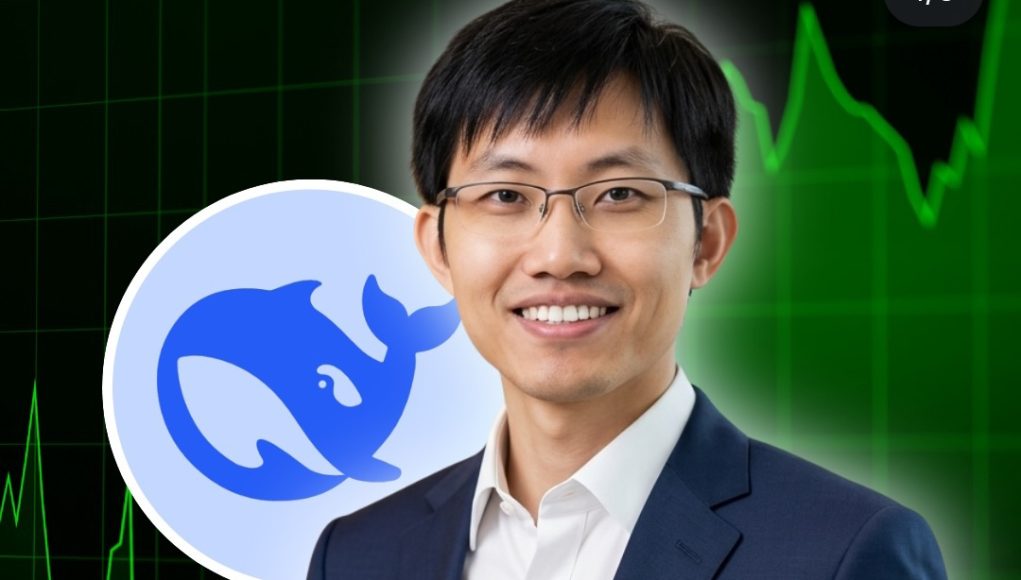
At the epicenter of this disruption is Liang Wenfeng (梁文锋).
Unlike many high-profile tech executives who thrive in the limelight of global press conferences and social media campaigns, Liang Wenfeng spent years operating in relative stealth. He first established himself as a mathematical prodigy and a pioneer of machine learning in quantitative finance through High-Flyer (Huanfang Quant). He then channeled that computational mastery and financial independence into DeepSeek, creating open-source architectures that shattered the assumption that artificial general intelligence (AGI) requires endless trillions in compute spending.
This comprehensive biography explores Liang Wenfeng’s early life, academic foundation, meteoric rise in quantitative finance, the founding of DeepSeek, the technical breakthroughs that shocked Silicon Valley, and his lasting impact on the future of artificial intelligence.
Quick Facts: Liang Wenfeng
| Attribute | Details |
|---|---|
| Full Name | Liang Wenfeng (梁文锋) |
| Place of Birth | Zhanjiang, Guangdong Province, China |
| Alma Mater | Zhejiang University (ZJU) |
| Degrees | Bachelor’s & Master’s in Electronic Information Engineering / Automation |
| Primary Roles | Founder & CEO of High-Flyer Quant; Founder of DeepSeek |
| Key Achievements | Built one of China’s top quant funds; Created DeepSeek-V3 & DeepSeek-R1 |
| Domain Expertise | High-Performance Computing, Deep Learning, Quantitative Trading, LLM Architecture |
1. Early Life and Academic Foundations
Roots in Zhanjiang
Liang Wenfeng was born in the late 1970s / early 1980s in Zhanjiang, a coastal city in Guangdong Province, China. From an early age, Liang exhibited an exceptional aptitude for mathematics, analytical reasoning, and software programming. During his secondary schooling, he stood out in regional and national science competitions, developing an obsession with logical systems and algorithmic efficiency.
The Zhejiang University Years
In the early 2000s, Liang enrolled at Zhejiang University (ZJU) in Hangzhou—one of China’s premier engineering and computer science institutions. He entered the College of Information Science and Electronic Engineering, focusing on automation, electronic information engineering, and computational intelligence.
During his undergraduate and master’s studies at Zhejiang University:
- Algorithmic Mastery: Liang immersed himself in machine learning theory, complex systems, and distributed computing long before “deep learning” became an industry buzzword.
- Open-Source & Coding Competitions: He spent his university years participating in competitive programming and working on experimental algorithmic projects, laying the groundwork for his low-level systems engineering mindset.
- Pragmatic Problem Solving: Peers and mentors from ZJU frequently described Liang as intensely pragmatic. Rather than chasing theoretical publications for academic prestige, he focused relentlessly on practical implementation: how to make algorithms run faster, use less memory, and solve tangible mathematical challenges.
After completing his graduate studies around 2008, Liang spent a few years experimenting with commercial software, financial modeling, and early automated trading systems, setting the stage for his first massive entrepreneurial venture.
2. The Quantitative Trading Era: High-Flyer Capital
Before reshaping the global AI landscape, Liang Wenfeng built a financial empire. In the early 2010s, China’s domestic stock and derivatives markets were maturing, yet largely driven by discretionary retail trading and traditional statistical arbitrage. Liang recognized that modern machine learning could systematically exploit market inefficiencies.
       [ Liang Wenfeng's Vision ]
                   │
    ┌──────────────┴──────────────┐
    ▼                             ▼
High-Flyer Quant             DeepSeek AI
(Financial Engines)       (Open-Source AGI)
    │                             │
    └──────────────┬──────────────┘
                   ▼
     [ Proprietary Superclusters ]
        (Fire-Flyer I & II)
Founding High-Flyer (Huanfang Quant)
In 2015, Liang co-founded High-Flyer Capital Management (Ningbo Huanfang Information Technology / Zhejiang Huanfang Quant).
While traditional quantitative hedge funds relied on human-crafted economic factors and linear statistical regression, Liang took a radically different path: end-to-end deep learning.
Under Liang’s leadership, High-Flyer:
- Pioneered Pure AI Trading: Replaced traditional quantitative analysts with deep neural networks that ingested massive, real-time tick-level market data to forecast price movements.
- Built Massive Assets Under Management (AUM): Within a few years, High-Flyer grew to become one of China’s elite “Mega-Quants” (known as the Top Quant League), managing tens of billions of Renminbi (surpassing 50 billion to 100 billion RMB at its peak).
- Engineered Extreme Execution Platforms: High-Flyer built custom ultra-low-latency trading systems, optimizing network packets and memory buffers at the hardware level.
The Compute Visionary: The “Fire-Flyer” Superclusters
Liang realized early on that the limiting factor for deep learning was compute capacity. While most hedge funds rented generic cloud servers, Liang directed High-Flyer’s immense profits toward building its own proprietary supercomputing infrastructure.
- Fire-Flyer I (Yinghuo-1): Launched around 2019–2020, this custom-built AI supercomputer cost over 100 million RMB and housed thousands of GPUs designed specifically for training massive quantitative neural networks.
- Fire-Flyer II (Yinghuo-2): Launched in 2021 with an estimated investment exceeding 1 billion RMB, scaling to roughly 10,000 high-performance GPUs.
This strategic decision proved decisive. When global supply-chain restrictions and semiconductor export controls later tightened, Liang already possessed one of the largest private AI compute clusters outside of major hyperscalers.
3. The Pivot to Artificial General Intelligence: Founding DeepSeek
By 2023, the emergence of OpenAI’s ChatGPT had triggered a worldwide generative AI boom. In China, hundreds of tech giants and venture-backed startups launched a “War of a Thousand Models” (Qian Mo Da Zhan), rushing to wrap API interfaces or build massive, compute-hungry copycats.
Liang Wenfeng saw that most of the industry was caught in a brute-force paradigm: throwing more capital and more generic compute at unoptimized transformer architectures. In mid-2023, he founded DeepSeek (Hangzhou DeepSeek Artificial Intelligence Co., Ltd.).
Traditional Tech Giant AI Approach:
  [ Massive Capital ] ──> [ Thousands of GPUs ] ──> [ Standard Transformer ] ──> [ $100M+ Training Cost ]

Liang Wenfeng's DeepSeek Approach:
  [ Algorithmic Efficiency ] ──> [ Custom MLA / MoE ] ──> [ Optimized Low-Precision Training ] ──> [ ~$6M Training Cost ]
A Fundamentally Different AI Lab
Liang structured DeepSeek with a corporate philosophy that diverged dramatically from both Silicon Valley tech giants and traditional Chinese tech conglomerates:
- Self-Funded Independence: DeepSeek was incubated and funded by High-Flyer’s capital. Liang did not have to answer to short-term venture capital expectations, quarterly monetization pressures, or external commercial agendas.
- Research-Driven “Hacker” Culture: Liang stripped away middle management and corporate bureaucracy. DeepSeek was organized like a pure research lab populated by young, top-tier math and software talent.
- Commitment to Open Source: Rather than walling off models behind proprietary API paywalls, Liang committed to releasing weights, technical reports, and code to the global community.
- Algorithmic Efficiency over Brute Force: Constrained by hardware limits, Liang set a core research directive: Extract the absolute maximum performance per floating-point operation (FLOP).
- Liang Wenfeng: DeepSeek Founder Biography, Career, Education, and AI Impact
- Tech Internship vs Fellowship: Which Builds Stronger Career Experience?
- How to Make $1000 in a Day: Quick & Easy Methods
4. DeepSeek’s Technical Masterstrokes
Under Liang’s guidance, DeepSeek systematically re-engineered the Transformer architecture from the silicon up. Rather than following Western blueprints, Liang’s team developed several foundational breakthroughs.
1. Multi-Head Latent Attention (MLA)
One of the largest bottlenecks in large language model inference is the Key-Value (KV) cache, which eats up vast amounts of GPU memory as context windows expand.
- The Problem: Standard Multi-Head Attention (MHA) creates massive memory footprints, limiting throughput and making long-context inference expensive.
- DeepSeek’s Solution: DeepSeek introduced Multi-Head Latent Attention (MLA), which compresses the KV cache into a low-dimensional latent vector during inference.
- The Result: Massive reductions in inference memory requirements, enabling DeepSeek models to serve long contexts at a fraction of standard operational costs.
2. DeepSeekMoE (Mixture of Experts) Architecture
Traditional MoE models activate a small number of very large “expert” sub-networks (e.g., activating 2 out of 8 experts). DeepSeek pioneered an extreme fine-grained MoE architecture:
- Fine-Grained Expert Segmentation: Breaking experts into dozens of smaller sub-experts (e.g., activating 8 out of 64+ experts), allowing for more precise knowledge specialization.
- Shared Experts: Designating specific experts that are always active to capture common, foundational knowledge across tokens, preventing knowledge duplication across specialized experts.
3. Mixed Precision Training (FP8) & Hardware Optimization
Liang’s background in ultra-low-latency financial engineering was evident in DeepSeek’s training pipeline. DeepSeek built a custom FP8 mixed-precision training framework from scratch, optimizing matrix multiplication and inter-node communication protocols across their clusters, dramatically reducing the compute time and electrical power required for convergence.
5. The Models That Shook the World
Between late 2023 and early 2025, DeepSeek released a rapid series of open-weights models that systematically dismantled the competitive moat of established closed-source labs.
                           DeepSeek Evolution
                                   │
       ┌───────────────────────────┼───────────────────────────┐
       ▼                           ▼                           ▼
[ DeepSeek-Coder / Math ]  [ DeepSeek-V3 ]             [ DeepSeek-R1 ]
Specialized domain power   671B Total / 37B Active     Pure Reinforcement Learning
Beat proprietary models    ~$6M Training Cost          Matches OpenAI o1 Reasoning
DeepSeek-Coder & DeepSeek-Math (Early 2024)
DeepSeek first gained underground cult status among developers with its specialized models:
- DeepSeek-Coder: Outperformed many closed-source alternatives in code generation, syntax completion, and technical debugging.
- DeepSeek-Math: Demonstrated that pre-training on rigorously curated mathematical tokens could unlock advanced logical reasoning abilities without requiring trillions of generic web-scraped parameters.
DeepSeek-V3: The $6 Million Miracle (December 2024)
In December 2024, DeepSeek published DeepSeek-V3, a massive 671-billion parameter Mixture-of-Experts model (activating 37 billion parameters per token).
What astonished the global AI research community was the accompanying technical report:
- Cost: DeepSeek trained the entire model for approximately $6 million USD in compute—a fraction of the $100M+ budgets cited for comparable models like Meta’s Llama 3 or OpenAI’s GPT-4.
- Performance: On broad benchmarks—including coding, humanities, multilingual comprehension, and general knowledge—DeepSeek-V3 rivaled the world’s most capable closed-source systems.
DeepSeek-R1: Democratizing Advanced Reasoning (January 2025)
In January 2025, Liang’s team unveiled DeepSeek-R1, directly challenging OpenAI’s reasoning-focused “o1” model.
DeepSeek-R1’s core innovations included:
- Large-Scale Reinforcement Learning Without Prior Supervised Fine-Tuning (DeepSeek-R1-Zero): DeepSeek demonstrated that a base model, when subjected to pure Reinforcement Learning (RL) with rule-based reward signals (verifiable math and code outcomes), naturally developed self-reflection, chain-of-thought verification, and recursive problem-solving skills without relying on millions of human-annotated examples.
- Distillation into Open Weights: DeepSeek distilled R1’s reasoning capability into smaller, accessible models (ranging from 1.5B to 70B parameters) based on Qwen and Llama architectures, allowing developers worldwide to run frontier reasoning models locally on consumer GPUs.
6. Liang Wenfeng’s Philosophy and Leadership Style
Liang Wenfeng represents a stark departure from the typical Silicon Valley tech CEO or traditional Chinese executive. Analysts and insiders point to several defining tenets of his leadership:
1. The “First Principles” Engineering Mindset
Liang approaches software and AI architecture without deference to established dogma. When conventional wisdom dictated that frontier models could only be trained with dense compute and multi-thousand-node H100 clusters, Liang audited the underlying mathematics of the attention mechanism and communication protocols to discover where hardware cycles were being wasted.
2. Anti-Bureaucratic and Flat Organization
DeepSeek operates with an exceptionally small, elite headcount compared to hyperscalers:
- No Middle Management Bloat: DeepSeek avoids the multi-layered product management layers standard in big tech companies.
- Young Talent Recruitment: Liang frequently hires fresh university graduates, top competitive programmers, and PhD researchers directly from Chinese universities, placing them on mission-critical architectural problems rather than relegating them to menial support roles.
3. Open Science as a Competitive Strategy
While many tech companies began transitioning from open-source to closed commercial platforms, Liang doubled down on radical openness.
- By publishing detailed whitepapers disclosing exact architectural specs, training hyperparameters, communication bottlenecks, and data recipes, Liang established DeepSeek as a primary