The Anticipation: Unpacking the World Behind “Rider is Out for Delivery”
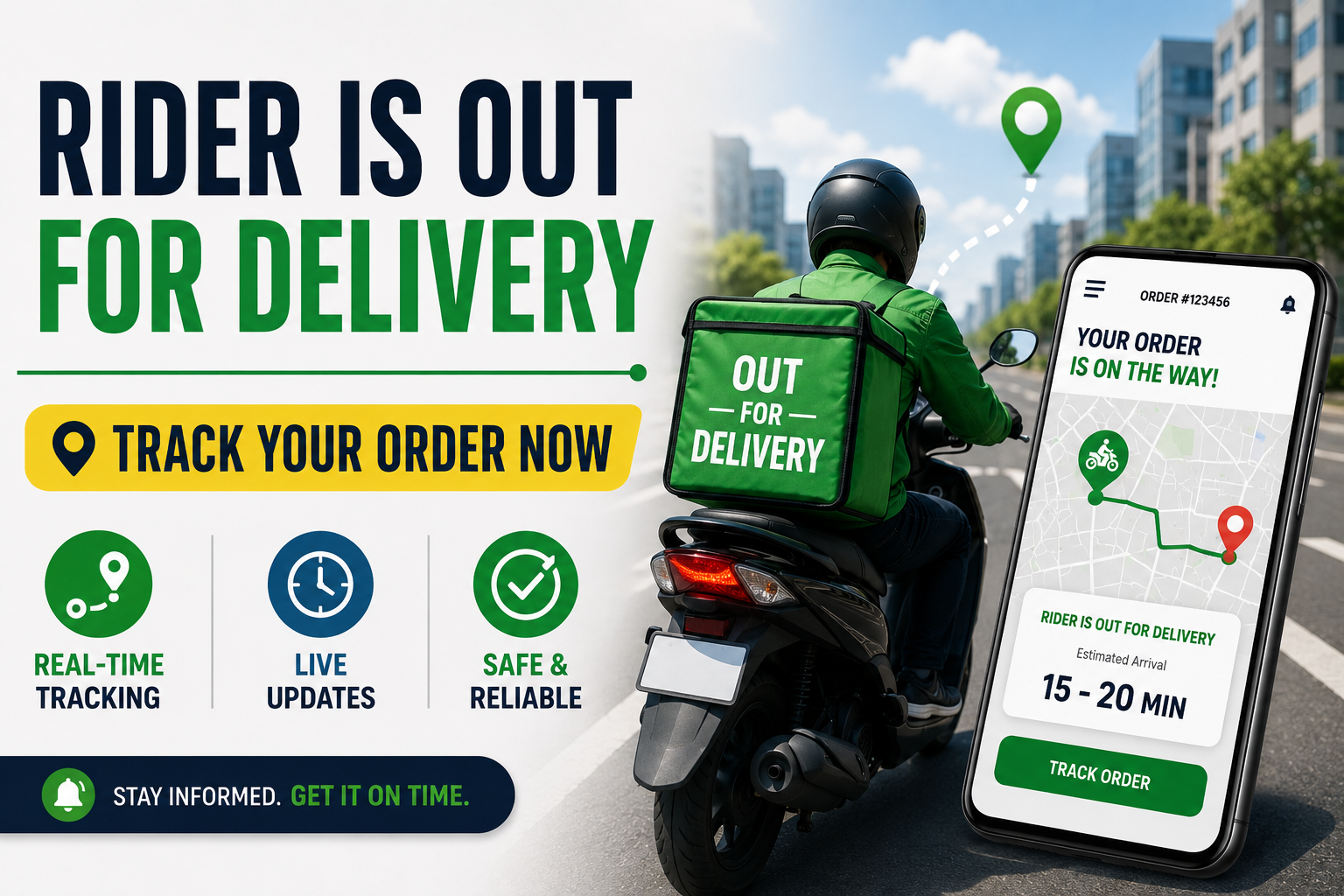
In an age defined by instant gratification and on-demand services, few phrases carry as much weight, or spark as much anticipation, as “Rider is out for delivery.” It’s the digital equivalent of hearing the ice cream truck bell, the modern-day signal that your craving, your necessity, or your long-awaited package is finally, truly, on its way. This simple notification, flashing across our smartphone screens, marks the culmination of a complex logistical ballet, a symphony of technology, human effort, and intricate planning.
From a piping hot pizza arriving at your doorstep to a crucial document reaching its destination, “Rider is out for delivery” is more than just a status update; it’s a promise. It signifies the final, critical leg of a journey that began with a click or a call, traversing warehouses, kitchens, and dispatch centers, all orchestrated to bring something directly to you.
- Motorola Razr Ultra 2026 Review: Better Performance Comes at a Premium
- Android 17 Touchscreen Issues: Effective Workaround Found!
- How to Analyze Website Authority for Better Content & SEO
This article delves deep into the multifaceted world behind this ubiquitous phrase. We’ll explore what it truly means, the sophisticated technology that makes it possible, the varied experiences of customers and riders, the strategic imperatives for businesses, and its profound impact on our daily lives. We’ll also cast an eye towards the future, imagining how this essential service might evolve.
I. Decoding the Message: What “Rider is Out for Delivery” Truly Means
At its core, “Rider is out for delivery” is a straightforward declaration, yet its implications resonate far beyond the literal words. It’s the moment of transition from preparation to imminent arrival, a critical milestone in the delivery process.
A. The Literal Interpretation
When you see this message, it means:
- Your item has left the dispatch point: Whether it’s a restaurant, a grocery store, a local warehouse, or a distribution center, your specific order has been picked up by a designated delivery person.
- It’s on its way to your specific address: The rider is actively en route, navigating the streets with your package or food as their primary objective.
- The final stage before arrival: This is the last major status update before the item physically reaches your hands or doorstep. The next expected status is typically “Delivered.”
B. Beyond the Words: The Implied Promise
The message carries a powerful implied promise:
- Imminent Arrival: It suggests that the wait is almost over. Depending on distance and traffic, arrival is expected within minutes or a short window.
- Confirmation of Successful Order Processing: It reassures the customer that their order was received, prepared, and dispatched correctly. There’s a sense of relief that the process is moving forward as planned.
- Anticipation and Excitement: For many, especially with food or highly anticipated items, this message triggers a surge of excitement. The mental countdown truly begins.
C. Different Contexts
While the phrase is widely understood, its specific context can vary slightly:
- Food Delivery: Services like DoorDash, Uber Eats, Grubhub, and Deliveroo use this extensively. It often comes with real-time GPS tracking of the rider.
- Grocery Delivery: Instacart, Amazon Fresh, and local supermarket delivery services employ similar notifications, indicating your groceries are on their way.
- Package Delivery: Major carriers like Amazon, FedEx, UPS, and DHL use “Out for Delivery” or “On its way” to signal the final leg of a parcel’s journey. While they might not always specify “rider,” the principle is the same.
- Local Courier Services: Smaller, specialized couriers for documents, flowers, or specific goods also use this status to keep recipients informed.
Regardless of the specific service, the underlying meaning remains consistent: your item is in transit, heading directly to you, and arrival is close at hand.
II. The Technological Backbone: How Deliveries Are Tracked and Communicated
The seamless experience of seeing “Rider is out for delivery” is a testament to sophisticated technology working behind the scenes. Without advanced digital infrastructure, such real-time transparency would be impossible.
A. GPS and Geolocation
At the heart of modern delivery tracking lies Global Positioning System (GPS) technology.
- Real-time Rider Location: Every rider’s smartphone acts as a GPS beacon, constantly transmitting their location data to the delivery platform’s servers. This data is then translated into the moving dot on your customer app map.
- Mapping Optimal Routes: Sophisticated algorithms use GPS data, combined with traffic information and road networks, to calculate the most efficient routes for riders. This minimizes travel time and fuel consumption.
- Geofencing for Arrival/Departure Detection: Virtual boundaries (geofences) around restaurants, customer addresses, and dispatch hubs automatically trigger status updates (e.g., “Rider has arrived at restaurant,” “Rider has arrived at your location”) without manual input from the rider.
B. Mobile Applications and APIs
The entire delivery ecosystem hinges on robust mobile applications and Application Programming Interfaces (APIs).
- Rider Apps: These are the rider’s central command center. They display new order requests, provide turn-by-turn navigation, allow riders to update order statuses (e.g., “picked up,” “delivered”), communicate with customers and support, and track earnings.
- Customer Apps: These are what you interact with. They allow you to place orders, track your rider, view estimated delivery times, communicate with the rider, and provide feedback.
- Integration with Dispatch Systems: APIs facilitate the seamless flow of information between customer orders, restaurant/store systems, rider apps, and the central dispatch platform. This ensures that an order placed on a customer app is immediately visible to the restaurant and then assigned to an available rider.
C. Algorithmic Optimization
Beyond simple GPS, powerful algorithms are constantly at work to optimize every aspect of the delivery process.
- Route Planning Algorithms: These are incredibly complex, taking into account not just the shortest path, but also real-time traffic, road closures, one-way streets, delivery time windows, and even the ability to batch multiple orders for a single rider if they are geographically close.
- Dynamic Pricing and Estimated Delivery Times (ETAs): Algorithms analyze current demand, rider availability, traffic conditions, and historical data to provide accurate ETAs and adjust delivery fees in real-time.
- Predictive Analytics for Demand Forecasting: Platforms use machine learning to predict peak times and areas of high demand, allowing them to proactively encourage more riders to be online in those zones, ensuring quicker service.
D. Communication Channels
Effective communication is paramount to a smooth delivery experience.
- In-App Notifications: The primary method for status updates, including “Rider is out for delivery.”
- SMS Alerts: Often used as a backup or supplementary notification, especially when the app isn’t open.
- Live Chat with Support/Rider: Most apps offer direct messaging between the customer and the rider for specific instructions or questions, and a chat function with customer support for more complex issues.
This intricate web of technology ensures that the moment a rider begins their journey to you, you are kept informed, reducing anxiety and enhancing the overall experience.
III. The Customer Experience: From Order to Arrival
For the customer, “Rider is out for delivery” is the most engaging part of the entire process. It transforms a passive wait into an active anticipation, but it also comes with its own set of psychological nuances and expectations.
A. The Psychology of Waiting
- Anticipation and Excitement: Especially for food or highly desired items, seeing the rider on the map can be genuinely exciting. It’s the final countdown.
- Anxiety if Delays Occur: Conversely, if the rider appears to be going in the wrong direction, stopping for an extended period, or if the ETA keeps increasing, anxiety can quickly set in. The real-time tracking, while usually helpful, can amplify concern during unexpected delays.
- The “Delivery Window” vs. Real-time Tracking: Traditional delivery services often provide a broad window (e.g., “between 2 PM and 6 PM”). Modern services, with real-time tracking, have shifted expectations to a much narrower, more precise window, making any deviation more noticeable.
B. Managing Expectations
- Accuracy of ETAs: Customers expect ETAs to be reasonably accurate. Significant discrepancies can lead to frustration. Platforms continuously refine their algorithms to improve ETA precision.
- Transparency in Case of Issues: If there’s a delay due to traffic, a restaurant issue, or a rider problem, customers appreciate transparent communication. A quick message from the rider or an in-app update can mitigate frustration.
- The Role of Customer Reviews and Ratings: The entire experience, from order placement to delivery, contributes to the customer’s rating of the service and the rider. This feedback loop is crucial for maintaining quality.
C. The Moment of Truth: Hand-off and Satisfaction
The actual delivery interaction is the culmination of the entire process.
- Contactless Delivery vs. In-Person: The pandemic accelerated the adoption of contactless delivery, where items are left at the door. This requires clear instructions and trust. In-person deliveries still occur, especially for age-restricted items or larger packages.
- Verifying Order Accuracy: A quick check to ensure all items are present and correct is common. Errors at this stage can significantly impact satisfaction.
- The Impact of Friendly Service: A polite, efficient, and friendly rider can elevate the entire experience, often leading to better tips and higher ratings.
D. Common Customer Queries and Concerns
- “Why is my rider going the wrong way?” Often, the rider might be completing another delivery if orders were batched, or taking an unexpected detour due to traffic not reflected on the customer’s map.
- “My ETA keeps changing.” This can be due to unforeseen traffic, a longer-than-expected wait at the pickup location, or the rider handling multiple orders.
- “What if I’m not home?” Clear instructions for safe drop-off or prompt communication with the rider are essential to avoid failed deliveries.
The customer experience is a delicate balance of technology, communication, and human interaction, all converging at the moment the rider is “out for delivery.”
IV. The Rider’s Journey: Behind the Wheel (or Bike)
While customers focus on the arrival, the rider is at the forefront of the “out for delivery” experience. Their journey is often demanding, navigating urban landscapes, time pressures, and the intricacies of the gig economy.
A. The Gig Economy Landscape
- Flexibility vs. Instability: Many riders are drawn to the flexibility of setting their own hours. However, this often comes with income instability, as earnings can fluctuate based on demand, weather, and competition.
- Income Generation: Delivering provides a source of income, often supplemental, but for many, it’s a primary livelihood. Earnings are typically based on a per-delivery fee, distance, time, and customer tips.
- Challenges of Independent Contractor Status: Riders are usually classified as independent contractors, meaning they don’t receive employee benefits like health insurance, paid time off, or minimum wage guarantees, which is a subject of ongoing debate and policy changes in various regions.
B. Tools of the Trade
- Smartphone as the Central Hub: The rider’s smartphone is indispensable, running the delivery app, GPS navigation, and communication tools. A reliable device and data plan are critical.
- Vehicle Maintenance: Whether it’s a car, motorcycle, scooter, or bicycle, riders are responsible for their own vehicle maintenance, fuel, and insurance costs.
- Insulated Bags, Safety Gear: Essential for keeping food hot/cold and for the rider’s safety, especially for bike riders in traffic.
C. Navigating Challenges
The path from pickup to delivery is rarely straightforward.
- Traffic and Parking: Urban traffic congestion and the perennial hunt for parking spots are major time sinks and sources of stress.
- Weather Conditions: Rain, snow, extreme heat, or cold significantly impact the rider’s comfort, safety, and efficiency.
- Difficult Delivery Locations: Large apartment complexes, secure office buildings, or confusing addresses can lead to delays and frustration. Clear customer instructions are invaluable.
- Customer Communication Issues: Unresponsive customers, incorrect addresses, or last-minute changes can complicate deliveries.
- Time Pressure and Efficiency Targets: Riders are often incentivized to complete deliveries quickly, leading to pressure to navigate efficiently and minimize idle time.
D. The Reward: Customer Satisfaction and Tips
- The Direct Link Between Service and Income: For many riders, tips form a significant portion of their earnings. Excellent service, politeness, and efficiency directly translate to better tips.
- The Importance of Positive Ratings: High ratings are crucial for riders to maintain access to the platform and receive more delivery opportunities. Negative ratings can impact their standing.
The rider’s role is physically and mentally demanding, requiring a blend of navigational skills, customer service acumen, and resilience. They are the human face of the “out for delivery” message, working tirelessly to bridge the final mile.
V. The Business Imperative: Logistics, Efficiency, and Brand Reputation
For the companies behind the delivery platforms, “Rider is out for delivery” represents a critical juncture in their operational strategy. It’s where all their logistical planning, technological investment, and customer service efforts converge.
A. Optimizing the Last Mile
- The Most Expensive and Complex Part of Delivery: The “last mile”—the journey from the final distribution hub (or restaurant/store) to the customer’s doorstep—is notoriously the most inefficient and costly segment of the supply chain. It involves navigating diverse urban environments, making multiple stops, and dealing with unpredictable variables.
- Strategies for Efficiency: Companies invest heavily in advanced route optimization software, dynamic dispatching systems, and the ability to batch orders intelligently to minimize travel time and maximize rider productivity.
- Minimizing Failed Deliveries: A failed delivery (e.g., customer not home, incorrect address) is costly in terms of wasted time, fuel, and potential product spoilage. Clear communication protocols and customer verification methods are key.
B. Data-Driven Decisions
Delivery platforms are data powerhouses.
- Analyzing Delivery Times, Rider Performance, Customer Feedback: Every delivery provides valuable data points. Companies analyze average delivery times, rider acceptance rates, customer ratings, and common issues to identify patterns and areas for improvement.
- Identifying Bottlenecks and Areas for Improvement: Data helps pinpoint specific restaurants that consistently cause delays, traffic hotspots, or times of day when rider supply doesn’t meet demand.
- Forecasting Demand and Supply: Predictive analytics allows platforms to anticipate surges in demand (e.g., during major sporting events, holidays, or bad weather) and proactively adjust rider incentives to ensure sufficient supply.
C. Building Trust and Loyalty
- Reliable Delivery as a Core Service Differentiator: In a competitive market, consistent, reliable, and fast delivery is a major factor in customer choice and retention.
- Transparent Communication Builds Confidence: Providing real-time tracking and clear status updates like “Rider is out for delivery” fosters trust and reduces customer anxiety.
- Handling Disputes and Refunds Effectively: When things go wrong (missing items, late delivery), a swift and fair resolution process is crucial for maintaining customer loyalty and positive brand perception.
D. The Cost of Delivery
- Balancing Rider Pay, Operational Costs, and Customer Fees: Companies constantly grapple with the economics of delivery. They need to pay riders enough to incentivize participation, cover their own operational costs (technology, support, marketing), and still keep customer delivery fees competitive.
- Sustainability Models for Delivery Services: Many platforms operate on thin margins, and finding a truly sustainable business model that satisfies all stakeholders (customers, riders, restaurants/stores, and the platform itself) is an ongoing challenge.
For businesses, “Rider is out for delivery” is the ultimate performance metric, a moment that encapsulates their ability to execute on their promise and solidify their brand in the minds of their customers.
VI. The Broader Impact: How “Rider is Out for Delivery” Shapes Modern Life
The prevalence of “Rider is out for delivery” is not just a technological marvel; it reflects and drives significant shifts in societal behavior, urban dynamics, and economic structures.
A. Convenience as a Commodity
- On-Demand Culture: The phrase is emblematic of the “on-demand” culture, where goods and services are expected to be available instantly, delivered to one’s preferred location. This has fundamentally altered consumer expectations, making traditional retail and service models seem slow by comparison.
- Changing Consumer Expectations for Speed and Ease: Once a luxury, immediate delivery has become a standard expectation. This convenience frees up personal time, reduces the need for personal transport, and allows for greater spontaneity in ordering.
B. The Gig Economy’s Rise
- Job Creation and Economic Impact: Delivery platforms have created millions of flexible work opportunities globally, providing income for individuals who might struggle with traditional employment structures. This has a significant, albeit complex, impact on local economies.
- Debates Around Worker Rights and Benefits: The rapid growth of the gig economy has sparked widespread debate about worker classification, fair wages, access to benefits, and the future of labor laws. The “rider” is at the center of this crucial societal discussion.
C. Urban Planning and Infrastructure
- Increased Traffic, Parking Challenges: The sheer volume of delivery vehicles (cars, bikes, scooters) contributes to urban traffic congestion and exacerbates parking issues, particularly in dense areas.
- Demand for Delivery Hubs and Micro-Fulfillment Centers: To optimize last-mile delivery, there’s a growing trend towards establishing smaller, strategically located micro-fulfillment centers within urban areas, reducing the distance riders need to travel.
D. Environmental Considerations
- Carbon Footprint of Delivery Fleets: The reliance on internal combustion engine vehicles for delivery contributes to air pollution and carbon emissions.
- Push for Electric Vehicles and Sustainable Practices: In response, many delivery companies are investing in electric vehicle fleets, e-bikes, and exploring more sustainable packaging options to reduce their environmental impact.
The simple notification “Rider is out for delivery” is a microcosm of these larger trends, reflecting how technology, economics, and human behavior intertwine to redefine our daily lives.
VII. The Future of Delivery: Beyond the Human Rider
While the human rider remains central to the “out for delivery” experience today, the future promises an exciting, and perhaps unsettling, evolution of how goods reach our doorsteps.
A. Drones and Autonomous Vehicles
- Potential for Faster, Cheaper Deliveries: Drones could offer rapid delivery for smaller, lighter items,