
Table of Contents
Google Pixel 6 Pro vs. Samsung Galaxy S21 Ultra: A Flagship Battle Royale
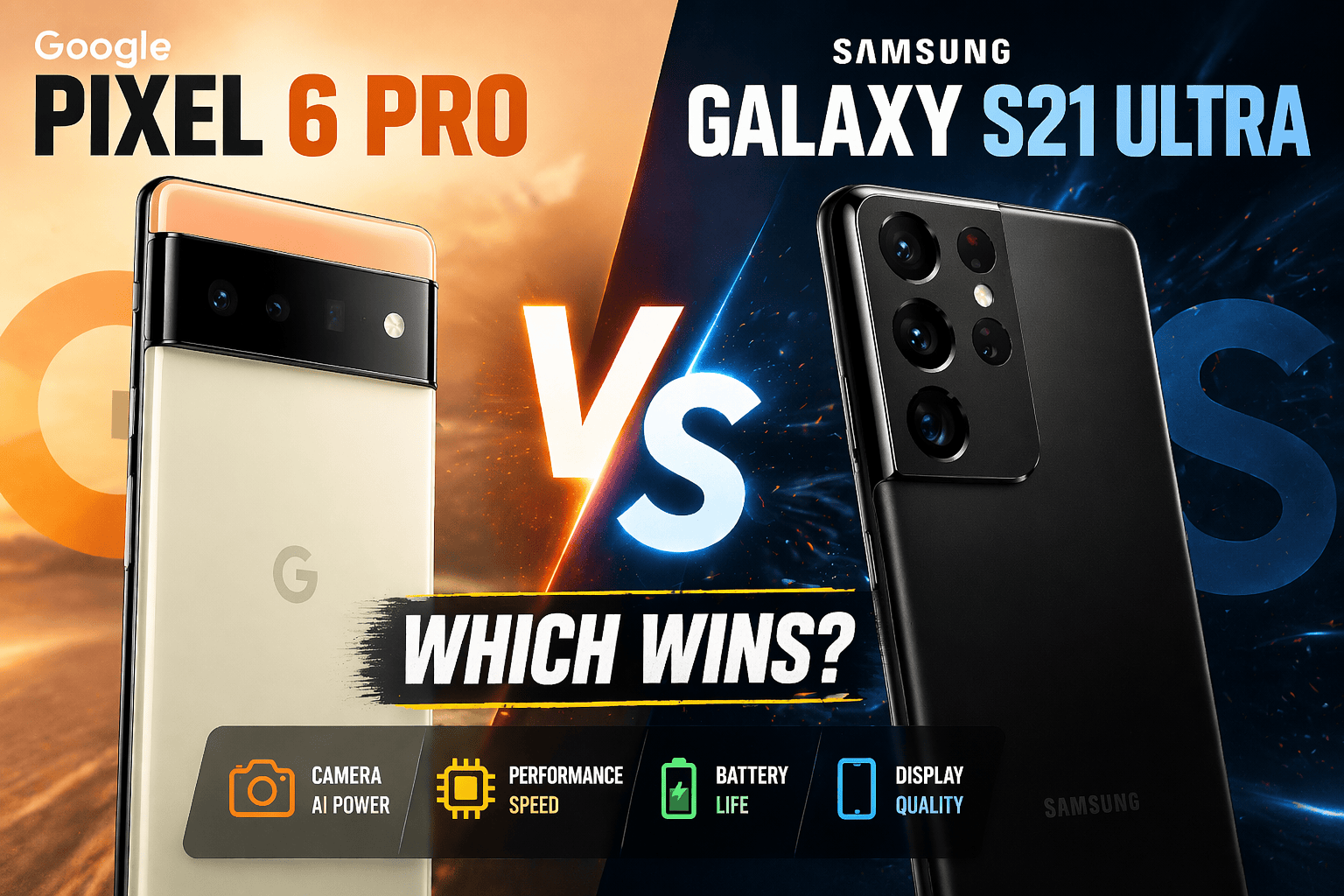
In the fiercely competitive world of premium smartphones, two titans emerged in late 2021 to redefine what a flagship device could be: the Google Pixel 6 Pro and the Samsung Galaxy S21 Ultra. While both aimed for the top tier, they approached excellence from distinctly different philosophies. Google, with its first custom-built Tensor chip, sought to leverage AI and computational photography to an unprecedented degree, offering a “pure Android” experience with a unique design. Samsung, on the other hand, continued its legacy of hardware prowess, packing the S21 Ultra with cutting-edge specifications, an industry-leading display, and a versatile camera system, all wrapped in its mature One UI ecosystem.
For consumers looking to invest in a top-tier Android device, the choice between these two powerhouses was, and in many ways still is, a significant dilemma. Both offer incredible performance, stunning displays, and exceptional cameras, but their nuances cater to different priorities and preferences. This comprehensive comparison will delve into every critical aspect of the Google Pixel 6 Pro and the Samsung Galaxy S21 Ultra, helping you understand their strengths, weaknesses, and ultimately, which one might be the perfect fit for your digital life.
Design and Build Quality
The first impression of any smartphone is its design, and both the Pixel 6 Pro and the Galaxy S21 Ultra make bold statements, albeit in different ways.
Google Pixel 6 Pro: The Visor and the Curves
The Pixel 6 Pro introduced a radical departure from previous Pixel designs, featuring a distinctive “camera bar” or “visor” that spans the entire width of the phone. This design element not only houses the camera sensors but also gives the phone an unmistakable identity. The back is made of glossy Gorilla Glass Victus, which curves elegantly into a polished aluminum frame. The front also features curved glass, giving it a premium, almost bezel-less feel.
While the visor design is polarizing, it undeniably stands out. The phone feels substantial in hand, weighing 210g, and its dimensions (163.9 x 75.9 x 8.9 mm) make it a large device, though the curved edges help with ergonomics. The build quality is excellent, with tight tolerances and a premium finish. It boasts an IP68 rating for dust and water resistance, ensuring durability against everyday splashes and dust ingress.
Samsung Galaxy S21 Ultra: Refined Elegance with a Contour Cut
Samsung’s approach with the S21 Ultra was one of refined elegance. It features a sophisticated “Contour Cut” camera housing that seamlessly blends into the metal frame, creating a unique and less intrusive look compared to the Pixel’s visor. The back is finished with a matte Gorilla Glass Victus, which feels incredibly premium and resists fingerprints far better than the Pixel’s glossy back. The frame is polished aluminum, and like the Pixel, the front display features subtly curved edges.
At 227g, the S21 Ultra is noticeably heavier than the Pixel 6 Pro, and its dimensions (165.1 x 75.6 x 8.9 mm) make it slightly taller. However, the weight distribution feels balanced, contributing to a sense of solidity. The matte finish on the back is a particular highlight, offering both a luxurious feel and practical resistance to smudges. Like the Pixel, it also carries an IP68 rating, signifying robust protection against the elements.
Design Verdict
The choice here largely comes down to personal aesthetic preference. The Pixel 6 Pro is bold and distinctive, while the Galaxy S21 Ultra is more conventionally elegant and refined. The S21 Ultra’s matte finish is arguably more practical, but the Pixel’s unique visor is certainly a conversation starter. Both phones feel incredibly well-built and premium.
Display: A Window to Your Digital World
The display is often the primary interface with a smartphone, and both devices offer stunning visual experiences.
Google Pixel 6 Pro: Smooth and Vibrant
The Pixel 6 Pro features a 6.7-inch LTPO AMOLED display with a QHD+ resolution (1440 x 3120 pixels), resulting in a sharp 512 ppi. Its adaptive refresh rate can scale from 10Hz to 120Hz, providing buttery-smooth scrolling and animations while conserving battery life when static content is displayed. The display offers excellent color accuracy, deep blacks, and good contrast, typical of an OLED panel.
Brightness levels are respectable, reaching around 800 nits in typical conditions and peaking higher for HDR content, making it generally good for outdoor visibility. The curved edges add to the immersive feel, though some users might find them prone to accidental touches or reflections.
Samsung Galaxy S21 Ultra: The Benchmark Setter
Samsung has long been a leader in display technology, and the S21 Ultra is a testament to that. It boasts a slightly larger 6.8-inch Dynamic AMOLED 2X display, also with a QHD+ resolution (1440 x 3200 pixels) and an even sharper 515 ppi. Like the Pixel, it uses LTPO technology for an adaptive refresh rate, ranging from 10Hz to 120Hz.
Samsung Galaxy S26 Ultra vs Google Pixel 10 Pro XL: Best Flagship?
Best eSIMs 2026: Top Plans for Travel, Business, and Home Use
Samsung Galaxy S26 Ultra vs Samsung Galaxy S25 Ultra: What’s the Difference?
Where the S21 Ultra truly shines is its peak brightness, which can reach an incredible 1500 nits. This makes it exceptionally bright and legible even under direct sunlight, setting a new standard for outdoor visibility. Colors are vibrant and punchy, and the display offers excellent clarity and contrast. It also supports HDR10+ for an enhanced viewing experience with compatible content. The S21 Ultra also includes S Pen support, a feature not found on the Pixel, adding a layer of productivity for those who utilize a stylus.
Display Verdict
While the Pixel 6 Pro’s display is excellent, the Samsung Galaxy S21 Ultra’s display is arguably the best in the business. Its superior peak brightness, slightly larger size, and S Pen support give it an edge, especially for power users and those who consume a lot of media outdoors.
Performance: Tensor vs. Snapdragon/Exynos
Performance is where the underlying philosophy of each company truly comes into play.
Google Pixel 6 Pro: The Dawn of Tensor
The Pixel 6 Pro is powered by Google’s inaugural custom-designed system-on-a-chip (SoC), the Google Tensor. This 5nm chip was not designed to win raw benchmark wars against competitors but rather to excel in AI, machine learning, and computational photography tasks. It features an octa-core CPU configuration, a Mali-G78 MP20 GPU, and a dedicated Tensor Processing Unit (TPU). The Pixel 6 Pro comes with 12GB of LPDDR5 RAM.
In daily use, the Pixel 6 Pro is incredibly smooth and responsive. Apps launch quickly, multitasking is seamless, and the 120Hz display ensures a fluid experience. Where Tensor truly shines is in its handling of on-device AI tasks:
- Speech Recognition: Live Translate, Live Caption, and Assistant interactions are remarkably fast and accurate, often processing speech entirely on the device.
- Computational Photography: Tensor powers advanced image processing features like Magic Eraser, Face Unblur, and enhanced HDR.
- Security: It integrates the Titan M2 security chip, providing robust hardware-level security.
While not topping synthetic benchmarks, the Pixel 6 Pro handles demanding games and heavy applications with ease, demonstrating that Google’s focus on real-world performance and AI acceleration pays off.
Samsung Galaxy S21 Ultra: Raw Power and Efficiency
The Samsung Galaxy S21 Ultra was released with two different chipsets depending on the region: the Qualcomm Snapdragon 888 (for North America, China, and Korea) and Samsung’s own Exynos 2100 (for Europe and other regions). Both are 5nm octa-core processors, featuring powerful CPUs and GPUs (Adreno 660 for Snapdragon, Mali-G78 MP14 for Exynos). The S21 Ultra also comes with 12GB or 16GB of LPDDR5 RAM.
Both the Snapdragon 888 and Exynos 2100 are absolute powerhouses. They consistently score higher in synthetic benchmarks than the Google Tensor, particularly in CPU and GPU raw performance. In real-world usage, this translates to:
- Blazing Speed: Apps open instantly, and the phone handles everything from intense gaming to video editing without breaking a sweat.
- Gaming Prowess: High-fidelity games run smoothly at maximum settings, thanks to the powerful GPUs.
- Multitasking: With ample RAM, the S21 Ultra can keep numerous apps open in memory without needing to reload them.
While the Exynos variant has historically lagged slightly behind its Snapdragon counterpart in some areas, both chips deliver a top-tier performance experience that few phones can match.
Performance Verdict
For raw computational horsepower and benchmark supremacy, the Samsung Galaxy S21 Ultra, particularly the Snapdragon variant, holds an edge. However, the Google Pixel 6 Pro’s Tensor chip offers a uniquely optimized experience, excelling in AI-driven tasks and delivering incredibly smooth day-to-day performance. If your priority is bleeding-edge gaming or heavy video editing, the S21 Ultra might be slightly better. If you value smart, AI-powered features and a consistently fluid user experience, the Pixel 6 Pro is exceptional.
Camera System: Computational Magic vs. Hardware Versatility
The camera is often the most critical feature for many smartphone buyers, and both these devices aim for photographic excellence, albeit through different philosophies.
Google Pixel 6 Pro: The Computational Photography King
Google has built its camera reputation on computational photography, and the Pixel 6 Pro takes this to new heights with its Tensor chip. The hardware itself is a significant upgrade from previous Pixels:
- Main Sensor: 50MP wide-angle with f/1.85 aperture, OIS, and a large 1/1.31″ sensor (captures 2.4x more light than Pixel 5).
- Ultra-wide Sensor: 12MP with f/2.2 aperture and 114˚ field of view.
- Telephoto Sensor: 48MP with f/3.5 aperture, OIS, 4x optical zoom, and up to 20x Super Res Zoom.
- Front Camera: 11.1MP with f/2.2 aperture and 94˚ ultrawide field of view.
Have any thoughts?
Share your reaction or leave a quick response — we’d love to hear what you think!
-
 0
0
-
 0
0
-
 0
0
-
 0
0
-
 0
0
-
 0
0
