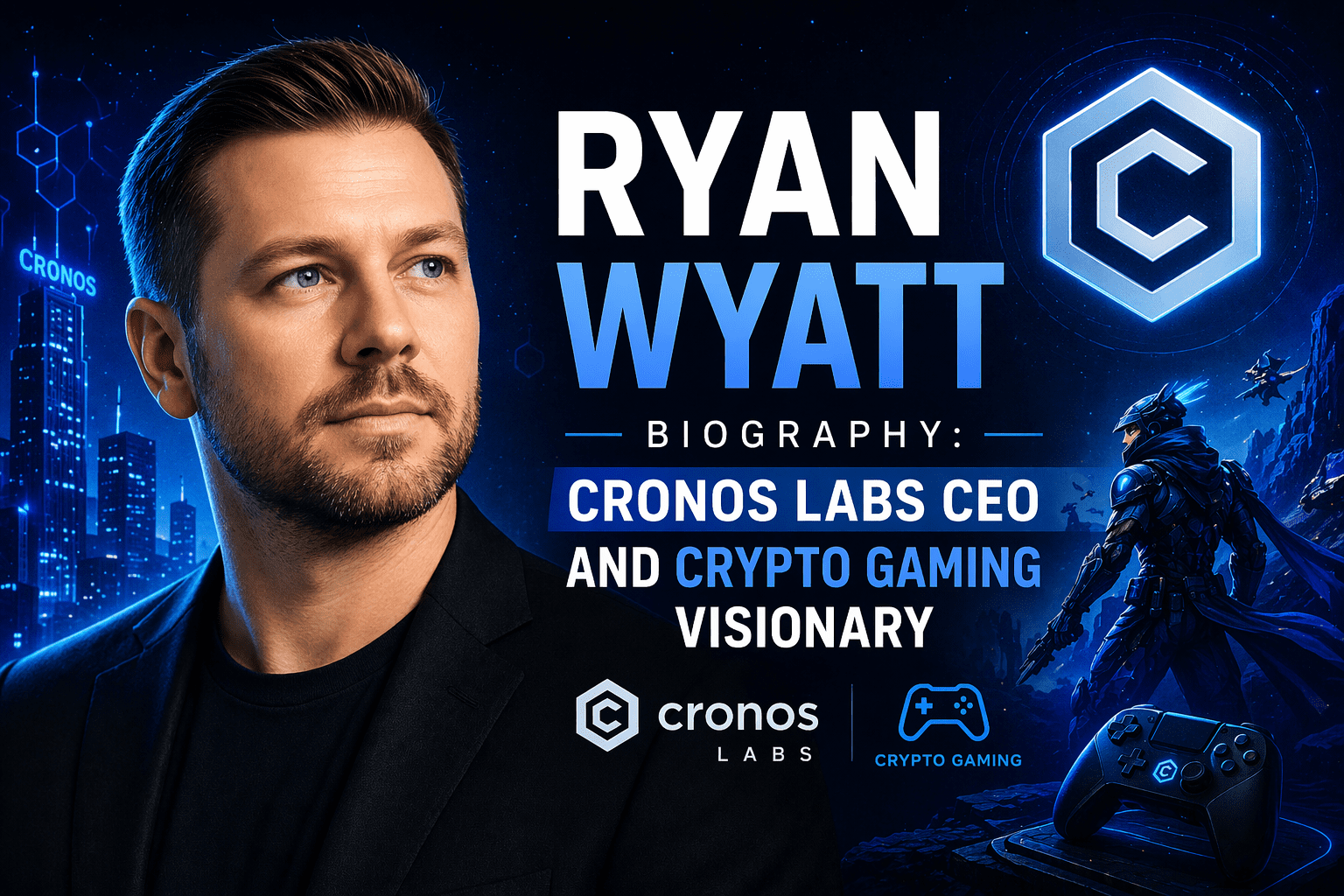
Ryan Wyatt Biography: Cronos Labs CEO, YouTube Gaming Leader, Polygon Studios Creator & Crypto Gaming Visionary
In the rapidly evolving landscapes of digital entertainment, esports, and blockchain technology, few figures have navigated the transition from “Web2” to “Web3” as successfully or as visibly as Ryan Wyatt. Known to millions by his online handle “Fwiz,” Wyatt has spent over fifteen years at the epicenter of the gaming industry. From the early days of shoutcasting Call of Duty matches in dimly lit booths to leading the gaming division of the world’s largest video platform, and finally to architecting the future of decentralized ecosystems, Wyatt’s career is a blueprint for the modern digital executive.
Today, as the CEO of Cronos Labs, Wyatt is tasked with one of the most significant challenges in tech: making blockchain technology invisible, intuitive, and indispensable for the next billion users. This is the story of a visionary who saw the potential of gaming long before it was a multi-billion dollar industry and who now sees the potential of digital ownership long before it has reached the masses.
The Early Days: “Fwiz” and the Birth of Professional Esports
Ryan Wyatt’s journey did not begin in a boardroom; it began in the competitive trenches of the early 2000s gaming scene. Born and raised in Ohio, Wyatt’s passion for gaming was evident from a young age. However, unlike many of his peers who viewed gaming as a solitary hobby, Wyatt saw it as a social and competitive arena.
While attending The Ohio State University, Wyatt became deeply involved in the burgeoning world of professional gaming. Under the moniker “Fwiz,” he became a prominent figure in the Call of Duty community. This was an era before Twitch, before massive arena sell-outs, and before “influencer” was a recognized career path.
The Major League Gaming (MLG) Era
Wyatt’s first major professional breakthrough came with Major League Gaming (MLG). As a commentator and later an executive, he played a pivotal role in professionalizing esports. He had a natural talent for “shoutcasting”—the art of providing play-by-play commentary for live matches. His ability to articulate the strategy and excitement of a high-stakes match helped bridge the gap between hardcore players and casual viewers.
At MLG, Wyatt served as the Vice President of Programming. During his tenure, he helped the company secure major broadcast deals and expand its reach. His time at MLG was foundational; it taught him how to build communities, how to manage high-level talent, and most importantly, how to scale a digital product. He saw firsthand that gaming was not just about the software—it was about the culture surrounding it.
The YouTube Era: Scaling the World’s Largest Gaming Platform
In 2014, Google made a move that would change the trajectory of Wyatt’s career and the gaming industry at large. They hired Wyatt to lead the Gaming vertical at YouTube. At the time, YouTube was the dominant home for gaming VOD (Video on Demand) content, but it was losing ground to Twitch in the live-streaming space.
Building YouTube Gaming
As the Global Head of Gaming, Wyatt was responsible for turning YouTube into a destination for gamers. Under his leadership, YouTube Gaming grew from a fragmented category into a powerhouse ecosystem. He oversaw the launch of the dedicated YouTube Gaming app and later integrated those features back into the main site to ensure maximum reach.
Wyatt’s strategy was two-fold: infrastructure and talent. He worked closely with engineers to improve the live-streaming experience, introducing features like “Super Chat” and channel memberships that allowed creators to monetize their content directly.
The “Streaming Wars”
Perhaps Wyatt’s most visible contribution to YouTube was his role in the “Streaming Wars.” Recognizing that platforms are only as strong as their creators, Wyatt orchestrated a series of high-profile, exclusive deals to bring top-tier talent to YouTube.
Some of the most notable moves included:
- DrDisrespect: After his permanent ban from Twitch, Wyatt and his team provided a platform for one of gaming’s biggest personalities to continue his career.
- Valkyrae: Bringing the “Queen of Gaming” to YouTube was a masterstroke that diversified the platform’s audience.
- Ludwig Ahgren: In a move that shocked the industry, Wyatt signed Ludwig, one of Twitch’s most innovative creators, signaling that YouTube was the place for creative freedom and long-term stability.
By the time Wyatt left YouTube in early 2022, the platform was seeing over 100 billion hours of gaming content watched annually. He had successfully transformed YouTube into a multi-faceted gaming giant that catered to creators, viewers, and publishers alike.
The Pivot to Web3: Polygon Studios
In January 2022, Ryan Wyatt announced he was leaving his prestigious role at YouTube to join Polygon Studios as CEO. The move sent shockwaves through the tech world. At the time, “Web3” and “NFTs” were polarizing topics. Many questioned why a top executive at a trillion-dollar company would leave for a blockchain startup.
For Wyatt, the answer was simple: Digital Ownership.
The Vision for Polygon Studios
Wyatt saw that the current model of the internet (Web2) was extractive. Players spent thousands of dollars on in-game skins and items that they didn’t actually own and couldn’t sell. He believed that blockchain technology could decentralize this power, giving value back to the users.
As CEO of Polygon Studios, Wyatt didn’t just focus on “crypto-native” projects. He understood that for blockchain to succeed, it needed mainstream adoption. He leveraged his years of experience and his massive professional network to bring some of the world’s biggest brands into the Polygon ecosystem.
Major Partnerships and Mainstream Adoption
Under Wyatt’s leadership, Polygon became the “de facto” blockchain for major corporations looking to enter the Web3 space. Key achievements included:
- Starbucks Odyssey: A loyalty program built on Polygon that allowed customers to earn and trade digital stamps.
- Nike’s .Swoosh: A platform for virtual creations that allowed users to co-create and own digital apparel.
- Reddit Collectible Avatars: One of the most successful implementations of NFTs to date, bringing millions of users into the ecosystem without them even needing to know they were using a blockchain.
- Disney: Polygon was selected for the Disney Accelerator program, further cementing its status as a premium enterprise solution.
Wyatt’s tenure at Polygon proved that Web3 didn’t have to be “clunky” or “scammy.” By focusing on user experience and high-quality partnerships, he helped legitimize the entire sector.
Leading the Charge at Cronos Labs
In late 2023, Wyatt took on a new challenge as the Managing Director (effectively CEO) of Cronos Labs. Cronos is the ecosystem development arm of the Cronos blockchain, a leading EVM-compatible Layer-1 network backed by Crypto.com.
The Mission at Cronos
At Cronos Labs, Wyatt is focusing on the next phase of blockchain evolution: the integration of DeFi (Decentralized Finance), Gaming, and AI. His goal is to scale the Cronos ecosystem by supporting developers through accelerators, grants, and strategic guidance.
One of his primary focuses is the Cronos zkEVM, a high-performance Layer-2 solution designed to offer hyper-scalability. Wyatt understands that for gaming to truly thrive on the blockchain, transactions must be near-instant and virtually free.
Stani Kulechov Biography: Founder of Aave, Lens Protocol, and Onchain Lending
Hayden Adams Biography: The Uniswap Founder Revolutionizing Decentralized Trading
Juan Benet Biography: The Visionary Behind Protocol Labs, IPFS, and Filecoin
Bridging the Gap
Wyatt’s role at Cronos Labs is as much about education as it is about technology. He continues to be a vocal advocate for the “fun-first” approach to gaming. He frequently argues that blockchain elements should be secondary to the gameplay itself. If a game isn’t fun to play, no amount of tokenomics will save it.
The Visionary Mindset: Why Gaming is the Gateway to Crypto
To understand Ryan Wyatt is to understand his philosophy on the intersection of gaming and technology. He has consistently identified three pillars that will define the future of the industry:
1. The Creator Economy 2.0
In the Web2 era, creators were at the mercy of algorithms and platform policies. Wyatt believes Web3 provides a “sovereign” alternative. By owning their distribution channels and having direct financial relationships with their fans through tokens or digital assets, creators can build more sustainable and independent businesses.
2. Interoperability
Wyatt often speaks about the “siloed” nature of modern gaming. If you buy a skin in Fortnite, you can’t use it in Call of Duty. While he acknowledges the technical and business hurdles, he envisions a future where digital assets are interoperable across different virtual worlds, powered by a neutral, decentralized ledger.
3. Frictionless User Experience
Perhaps Wyatt’s most frequent critique of the current crypto space is its complexity. He has been a staunch advocate for “abstracting away” the blockchain. He believes users shouldn’t have to worry about “gas fees,” “seed phrases,” or “cross-chain bridges.” Success, in Wyatt’s eyes, is when a user is interacting with a blockchain-powered app without even realizing it.
Leadership Style and Public Influence
Beyond his corporate titles, Ryan Wyatt is a prolific communicator. With a massive following on X (formerly Twitter) and frequent appearances on major tech podcasts, he has become a thought leader for a generation of digital professionals.
Transparency and Accessibility
Unlike many “suit and tie” executives, Wyatt maintains the persona of a gamer. He is known for his transparency, often engaging directly with critics and fans alike. This accessibility has made him a trusted voice in an industry often plagued by opacity.
Mentorship and Growth
Throughout his career, Wyatt has been a mentor to dozens of creators and young executives. He frequently speaks about the importance of “soft skills”—communication, empathy, and relationship building—in an increasingly automated world. His ability to manage the egos of high-profile streamers while simultaneously negotiating with C-suite executives at Fortune 500 companies is a rare and valuable skill set.
Examples of Wyatt’s Impactful Decisions
To truly grasp Wyatt’s influence, one can look at specific “inflection points” where his intervention changed the course of a project:
- The YouTube Live Redesign: Early on, YouTube Live was difficult to navigate. Wyatt pushed for a “Gaming” destination that mirrored the community feel of sites like Justin.tv (which became Twitch). This decision saved YouTube’s gaming vertical from irrelevance.
- The “No-Jargon” Approach at Polygon: When marketing the Starbucks and Nike partnerships, Wyatt insisted on avoiding terms like “NFT” and “Blockchain” in the primary marketing materials. Instead, they used terms like “Digital Collectibles” and “Stamps.” This significantly lowered the barrier to entry for mainstream consumers.
- The Cronos Accelerator Program: At Cronos Labs, he has pivoted the focus toward “utility-driven” projects. Instead of funding speculative “Play-to-Earn” games that lack depth, he is prioritizing projects that use blockchain to solve real problems in identity, loyalty, and community governance.
Challenges and the Road Ahead
Despite his successes, Wyatt faces significant challenges in his current role at Cronos Labs. The broader crypto market remains volatile, and regulatory scrutiny is at an all-time high. Furthermore, the “gamer backlash” against blockchain technology remains a hurdle. Many traditional gamers view NFTs as a “cash grab” or environmentally harmful.
Wyatt’s response to these challenges has been consistent: Build better products. He argues that the only way to win over the skeptics is to provide value that was previously impossible. Whether it’s through true ownership of assets, transparent secondary markets, or new forms of community-led development, he is betting that the utility of the technology will eventually outweigh the stigma.
Conclusion: The Architect of the Digital Frontier
Ryan Wyatt’s career trajectory—from “Fwiz” the commentator to the CEO of Cronos Labs—reflects the broader evolution of the digital age. He has consistently been ahead of the curve, identifying the next major shift before it becomes mainstream.
At MLG, he saw the potential of esports. At YouTube, he saw the power of the creator economy. At Polygon, he saw the necessity of digital ownership. And now, at Cronos Labs, he is building the infrastructure that will tie all these elements together.
Wyatt is more than just a tech executive; he is a bridge-builder. He bridges the gap between the old guard of corporate business and the new frontier of decentralized technology. He bridges the gap between the hardcore gamer and the casual consumer. As the lines between our physical and digital lives continue to blur, the vision and leadership of figures like Ryan Wyatt will be instrumental in ensuring that this new world is open, equitable, and, above all, fun.
The story of Ryan Wyatt is still being written, but his legacy as a gaming leader and crypto visionary is already secure. As he continues to push the boundaries of what is possible in Web3, the entire industry is watching to see where he will lead it next.