
Table of Contents
The Irony is Rich: Anthropic’s Copyright Crusade Against Claude Code Leaks
The world of artificial intelligence is a whirlwind of innovation, ethical dilemmas, and rapidly evolving legal challenges. As AI models grow in sophistication, their creators grapple with monumental questions of intellectual property, data rights, and the very definition of creativity. Yet, amidst this cutting-edge landscape, a recent incident involving AI pioneer Anthropic has brought a traditional legal weapon – the copyright takedown request – sharply into focus, revealing a profound and undeniable irony.
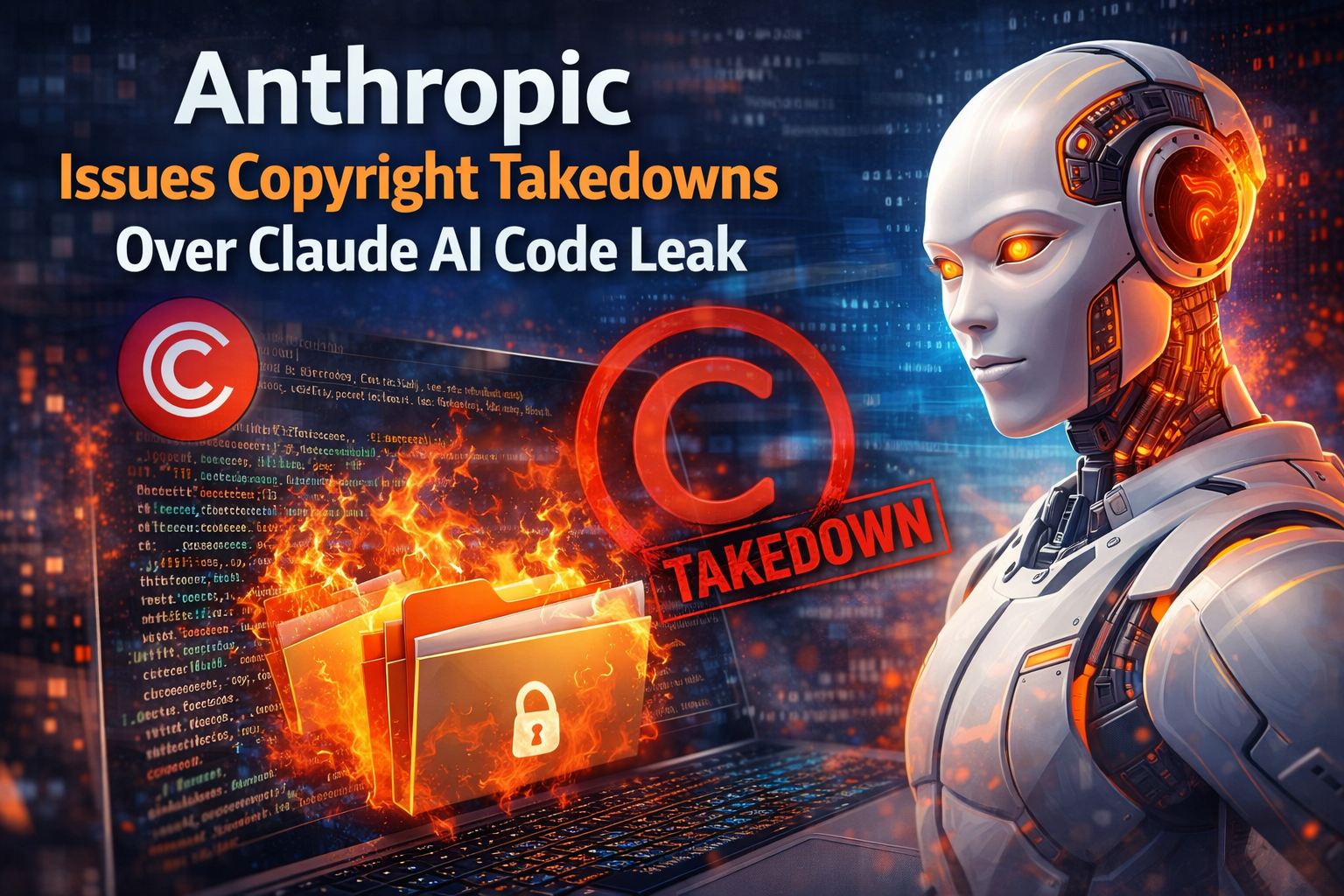
Anthropic, the company behind the highly regarded Claude AI model, found itself in a precarious situation when proprietary code related to its flagship product began to surface online. In a swift and decisive response, the company unleashed a barrage of Digital Millennium Copyright Act (DMCA) takedown requests, aiming to scrub the leaked code from various platforms. The irony, as many observers were quick to point out, is indeed rich: an AI company, whose very existence relies on processing vast quantities of data (much of it copyrighted) and often invoking “fair use” arguments, is now aggressively leveraging the same copyright laws to protect its own intellectual property.
This incident is more than just a corporate skirmish; it’s a microcosm of the larger, complex, and often contradictory relationship between AI, intellectual property, and the legal frameworks struggling to keep pace. It highlights the inherent tension between the open, collaborative spirit often associated with technological advancement and the fiercely proprietary nature of valuable commercial assets. As we delve deeper into this unfolding drama, we uncover layers of paradox that challenge our understanding of ownership, creation, and the future of digital rights in the age of artificial intelligence.
The Genesis of the Leak: What Happened?
In the fast-paced and highly competitive realm of artificial intelligence, proprietary code, model architectures, and training methodologies represent the crown jewels of any company. For Anthropic, a leading AI research and development company founded by former OpenAI researchers, its Claude AI model is a cornerstone of its innovation and commercial strategy. Claude is known for its advanced reasoning capabilities, extensive context window, and sophisticated conversational abilities, making it a direct competitor to models like OpenAI’s GPT series. The underlying code and architecture are therefore invaluable trade secrets and intellectual property.
The exact circumstances surrounding the initial leak remain somewhat opaque, but reports indicate that internal or proprietary code related to Claude began appearing on public platforms, most notably GitHub, a widely used code hosting service. The leaked material reportedly included portions of Claude’s codebase, internal tools, and potentially other sensitive information that could reveal insights into its operational mechanics, development processes, or even vulnerabilities.
Such leaks are a nightmare scenario for any technology company. For an AI firm, the stakes are particularly high. Leaked code could:
- Compromise Competitive Advantage: Competitors could gain insights into Anthropic’s unique approaches, algorithms, and optimizations, potentially accelerating their own development or even replicating features.
- Expose Security Vulnerabilities: If the code contained details about internal systems or security protocols, it could open doors for malicious actors to exploit weaknesses.
- Undermine Model Integrity: Knowledge of the underlying code could potentially be used to “jailbreak” the model, bypass safety features, or manipulate its behavior in unintended ways.
- Erode Trust: Customers and partners might lose confidence in Anthropic’s ability to protect its own assets and, by extension, their data.
The appearance of this code online was not an isolated incident but rather a distributed problem, with various users re-uploading or sharing fragments across different repositories and forums. This “whack-a-mole” scenario presented Anthropic with an immediate and significant challenge: how to effectively contain the spread and remove the infringing material from public view before it caused irreparable damage. The chosen weapon for this fight was a well-established legal instrument: the DMCA takedown notice.
Top 10 African Tech Innovators & Entrepreneurs to Watch 2026
Configure SPF, DKIM, DMARC for Better Email Deliverability
Decentralized Startups: Future Ecosystems and VC Investment Strategies
Anthropic’s Swift Response: Wielding the DMCA Hammer
Faced with a burgeoning crisis, Anthropic wasted no time in mobilizing its legal resources. The company initiated a concerted campaign of DMCA (Digital Millennium Copyright Act) takedown requests, targeting the platforms where the leaked Claude code was being hosted. The DMCA, a U.S. copyright law enacted in 1998, provides a mechanism for copyright holders to request the removal of infringing material from websites and online services. Specifically, Section 512 of the DMCA offers “safe harbor” provisions for online service providers (OSPs) like GitHub, protecting them from liability for user-generated content, provided they promptly remove infringing material upon receiving a valid takedown notice.
Anthropic’s strategy was clear: assert its ownership over the leaked code as copyrighted material and demand its immediate removal. The takedown notices would typically include:
- Identification of the copyrighted work: Clearly stating that the leaked code belongs to Anthropic and is proprietary.
- Identification of the infringing material: Providing specific URLs or file paths where the code was located.
- A statement of good faith belief: Affirming that the material is not authorized by Anthropic.
- A statement under penalty of perjury: Attesting to the accuracy of the information and the authority to act on behalf of the copyright holder.
GitHub, as a major OSP, has a well-defined process for handling DMCA requests. Upon receiving a valid notice, GitHub typically removes the infringing content and notifies the user who uploaded it. The user then has the option to file a counter-notice if they believe the content was removed in error or constitutes fair use. However, given the proprietary nature of internal company code, a successful counter-notice in this scenario would be highly unlikely.
The aggressive nature of Anthropic’s response underscored the perceived value and sensitivity of the leaked code. It was not a passive observation of the leak but an active, legal offensive to protect its intellectual property. This rapid and widespread deployment of DMCA requests demonstrated Anthropic’s commitment to safeguarding its assets, even if it meant resorting to legal measures that, in the broader context of AI, carry a heavy weight of irony. The company was effectively using a legal framework designed to protect human creativity and original works to shield the very algorithms that are blurring the lines of creation itself.
The Glaring Paradox: AI’s Copyright Conundrum Unveiled
The deployment of DMCA takedown requests by Anthropic to protect its Claude code is not just a standard legal maneuver; it’s a profound moment of irony that lays bare the deep contradictions and unresolved questions at the intersection of AI and intellectual property law. The “rich irony” stems from the stark contrast between how AI companies often consume copyrighted material and how they protect their own.
AI Training Data and Copyright: A Foundational Conflict
At the heart of the AI revolution lies the ability of large language models (LLMs) like Claude to learn from vast datasets. These datasets are gargantuan, comprising billions, if not trillions, of text snippets, images, audio files, and code repositories scraped from the internet. A significant portion of this training data is, unequivocally, copyrighted material – books, articles, photographs, songs, software code, and more.
The prevailing argument from many AI developers, including implicitly or explicitly from companies like Anthropic, is that the use of this copyrighted material for training purposes falls under “fair use.” Fair use is a legal doctrine that permits limited use of copyrighted material without acquiring permission from the rights holders, typically for purposes such as criticism, comment, news reporting, teaching, scholarship, or research. AI companies often contend that:
- Transformative Use: Training an AI model is a transformative process. The model doesn’t reproduce the original work directly but learns patterns, styles, and information from it to generate new content.
- Non-Expressive Use: The data is used not for its expressive content to be displayed to users, but as raw material for statistical learning.
- No Market Harm: The training process itself does not directly compete with or harm the market for the original copyrighted works.
However, this interpretation of fair use is hotly contested by creators, artists, authors, and media organizations. Many argue that:
- Massive Infringement: Scraping billions of copyrighted works without permission or compensation constitutes a massive act of infringement.
- Direct Competition: AI-generated content can directly compete with human-created content, potentially devaluing original works and undermining creators’ livelihoods.
- Lack of Transparency: The “black box” nature of AI models makes it difficult to ascertain exactly how copyrighted material is used or if it might be reproduced in outputs.
Lawsuits against AI companies from various creative industries (e.g., The New York Times vs. OpenAI/Microsoft, Sarah Silverman and other authors vs. OpenAI/Meta) are currently challenging these fair use claims, seeking to establish that AI training on copyrighted data without permission is indeed infringement.
The “Output vs. Input” Debate: A Double Standard?
This brings us to the core of the irony. When Anthropic issues DMCA takedown requests, it is asserting its clear, unequivocal copyright ownership over its proprietary Claude code. It is arguing that this code is an original work of authorship, deserving of legal protection, and that its unauthorized reproduction or distribution is a violation of its rights.
Yet, this stance appears to be in direct tension with the arguments often made by the AI industry regarding the input data used to train their models. If the code Anthropic creates is sacred and protected by copyright, why should the human-created content that feeds and enables the very existence of models like Claude be treated differently?
The paradox can be summarized:
- Anthropic’s Position (on its own code): “This is our original work, protected by copyright. Unauthorized distribution is infringement, and we will use legal means to stop it.”
- AI Industry’s Position (on training data): “We use vast amounts of copyrighted material for training, but this is fair use/transformative. We don’t need explicit permission or to compensate creators.”
This perceived double standard is what makes the irony so “rich.” It suggests that while AI companies are quick to claim robust copyright protection for their own creations (the models and their code), they are simultaneously advocating for a more permissive interpretation of copyright law when it comes to the vast ocean of human-made content that fuels their innovation. It highlights a desire to benefit from the existing copyright system when it protects their assets, while simultaneously pushing its boundaries or reinterpreting it when it might hinder their data acquisition strategies.
Proprietary AI vs. Open Source Ethos
Adding another layer to this paradox is the broader philosophical debate within the AI community regarding open-source versus proprietary development. While many foundational AI research papers are published openly and some powerful models are released under open-source licenses (e.g., Meta’s Llama 2), Anthropic’s Claude is a distinctly proprietary model. Its advanced capabilities, unique architecture, and safety mechanisms are considered core intellectual property, carefully guarded to maintain a competitive edge and ensure responsible deployment.
The decision to aggressively pursue DMCA takedowns reinforces Anthropic’s commitment to a proprietary model. It underscores that despite the open-source leanings of some parts of the AI world, the most valuable commercial AI assets are still treated as highly confidential and protected by traditional legal means. This incident serves as a stark reminder that even in an era of rapid technological sharing, the lines between what is freely accessible and what is fiercely protected remain firmly drawn, especially when billions of dollars in valuation are at stake.
Beyond the Code: Broader Implications for the AI Landscape
The Anthropic code leak and the company’s subsequent DMCA campaign are not isolated incidents; they are symptomatic of deeper, systemic challenges facing the AI industry and the legal frameworks attempting to govern it. The implications extend far beyond Anthropic’s immediate concerns, touching upon the future of IP protection, legal precedents, and public trust in the AI ecosystem.
The Future of AI IP Protection
This incident highlights the immense difficulty AI companies face in protecting their intellectual property. In a world where code can be instantly copied, shared, and re-uploaded globally, traditional methods of protection like trade secrets become incredibly fragile. While Anthropic’s aggressive use of DMCA is a strong defensive measure, it’s also a reactive one. Proactive measures are equally crucial:
- Enhanced Internal Security: Stricter access controls, monitoring, and employee training are essential to prevent internal leaks.
- Robust Legal Frameworks: AI companies will likely push for clearer, more specific legal protections for their models, algorithms, and training data, potentially going beyond existing copyright and trade secret laws.
- Technological Safeguards: Exploring methods to embed digital watermarks, track usage, or even design models that are inherently harder to reverse-engineer without authorization.
The incident underscores that the “code is law” ethos of some tech communities clashes directly with the “law is law” reality of commercial enterprise, especially when billions are invested in developing proprietary technology.
Setting Legal Precedents
Anthropic’s vigorous defense of its copyright could, paradoxically, strengthen the very copyright framework that many AI companies find inconvenient when it comes to their training data. If courts consistently uphold AI companies’ rights to protect their own code via copyright, it could inadvertently bolster arguments from creators who assert their copyright over the input data.
This creates a fascinating legal tightrope walk. If AI companies want robust copyright protection for their outputs and proprietary models, they may find it harder to argue against equally robust protection for the inputs that made their models possible. The legal battles currently underway regarding AI training data will undoubtedly reference such incidents, seeking to establish a consistent application of copyright principles across the entire AI lifecycle – from data ingestion to model deployment.
Public Perception and Trust
The “rich irony” of Anthropic’s actions has not gone unnoticed by the public and media. Such incidents can erode public trust in AI companies, particularly if they are perceived as hypocritical or as operating under a self-serving interpretation of legal and ethical norms. If AI companies are seen to demand strong protections for their own creations while simultaneously resisting similar protections for the human creations they rely upon, it can fuel skepticism and resentment.
Building trust in AI requires not just technological prowess but also a commitment to ethical practices and a fair approach to intellectual property. Incidents like the Claude code leak, and the subsequent legal response, become case studies in how AI companies navigate these complex ethical waters, shaping their public image and the broader societal acceptance of AI.
The Role of Platforms
Platforms like GitHub find themselves in a difficult position, caught between copyright holders and users. Their “safe harbor” status under the DMCA requires them to act swiftly on valid takedown notices, but they also face criticism for potentially over-censoring or removing content that might be legitimate. The volume and frequency of DMCA requests in cases like Anthropic’s can strain platform resources and highlight the challenges of content moderation at scale. This incident further emphasizes the critical role these platforms play as gatekeepers of digital content and their responsibility in upholding both copyright law and user rights.
Navigating the Uncharted Waters: The Need for Clarity
The Anthropic code leak and its aftermath serve as a potent reminder that the legal and ethical frameworks surrounding artificial intelligence are still very much in their infancy. The current laws, largely conceived in a pre-AI era, are struggling to keep pace with the rapid advancements and unique challenges posed by this transformative technology.
There is an urgent need for clarity and, potentially, new legislation or clearer judicial interpretations that specifically address the nuances of AI and intellectual property. This includes:
- Defining “Fair Use” in the AI Context: Establishing clearer guidelines on what constitutes fair use when copyrighted material is used for AI training, and whether compensation to creators is warranted.
- Protecting AI-Generated Content: Clarifying the copyright status of content generated by AI models – who owns it? Can it be copyrighted?
- Safeguarding AI Models and Data: Developing specific legal mechanisms to protect proprietary AI models, algorithms, and unique datasets from unauthorized access, replication, or misuse.
- International Harmonization: Addressing the global nature of AI development and data flow, requiring international cooperation to create consistent IP laws that transcend national borders.
The tension between fostering innovation (which often thrives on access to data and open collaboration) and protecting creators’ rights (which are fundamental to incentivizing original work) is a delicate balance. The Anthropic incident underscores that this balance is currently precarious, with AI companies often finding themselves in ethically complex positions as they navigate these uncharted waters.
Conclusion
The “rich irony” of Anthropic issuing copyright takedown requests to stem a Claude code leak is more than just an amusing paradox; it is a critical inflection point in the ongoing dialogue about AI and intellectual property. It starkly illustrates the inherent contradictions when an industry built on leveraging vast amounts of existing data suddenly finds itself needing to fiercely protect its own creations using the very laws it often seeks to reinterpret.
This incident is a microcosm of the larger systemic challenges facing the AI landscape. It highlights the immense value placed on proprietary AI models, the difficulties in securing such assets in a connected world, and the urgent need for legal frameworks that can adequately address the complexities of AI innovation. As AI continues its relentless march forward, the questions of ownership, creation, and fair use will only grow more pressing. Anthropic’s copyright crusade is a powerful signal that the era of AI will demand not just technological breakthroughs, but also profound legal and ethical introspection to ensure a future where both innovation and creators’ rights are respected and protected.
Have any thoughts?
Share your reaction or leave a quick response — we’d love to hear what you think!
-
 0
0
-
0
-
0
-
0
-
0
-
0


