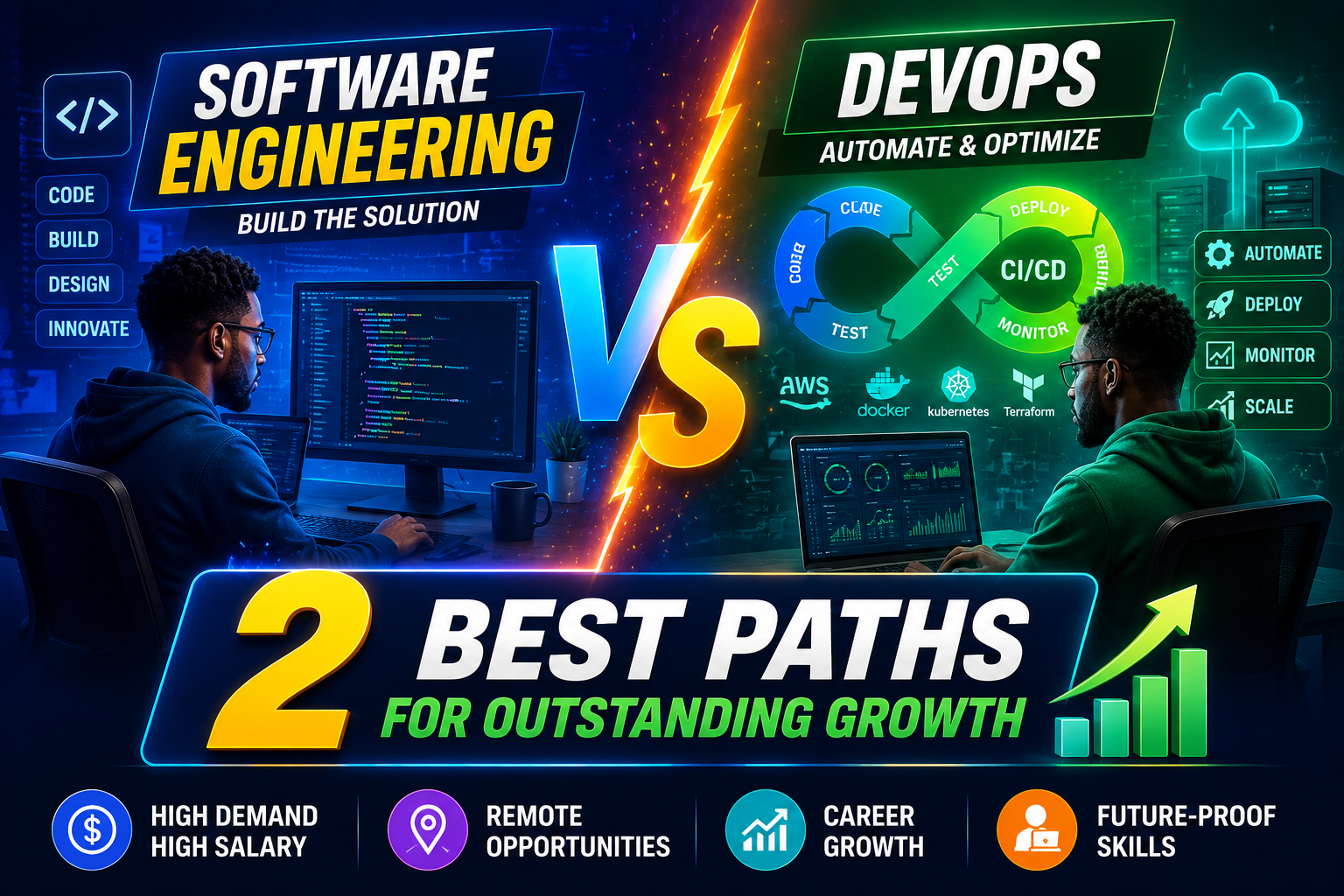
The technology landscape is a dynamic realm, constantly reshaped by innovation, evolving methodologies, and shifting market demands. Within this vibrant ecosystem, two career paths stand out for their critical importance and rapid growth: Remote Software Engineering and DevOps Engineering. Both offer compelling opportunities, but for professionals eyeing the long game, understanding their respective long-term growth trajectories is paramount. When comparing Software Engineering vs DevOps, it is essential to look beyond immediate salary figures and evaluate how each role adapts to emerging technologies like artificial intelligence, cloud-native architectures, and distributed work culture. The Software Engineering vs DevOps debate often centers on which role provides more stability in a volatile market. The choice between Software Engineering vs DevOps can significantly impact one’s career trajectory.
Table of Contents
- Understanding Remote Software Engineering
- Understanding DevOps Engineering
- Software Engineering vs DevOps: Key Differences at a Glance
- Comparing Long-Term Growth Factors
- Remote Work Dynamics in Both Roles
- The Impact of Artificial Intelligence and Automation
- How to Choose the Right Path for Your Future
- Conclusion
Understanding the Software Engineering vs DevOps landscape is vital for anyone looking to secure a high-paying position in the coming years. The rise of remote work has further amplified this discussion, allowing talent to transcend geographical boundaries and companies to tap into a global pool of expertise. This article delves into the intricacies of both remote software engineering and DevOps careers, dissecting their responsibilities, skill sets, career paths, and, most importantly, their potential for sustained growth in the decades to come. The long-term prospects for Software Engineering vs DevOps professionals are exceptionally promising.
Understanding Remote Software Engineering
Remote software engineering involves the design, development, testing, deployment, and maintenance of software applications from a non-traditional office setting. It’s a role that prioritizes code quality, functionality, scalability, and user experience, all while leveraging collaboration tools and asynchronous communication to work effectively with distributed teams. This field offers a distinct career path compared to DevOps, making the Software Engineering vs DevOps comparison important for career planning.
Key Responsibilities and Skills
A remote software engineer’s day-to-day can be incredibly varied, but core responsibilities typically include writing clean code, contributing to system architecture, and participating in peer code reviews. The essential skills for a remote software engineer are broad and deep, ranging from programming languages like Python and Java to data structures and cloud computing fundamentals. These skills are often distinct from those emphasized in a DevOps role, further defining the Software Engineering vs DevOps discussion.
Typical Career Path
The career trajectory for a software engineer typically follows a well-defined ladder from Junior to Senior, and eventually into Staff or Principal roles. For those interested in people management, the track leads toward Engineering Manager or VP of Engineering roles. This progression differs from the typical DevOps career path, highlighting another aspect of Software Engineering vs DevOps.
Understanding DevOps Engineering
DevOps is a cultural philosophy, set of practices, and tools that integrates software development and IT operations. A DevOps engineer is a crucial bridge between these two worlds, focusing on automation, infrastructure, reliability, and efficiency. This role presents a unique set of challenges and opportunities when considering Software Engineering vs DevOps.
Key Responsibilities and Skills
A DevOps engineer’s role is inherently cross-functional, with responsibilities including CI/CD pipeline management, Infrastructure as Code (IaC), and cloud resource management. The essential skills for a DevOps engineer are a blend of development, operations, and automation expertise. These technical demands are central to the Software Engineering vs DevOps debate.
Software Engineering vs DevOps: Key Differences at a Glance
To help visualize how these two career paths diverge and intersect, let us look at a direct comparison of their core parameters. This Software Engineering vs DevOps comparison highlights the shift from building features to building the systems that run them. Understanding these distinctions is crucial for anyone evaluating Software Engineering vs DevOps as a career choice.
| Feature | Remote Software Engineering | DevOps Engineering |
|---|---|---|
| Primary Focus | Building, designing, and maintaining software applications. | Automating deployments, managing infrastructure, and ensuring reliability. |
| Core Skill Set | Programming languages, algorithms, system design. | CI/CD, IaC, cloud platforms, containerization. |
| Remote Feasibility | Extremely high; highly asynchronous. | High, but requires real-time incident response. |
Comparing Long-Term Growth Factors
Now, let’s directly compare these two career paths across several dimensions crucial for long-term growth. This section explores the nuances of Software Engineering vs DevOps from a future-oriented perspective, focusing on sustained career development.
Market Demand and Evolution
In the Software Engineering vs DevOps market, demand is foundational and evergreen. According to the U.S. Bureau of Labor Statistics, employment for software developers is projected to grow much faster than average. The Software Engineering vs DevOps evolution shows that while software engineers are always needed for innovation, DevOps engineers are essential for operationalizing that innovation. Looking at Software Engineering vs DevOps through a long-term lens, we see that DevOps demand has exploded due to cloud adoption. The Software Engineering vs DevOps outlook remains positive as companies mature their automation strategies and seek high-paying remote jobs in specialized tech sectors. The continuous innovation in technology ensures that the demand for both Software Engineering vs DevOps roles will remain high, making both viable long-term options.
Skill Set Versatility and Transferability
Regarding Software Engineering vs DevOps skill versatility, core programming skills are highly transferable. The Software Engineering vs DevOps transition is often possible for engineers who understand both code and infrastructure. In the Software Engineering vs DevOps context, cloud skills gained in one role are often applicable to the other. The Software Engineering vs DevOps core principles of problem-solving and automation are stable across the industry. This transferability is a significant advantage when considering Software Engineering vs DevOps career flexibility.
Compensation and Earning Potential
Analyzing Software Engineering vs DevOps compensation reveals that both roles offer very competitive salaries. The Software Engineering vs DevOps salary trends are influenced by the scarcity of specialized skills in areas like Kubernetes or AI. In the Software Engineering vs DevOps earning potential comparison, specialized roles like SREs often see a slight edge. The Software Engineering vs DevOps financial outlook is further enhanced by the growth of remote Web3 developer salaries, which set new benchmarks for the industry. Both paths in Software Engineering vs DevOps offer robust earning potential, especially with experience and specialization, making either a financially sound choice.
Career Progression and Specialization
Evaluating Software Engineering vs DevOps career paths shows clear technical and management tracks. The Software Engineering vs DevOps technical track allows for deep specialization into Principal or Architect roles. In the Software Engineering vs DevOps management track, professionals can lead entire engineering or infrastructure organizations. The Software Engineering vs DevOps specialization options are vast, ranging from AI/ML engineering to Site Reliability Engineering. The long-term career progression for Software Engineering vs DevOps professionals is dynamic and rewarding, with ample opportunities for advancement.
Remote Work Dynamics in Both Roles
Comparing Software Engineering vs DevOps remote dynamics, software engineers often enjoy more “deep work” time. The Software Engineering vs DevOps collaboration style differs, as DevOps roles often require more synchronous coordination during incidents. In the Software Engineering vs DevOps tooling space, engineers rely on IDEs and Git, while DevOps professionals manage the entire deployment infrastructure. The Software Engineering vs DevOps infrastructure needs are critical for maintaining organizational productivity. Remote work has fundamentally reshaped the landscape for both Software Engineering vs DevOps roles, offering flexibility but also unique challenges.
The Impact of Artificial Intelligence and Automation
The Software Engineering vs DevOps AI transformation is already underway with tools like GitHub Copilot. In the Software Engineering vs DevOps automation era, roles are shifting from manual tasks to high-level architectural oversight. This shift is similar to how Agentic AI is transforming industrial workflows by solving interoperability challenges. The Software Engineering vs DevOps AIOps shift is helping DevOps engineers manage self-healing systems. Regarding Software Engineering vs DevOps future-proofing, embracing AI is no longer optional. The impact of AI on Software Engineering vs DevOps roles will continue to grow, requiring continuous learning and adaptation.
How to Choose the Right Path for Your Future
Making the Software Engineering vs DevOps choice depends on whether you prefer building features or managing systems. The Software Engineering vs DevOps decision depends on your interest in logical puzzles versus system reliability. In the Software Engineering vs DevOps career selection process, consider if you thrive in fast-paced troubleshooting environments. The Software Engineering vs DevOps personal fit is the most important factor for long-term satisfaction. Ultimately, the best path in Software Engineering vs DevOps aligns with individual strengths and career aspirations, ensuring a fulfilling career.
Conclusion
When evaluating Software Engineering vs DevOps growth, both paths offer outstanding longevity and compensation. The Software Engineering vs DevOps longevity is secured by the continuous need for digital innovation and operational excellence. Final thoughts on Software Engineering vs DevOps suggest that your natural strengths should guide your path. Whether you choose the art of creation in software engineering or the science of scale in DevOps, your future in the tech industry looks exceptionally bright. The ongoing discussion around Software Engineering vs DevOps will continue to evolve with technology, presenting new opportunities for skilled professionals.